
Clavicorona pyxidata
Clavicorona pyxidata
Description
Symptoms
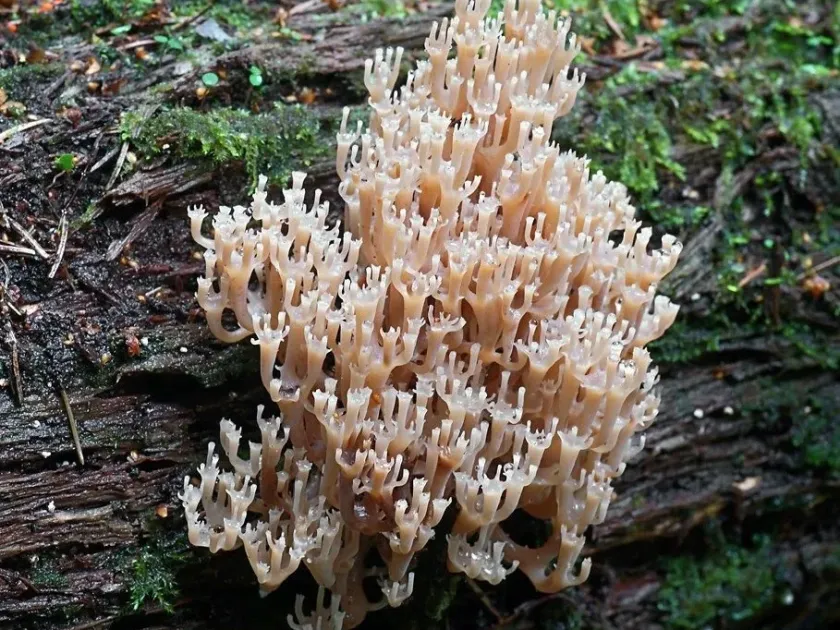
The most distinctive sign of Clavicorona pyxidata is its fruit body, which resembles a coral-like or candlestick structure. They typically appear in clusters on decaying logs, stumps, or damaged stems.
The tips of the fungal branches feature small, cup-like depressions, which are the primary morphological characteristic used for identification in the field.
Affected wood displays characteristic whitening, as the fungus breaks down the dark lignin pigments. The texture of the wood becomes spongy and brittle over time.
Advanced stages of colonization may show cracks in the tree bark, from which the yellowish-tan or cream-colored fruit bodies emerge during wet weather.
- Coral-shaped fruit bodies growing on bark.
- White, bleached appearance of internal wood layers.
- Softened, spongy consistency of the timber.
- Noticeable reduction in wood structural density.
Pathogen
Clavicorona pyxidata is a saprotrophic fungus belonging to the Basidiomycota phylum. It primarily functions as a decomposer of dead or decaying wood, playing a significant role in forest ecology cycles.
The fungus propagates through spores that are released from mature fruit bodies. These spores are dispersed by wind currents and can land on any exposed wood, where they initiate colonisation if moisture levels are adequate.
The mycelium of the fungus penetrates deep into the substrate, secreting enzymes that break down lignin and cellulose. This process leads to the formation of white rot, which significantly alters the timber's properties.
It remains in a vegetative state within the wood for extended periods, making it invisible to the naked eye until the environmental triggers for reproduction are met.
This species is highly efficient at competing for resources within its substrate, allowing it to establish itself firmly before other opportunistic fungi can take hold.
Conditions for development
High relative humidity is the primary catalyst for the development of the fruit bodies. Clavicorona pyxidata flourishes in damp, shaded environments where evaporation is minimal.
The fungus thrives within a temperature range of 15°C to 25°C. These moderate conditions facilitate the rapid metabolic activity required for cellulose breakdown.
Mechanical damage to the tree, such as wounds from pruning, storm damage, or frost cracks, acts as a primary entry point for fungal spores to reach the inner heartwood.
Proximity to decaying logs or leaf litter provides an ideal reservoir for the fungus. These sources can continuously release spores, increasing the risk of infection for neighboring trees.
Lack of proper air circulation within a tree stand or orchard creates a stable microclimate that encourages the prolonged survival of the fungus and its eventual spread.
Why it matters
The primary harm caused by this fungus is the internal destruction of wood tissue, which drastically reduces the mechanical stability and economic value of the timber.
In landscape or urban settings, trees affected by significant heart rot pose a serious safety risk, as they are prone to structural failure and windthrow during inclement weather.
For fruit-bearing trees, the presence of such decay disrupts vascular transport systems, leading to lower yields, stunted growth, and eventually, the death of the tree.
The fungal activity is irreversible; once the mycelium has deeply penetrated the wood core, the tree's health is severely compromised regardless of external care measures.
The decay also invites other secondary pests and pathogens to colonize the weakened tree, exacerbating the overall decline and potentially leading to a rapid forest die-off.
Protection
Sanitation is the most effective management tool. Removing dead wood, fallen logs, and heavily infected trees significantly reduces the total spore count in the environment.
Applying protective sealants to pruning wounds and accidental bark injuries prevents spores from entering the inner tissues, effectively creating a physical barrier against infection.
Maintaining tree vigor through appropriate fertilization and regular crown management helps the tree compartmentalize potential infections and bolster its natural defenses.
Improving the drainage around the base of trees prevents high-humidity zones that favor fungal reproduction, thereby creating a less hospitable environment for the pathogen.
If decay is identified early on a limb, prompt surgical removal of the affected tissue followed by proper dressing can sometimes prevent the spread into the main trunk.
Discussion
No discussions yet — be the first.