
Clavicorona
Clavicorona
Description
Symptoms
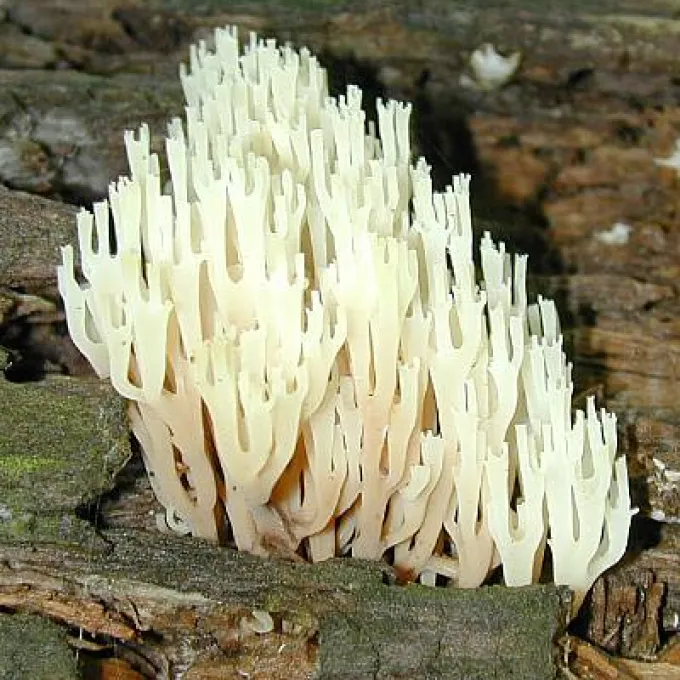
The most distinctive sign of infection is the emergence of creamy-colored, branching, coral-like fruiting bodies on the trunk or exposed wood of the tree.
Infected trees often show signs of premature chlorosis, where leaves or needles yellow and drop long before the usual autumn season, indicating a disturbance in water supply.
The bark of the affected area may appear sunken or cracked, and peeling it back often reveals a thick, white mat of fungal mycelium growing directly on the wood surface.
Advanced stages of the disease manifest as interior wood rot, where the timber becomes soft, discolored, and crumbly, which can be identified by the hollow sound during percussion tests.
Progressive wilting and branch dieback are common, as the fungus eventually destroys the vascular cambium, preventing essential fluids from reaching the upper canopy of the tree.
Pathogen
The disease is caused by the fungus Clavicorona pyxidata, a saprotrophic basidiomycete that can act as a pathogen under favorable conditions. It is specifically known for its ability to decompose wood structure efficiently.
This fungus survives by secreting specialized enzymes that break down complex organic polymers like cellulose and lignin. This biological process leads to the loss of structural integrity in living host trees.
The pathogen reproduces via airborne spores produced by coral-like fruiting bodies. These fruiting bodies are the visible reproductive stage of the fungus, emerging from colonized wood tissues.
Clavicorona thrives by colonizing internal tree tissues, specifically the sapwood and heartwood, which restricts the movement of nutrients and water throughout the plant.
It is classified as a wood-decay fungus that often targets weakened or stressed trees, effectively finishing the decomposition process that was initiated by environmental or external injuries.
Conditions for development
Clavicorona requires high levels of ambient and wood moisture to flourish. Dense forests with poor air circulation are particularly prone to outbreaks of this fungal infection.
Temperature plays a crucial role in mycelial growth, with the fungus favoring mild to warm temperatures, typically between 15°C and 22°C, for maximum metabolic activity.
Wounds in the bark serve as critical entry points for fungal spores. These wounds can be caused by pruning, animal damage, or abiotic factors like frost cracks and heavy storms.
Stagnant, poorly drained soil conditions around the root collar can increase the susceptibility of the tree to fungal colonization by weakening its overall physiological status.
High spore density in the forest, resulting from unremoved deadwood or decaying logs, creates a constant environmental pressure on the nearby healthy standing trees.
Why it matters
The primary impact of Clavicorona is the significant degradation of timber quality, rendering logs unsuitable for construction or high-value carpentry uses due to internal rot.
Infected trees suffer from a major loss in structural stability, posing a serious safety risk due to potential windthrow, especially during storms or high wind events.
The disease weakens the host tree, making it highly attractive to secondary wood-boring insects, which accelerates the decline and eventual death of the affected plant.
In forest nurseries, the pathogen can cause significant economic losses by killing off large batches of young saplings before they are ready for forestation programs.
It disrupts the natural regeneration cycle of forests by killing middle-aged and mature trees, which leaves gaps in the canopy and alters the local microclimate.
Protection
Sanitation is the most effective management strategy; removing and properly destroying infected wood prevents the buildup of spore loads within the local environment.
Implementing proper pruning techniques is essential to prevent unnecessary bark damage, and any accidental injuries should be immediately treated with appropriate sealants.
Improving the forest stand density through regular thinning promotes better air flow, which naturally reduces humidity levels and hinders the germination of fungal spores.
In critical cases or high-value plantations, systemic fungicides can be applied to protect vulnerable trees during high-risk seasons with heavy precipitation.
- Regular site sanitation
- Proper tool disinfection
- Promoting tree vigor
- Stump removal practices
- Monitoring for fruit bodies
Discussion
No discussions yet — be the first.