
Clauzadea monticola
Clauzadea monticola
Description
Symptoms
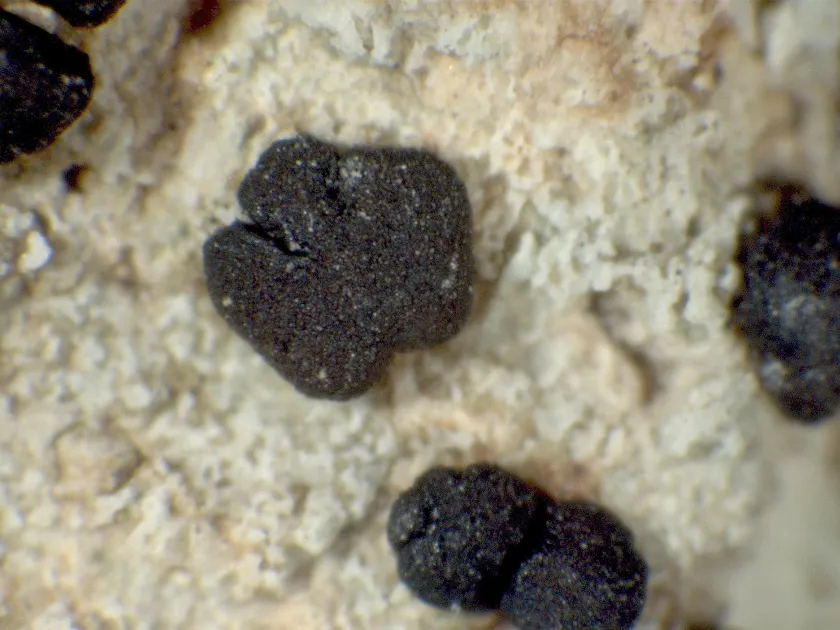
The lichen appears as a crustose thallus that adheres tightly to rocky surfaces, making it difficult to detach.
It typically exhibits a gray to brownish hue, often displaying small apothecia which are its reproductive structures.
The texture of the thallus is often granular or cracked, creating a distinct patterned appearance on stone.
There are no symptoms of infection on plants, as this organism does not interact with the physiology of cultivated flora.
The presence of this lichen remains stable throughout the year and does not fluctuate with seasonal plant development cycles.
Pathogen
It is crucial to clarify that Clauzadea monticola is not a plant disease, but a species of lichen in the Lecanoraceae family.
The organism is a stable symbiosis between a fungal partner (mycobiont) and an algal partner (photobiont).
This species is strictly epilithic, which means it thrives exclusively on stony, non-living substrates.
It lacks any parasitic mechanisms, meaning it does not attack or draw nutrients from living plant tissues.
Its biological cycle is focused on mineral absorption and photosynthesis, making it completely independent of agricultural crops.
Conditions for development
Clauzadea monticola requires clean air and mineral-rich surfaces, such as limestone or natural rock formations.
It prefers well-lit environments where humidity levels support its slow metabolism and steady growth.
The species occupies specific ecological niches where competition from vascular plants is absent due to the lack of soil.
Growth is extremely slow, reflecting its adaptation to environments with scarce nutrient availability.
The presence of the species is often used as a biological indicator of healthy, non-polluted atmospheric conditions.
Why it matters
Clauzadea monticola poses no threat to agricultural productivity or the health of orchards and ornamental plants.
It does not produce any metabolites that could be considered phytotoxic to surrounding vegetation or soil health.
Since it does not extract water or minerals from plants, there is no impact on crop yields or plant vitality.
The lichen does not cause plant diseases, and its presence in an agricultural area should not be confused with fungal pathogens.
Any damage is restricted to minimal surface alteration of stones, which has zero economic consequence in farming operations.
Protection
No protection measures are necessary, as the organism is not a disease, pest, or threat to plant life.
If removal is desired for aesthetic reasons on stone structures, simple mechanical cleaning is sufficient.
The application of chemical pesticides or fungicides is entirely ineffective and not recommended for this species.
Proactive prevention is not applicable since the organism does not colonize living plants.
It is best viewed as a natural component of the local environment rather than a target for eradication.
Discussion
No discussions yet — be the first.