
Cladosporium leaf mold
Cladosporium sphaerospermum
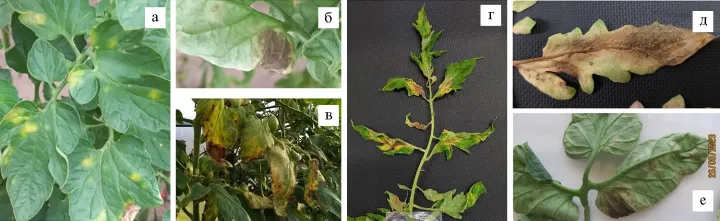
Description
Symptoms
Early symptoms appear as pale green or yellowish spots on the upper surfaces of the lower leaves, which expand as the infection progresses.
A distinct olive-brown or velvety fungal mat develops on the undersides of these spots, which is a diagnostic feature of the disease.
As the disease advances, affected leaves turn yellow, wilt, and dry out, leading to significant defoliation of the lower stem.
In severe cases, the infection can spread to flowers and fruit, causing necrotic spots that render the produce unmarketable.
The overall appearance of the plant becomes stunted, with reduced vigor and significant yield loss due to leaf death.
Pathogen
The disease is caused by the fungus Cladosporium sphaerospermum, a common plant pathogen affecting various solanaceous crops.
The fungus propagates through microscopic spores (conidia) that are easily dispersed by air currents, water splashes, and physical contact.
It acts as a facultative parasite, surviving as a saprophyte on crop debris during the off-season, which facilitates its persistence in greenhouses.
The pathogen displays high adaptability to environmental changes, making it a persistent challenge for commercial growers globally.
Its mycelium penetrates the stomata of leaves, eventually disrupting the plant's physiological processes and internal circulation.
Conditions for development
High relative humidity, typically exceeding 80%, is the primary environmental trigger for the development of Cladosporium leaf mold.
Optimal temperatures for fungal growth range between 20 and 25 degrees Celsius, matching standard greenhouse conditions.
Poor air circulation within the canopy and prolonged periods of leaf wetness significantly increase the rate of spore germination.
Overhead irrigation systems are particularly problematic as they facilitate the spread of spores from infected foliage to healthy parts.
Insufficient sanitation practices allow the pathogen to remain within the growing environment, leading to consistent annual outbreaks.
Why it matters
The disease causes substantial harm by reducing the photosynthetic surface area, which directly impacts plant development and fruit filling.
Yield loss can be catastrophic in greenhouses, potentially resulting in complete crop failure if left unmanaged during the peak season.
Economic impact includes increased operational costs for pesticide applications and labor-intensive sanitation efforts within the facility.
Fruit quality is severely diminished, as the presence of spots and lack of nutrition lead to smaller, misshapen harvest outputs.
Plants weakened by the disease are more susceptible to secondary infections by bacteria and other opportunistic fungi, further complicating plant health.
Protection
Effective control strategies rely on regulating humidity and ensuring proper air movement between plants to prevent favorable conditions.
Crop rotation and the removal of infected plant residues are essential sanitation measures to break the pathogen's life cycle.
Choosing resistant cultivars is highly recommended, as genetic resistance significantly reduces the need for chemical intervention.
Integrated pest management (IPM) practices, including the timely removal of infected lower leaves, help minimize the inoculum load.
Chemical control involving copper-based fungicides or systemic options should be used according to local agricultural regulations and rotation schemes.
Discussion
No discussions yet — be the first.