
Cladosporium leaf spot of pepper
Cladosporium pipericola
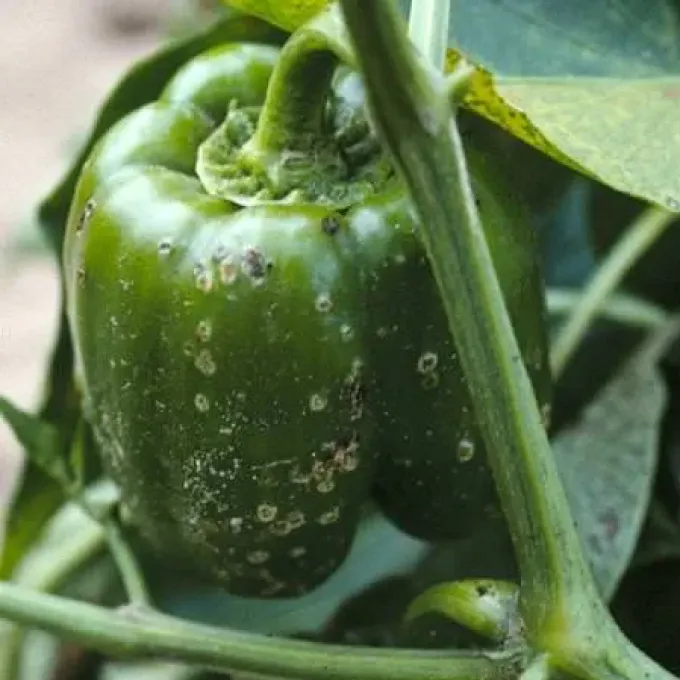
Description
Symptoms
The early symptoms of Cladosporium leaf spot appear as small, light green to yellow circular spots on the surface of the lower leaves.
As the infection advances, the centers of these spots become necrotic and turn light brown, while a dense, velvety, olive-green to brown fungal growth appears on the underside of the leaves.
Severe infections lead to chlorosis (yellowing) of the leaf tissue, followed by premature leaf drop, which significantly impacts the plant's health.
In humid conditions, the fungus may also affect stems and occasionally the calyx of the fruit, causing tissue browning and potential decay.
Affected plants exhibit stunted growth and reduced vigor, which is particularly detrimental during the early flowering and fruit-setting stages.
Pathogen
The disease is caused by the pathogenic fungus Cladosporium pipericola, which specifically targets pepper plants (Capsicum spp.).
This fungus survives as mycelium or conidia in infected crop residues, contaminated soil, or on alternative host plants within the vicinity.
The conidia are easily disseminated by wind currents, splashing water from rainfall, or through human activity during field maintenance tasks.
Once settled on a leaf surface, the pathogen penetrates the host tissue and begins to colonize it, leading to the characteristic development of necrotic spots.
Its biological cycle is highly dependent on humidity levels, with the pathogen showing high reproductive efficiency in greenhouse environments where conditions are stable.
Conditions for development
High relative humidity (above 80%) is the most significant factor influencing the rapid spread and severity of the disease.
The fungus thrives in temperatures between 20°C and 25°C, making it a persistent issue in protected cultivation systems like greenhouses.
Poor ventilation and high-density planting exacerbate the problem by preventing the evaporation of dew and irrigation water from the foliage.
Irrigation methods that wet the foliage, such as overhead sprinklers, provide the film of moisture required for conidia germination and infection initiation.
Diurnal temperature fluctuations that promote nighttime dew formation create the perfect microclimate for the development of the pathogen.
Why it matters
The primary damage results from the reduction of leaf area, which decreases the plant's ability to perform photosynthesis and produce energy.
Premature defoliation weakens the plant, often leading to reduced fruit size, yield losses, and poor quality of the harvested produce.
In severe cases, the disease can render a significant portion of the crop unmarketable due to both reduced yield and the aesthetic damage to the plant.
Infected plants are also more susceptible to secondary infections, as their natural immune responses are compromised by the primary fungal attack.
Economic losses in commercial pepper production can be substantial if preventative measures are not implemented early in the growing season.
Protection
Management of Cladosporium leaf spot relies on a combination of cultural practices and targeted chemical control to disrupt the life cycle of the fungus.
Improving air circulation within greenhouses through side-wall or roof ventilation is essential to keep foliage dry and inhibit fungal growth.
Effective sanitation, including the removal and destruction of all infected plant material, is crucial for preventing the spread of the pathogen in subsequent cycles.
Fungicides, particularly those containing copper or systemic active ingredients, can be used preventatively or at the first signs of symptoms to curb infection.
- Utilize drip irrigation to keep the foliage dry
- Rotate crops with non-solanaceous plants
- Maintain appropriate plant spacing to improve airflow
- Disinfect greenhouse tools and structures regularly
Discussion
No discussions yet — be the first.