
Cladosporium leaf mold
Cladosporium oxysporum
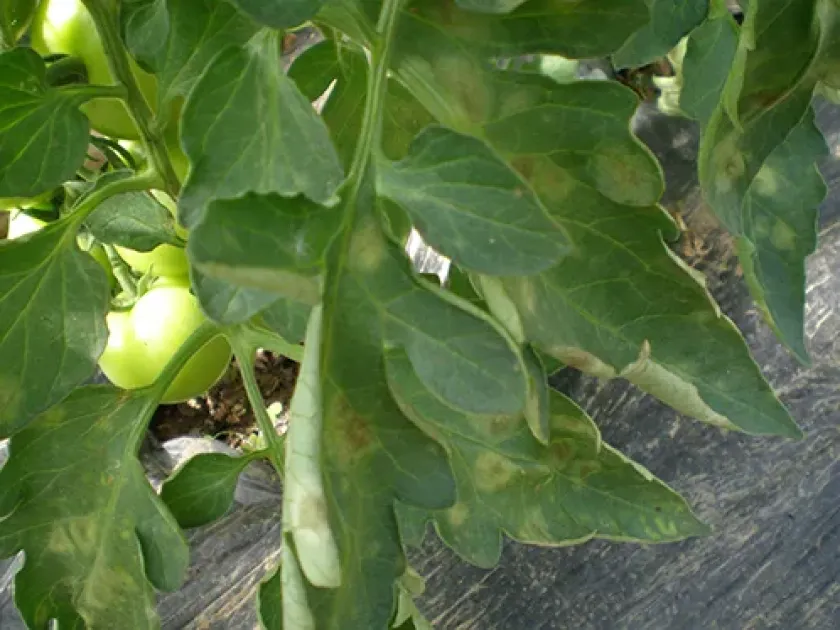
Description
Symptoms
The primary symptom is the development of yellow, irregular spots on the upper leaf surface, which eventually turn tan or brown.
A distinctive olive-brown or greyish velvety layer of fungal spores becomes visible on the underside of the affected leaf areas.
As the infection progresses, the leaves curl, dry out, and drop prematurely, leading to significant defoliation of the host plant.
In severe cases, the fungus may attack the stems and blossoms, causing systemic damage that weakens the entire plant structure.
The infection is often most severe on the lower, older leaves first, gradually moving upward toward the younger foliage.
Pathogen
The disease is caused by the fungus Cladosporium oxysporum, a common plant pathogen and saprotroph found in various environments.
This fungus propagates primarily through conidia, which are easily dispersed by air currents, splashing water, and agricultural machinery.
It acts as a facultative parasite, meaning it can survive on decaying organic matter in the soil or greenhouse structures between cropping cycles.
The pathogen utilizes specialized enzymes to penetrate the leaf cuticle, establishing a connection that allows it to feed on plant tissues.
The biological nature of this fungus makes it highly adaptable to different environmental stressors, complicating total eradication efforts.
Conditions for development
High relative humidity, typically above 80%, is the primary environmental factor triggering the germination of Cladosporium oxysporum spores.
Temperatures ranging from 20°C to 25°C provide the optimal metabolic environment for the fungus to colonize and spread rapidly.
Poor ventilation in greenhouse environments leads to stagnant air and moisture accumulation, facilitating the development of the leaf mold.
Excessive overhead irrigation can create moisture films on leaves, which serve as perfect entry points for fungal spores.
Inadequate light and crowded planting densities further stress the plants, making them more susceptible to the fungal invasion.
Why it matters
The disease severely impacts the plant's ability to photosynthesize by destroying large portions of the leaf tissue, leading to stunted growth.
The yield quality is significantly degraded as plants lack the energy required for proper fruit development and maturation.
The overall market value of the produce is reduced due to cosmetic damage and the potential for secondary rotting organisms to infect the tissues.
In greenhouse settings, uncontrolled outbreaks can cause widespread loss, forcing farmers to take drastic measures such as crop destruction.
The need for repeated chemical treatments increases production costs and may lead to issues with pesticide residue on edible produce.
Protection
Strategic climate management in greenhouses, including proper heating and ventilation, is essential to keep humidity levels below the threshold for spore germination.
Sanitation practices such as removing crop debris and disinfecting surfaces are critical to reducing the primary inoculum in the environment.
Application of systemic fungicides is an effective way to protect healthy plants and halt the progression of existing infections.
- Maintaining proper plant spacing for improved airflow;
- Implementing strict crop rotation schedules;
- Using drip irrigation to keep foliage dry;
- Selecting resistant crop varieties where available.
Regular monitoring of plants allows for early detection of initial signs, enabling localized intervention before the disease spreads throughout the greenhouse.
Discussion
No discussions yet — be the first.