
Heterosporium leaf spot
Cladosporium iridis
Description
Symptoms
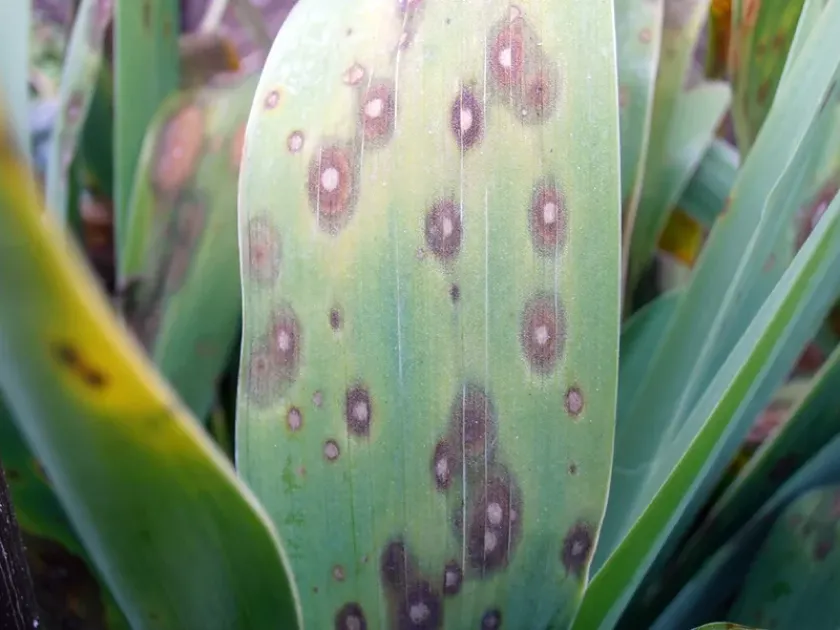
Initial symptoms of the infection appear as small, light green spots that quickly develop a brown or reddish-brown hue. As the disease progresses, these spots expand, often becoming oval or elliptical in shape with a dark, distinct margin.
The center of the necrotic spots eventually develops a dense olive-black or grayish fungal mat. This mat consists of the fungus's conidiophores and conidia, which is a definitive diagnostic feature of Heterosporium leaf spot.
Damage typically begins at the leaf tips and works its way down to the base. In severe cases, the foliage yellows, curls, and dries out, causing the plant to lose its aesthetic appeal and structural integrity before the end of the season.
Floral stems can also be affected, leading to poor bud development or premature drying of the flowers. While the rhizome itself is rarely killed immediately, the loss of foliage weakens the overall vitality of the iris.
Regular inspection is critical, as early stages of the disease can be easily overlooked. Monitoring for the characteristic olive-colored sporulation on the underside of leaves is the most effective way to confirm a diagnosis.
Pathogen
The causative agent of this disease is the imperfect fungus Cladosporium iridis (formerly classified as Heterosporium iridis). It is a specialized pathogen that primarily targets plants within the Iris genus.
The fungus survives the winter as mycelium and conidia on infected plant debris left in the soil or on the surface of flower beds. When conditions become favorable in the spring, spores are dispersed by wind, rain, and insects to healthy plant tissues.
The biological cycle of this pathogen involves the rapid germination of conidia in the presence of water droplets on leaf surfaces. Once it penetrates the epidermis, the fungus begins colonizing the tissue and producing new reproductive structures.
The disease cycle can repeat several times throughout the growing season, with each generation of spores further spreading the infection. The high persistence of the pathogen in old plant tissue makes it difficult to eradicate without diligent sanitation.
Host specificity of the fungus means it can affect a wide range of iris species, including bearded and beardless varieties. It remains a persistent problem in professional nurseries and home gardens alike.
Conditions for development
High humidity and prolonged periods of wet weather are the primary drivers of Heterosporium leaf spot. Rainfall, heavy fog, and dew provide the necessary surface moisture for conidial germination and infection.
Poor ventilation, caused by overcrowding or planting in low-lying areas, creates a microclimate conducive to rapid fungal growth. Shaded environments that do not allow foliage to dry out quickly are also high-risk sites.
Excessive use of nitrogen-based fertilizers results in soft, succulent leaf growth, which is significantly more susceptible to fungal penetration. Proper fertilization strategies are essential to maintain plant resistance.
Waterlogging and poor soil drainage contribute to stress in the iris, which in turn reduces its natural immunity. Plants weakened by environmental stress are significantly more likely to develop severe infestations.
Failure to remove dead, infected foliage from the previous season is the most common reason for recurring outbreaks. The pathogen can remain viable in debris for long periods, providing a consistent source of inoculum each spring.
Why it matters
Heterosporium leaf spot causes significant damage to the visual quality of iris plantings, turning healthy, vibrant foliage into unsightly patches of decay. This severely detracts from the value of the plants in a landscape setting.
The primary physiological harm is the disruption of photosynthesis. When the leaves are destroyed prematurely, the rhizome cannot accumulate the carbohydrates necessary for the next year’s bloom cycle, leading to stunted or non-flowering plants.
Long-term infestation weakens the iris, making it more prone to winter kill and susceptibility to other secondary pests or diseases. Chronic exposure to the fungus eventually leads to the degradation of the entire planting.
For horticulturalists and nurseries, the presence of this disease can result in economic losses due to the unsaleable condition of the plants. It also restricts the trade and movement of iris rhizomes due to the risk of spreading the pathogen.
If left unmanaged, the pathogen can spread to entire collections, making it difficult to maintain susceptible varieties. The constant need for fungicide applications increases maintenance costs and impacts the environment.
Protection
The most important control measure is strict sanitation. All infected leaves should be cut back and burned or removed from the site in the autumn to eliminate the primary sources of spores for the following spring.
When the disease is detected, systemic fungicides belonging to the triazole or strobilurin classes are effective. Copper-based sprays can also be used preventatively during the early growing season to protect healthy foliage.
Cultural practices are essential for prevention. Ensure sufficient spacing between plants to improve airflow and choose well-drained, sunny locations. Proper light exposure helps keep foliage dry, hindering fungal colonization.
Maintain balanced plant nutrition with emphasis on potassium and phosphorus to strengthen cell walls and overall plant health. Avoid excessive nitrogen applications, especially in the late summer.
If a severe outbreak occurs, radical pruning of the foliage to a few centimeters above the ground, followed by fungicide application, can help save the rhizome. Always disinfect garden tools after working with infected material to prevent further spread.
Discussion
No discussions yet — be the first.