
Cladosporium leaf mold
Cladosporium cladosporioides
Description
Symptoms
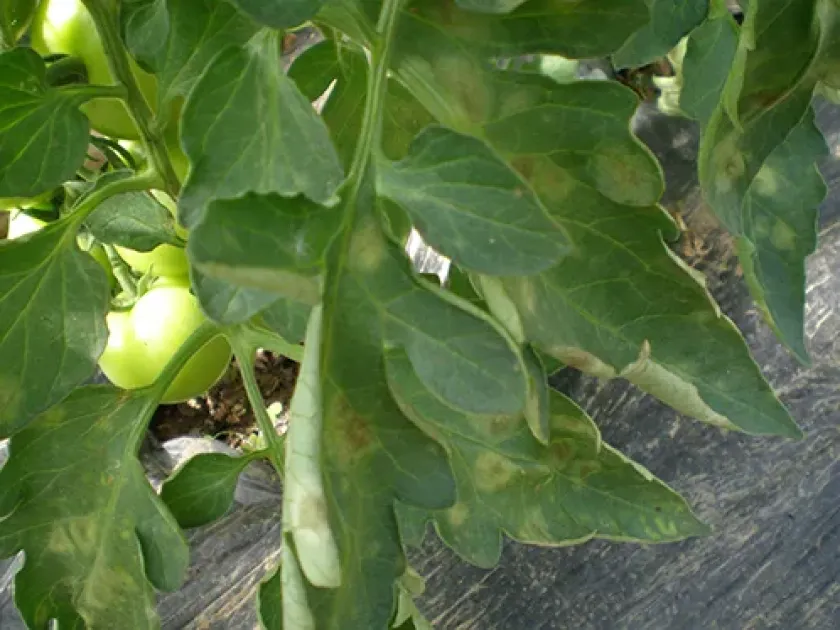
The first symptoms appear as pale, yellowish spots on the lower surfaces of older leaves, which slowly enlarge.
As the infection progresses, a distinctive olive-brown to dark gray velvety mold appears on the underside of these spots.
On the upper leaf surface, the corresponding areas show chlorotic yellowing, which eventually turns necrotic and brown.
Severe infestations cause leaves to curl, wither, and drop prematurely, leaving the plant defoliated and unable to sustain fruit production.
While flowers are less commonly affected, significant outbreaks can lead to stunted growth and reduced fruit set across the whole plant.
Pathogen
The disease is caused by the fungus Cladosporium cladosporioides, a common pathogen affecting various plants, particularly in greenhouses.
This fungus survives in soil and crop debris as dormant spores, waiting for favorable conditions to germinate and infect new host plants.
The cycle begins when airborne conidia land on the leaf surface and, in the presence of moisture, enter the tissue through the stomata.
Once inside, the mycelium rapidly colonizes the plant cells, absorbing nutrients and eventually producing new reproductive structures on the leaf surface.
Its high reproductive capacity and resilience make it a challenging pathogen to manage in intensive cultivation systems.
Conditions for development
High relative humidity (above 80%) is the most critical factor for the rapid spread and development of the leaf mold pathogen.
Temperatures ranging from 20°C to 25°C are ideal for the fungus, although it can remain active in a broader range of greenhouse conditions.
Poor air circulation within greenhouse structures promotes stagnant, humid air pockets that favor spore germination.
Condensation on leaves resulting from temperature fluctuations provides the necessary moisture for the pathogen to penetrate the leaf cuticle.
Inadequate sanitation practices after harvesting contribute to the long-term survival of spores in soil, tools, and structural materials.
Why it matters
Leaf mold can cause substantial yield losses by reducing the plant's photosynthetic capacity, often leading to up to 50% loss in production.
Affected plants produce smaller, lower-quality fruits, significantly impacting market value and profitability for commercial growers.
The weakened plant becomes highly susceptible to opportunistic secondary infections, further complicating the disease management process.
Managing the disease requires frequent labor-intensive cleaning and potential chemical applications, increasing overall operational costs.
Failure to control the disease early can lead to an epidemic within a greenhouse, requiring complete crop destruction in severe cases.
Protection
The most effective strategy is environmental management: maintaining humidity below 70% and ensuring excellent ventilation.
Drip irrigation systems are preferred over overhead watering to keep leaf surfaces dry, which is essential to prevent infection.
- Regular inspection and removal of infected lower leaves.
- Selecting resistant crop cultivars to lower the risk of infection.
- Thorough sanitization of greenhouse structures after each cycle.
- Implementation of crop rotation to break the pathogen's life cycle.
- Use of certified organic or chemical fungicides when infection levels exceed thresholds.
Monitoring for initial spots is vital; early intervention with biological controls can prevent the need for harsher chemical treatments.
Balanced plant nutrition, particularly avoiding excessive nitrogen, helps maintain stronger plant tissue that is more resistant to fungal penetration.
Discussion
No discussions yet — be the first.