
Cladosporium leaf blotch
Cladosporium allii-porri
Description
Symptoms
The initial signs of infection appear as small, pale, or light green spots on the onion leaves. These spots are often overlooked in the early stages of development.
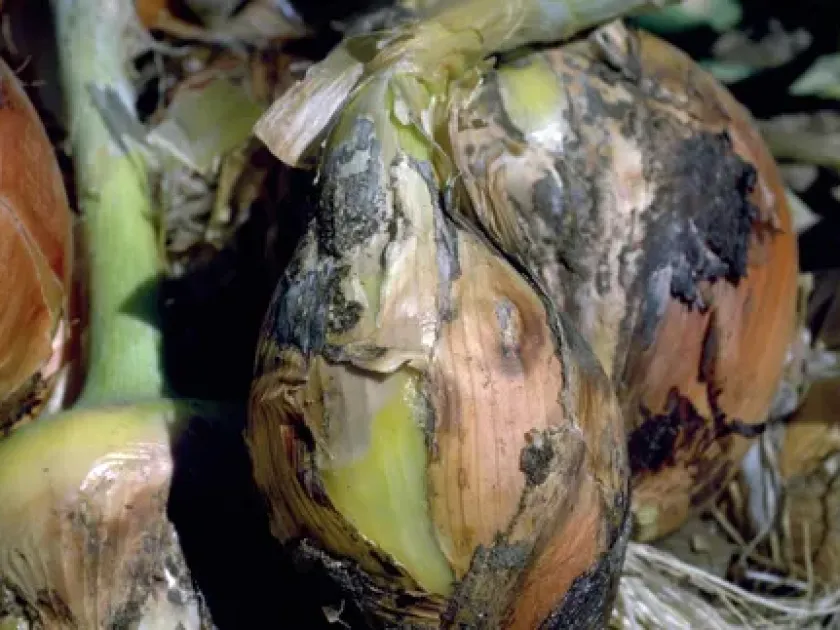
As the infection progresses, these spots expand and darken, turning into olive-brown or greyish-brown necrotic lesions due to the dense production of fungal spores.
In humid conditions, the lesions exhibit a distinct velvety texture. The leaves begin to yellow from the tips downward, eventually collapsing and drying out completely.
At advanced stages of the disease, the necrotic patches merge, covering significant portions of the leaf surface and significantly reducing the plant's photosynthetic capacity.
Unlike some other fungal diseases, leaf blotch symptoms often develop on older, lower leaves first before climbing toward the younger growth.
Pathogen
The disease is caused by the fungus Cladosporium allii-porri. It is a specialized pathogen that primarily targets species of the Allium genus, disrupting their physiological development.
The pathogen overwinters as mycelium or spores within crop residues and the soil. During the growing season, it spreads through conidia dispersed by wind, rain splashes, and mechanical equipment.
The fungus penetrates leaf tissues through stomata or wounds caused by insect damage. Once inside, it colonizes the intercellular space, leading to tissue degradation.
The life cycle of the pathogen is closely tied to humidity levels. Under favorable conditions, the fungus produces large quantities of spores, which appear as a visible surface layer.
This fungus is highly adaptive and capable of surviving across a variety of moderate climates, making it a persistent challenge for commercial onion growers.
Conditions for development
High relative humidity (above 80%) and extended periods of leaf wetness are the primary drivers for the rapid development and spread of this disease.
Temperatures ranging from 15°C to 25°C are ideal for the metabolic activity of Cladosporium allii-porri, allowing for quick colonization of the host plant.
Dense planting patterns that limit air movement around the canopy create microclimates where moisture remains trapped, significantly increasing the risk of an outbreak.
Frequent rainfall or overhead irrigation cycles that keep the plant foliage wet for long periods are significant contributors to the severity of the infection.
Environmental stress, such as sudden temperature shifts, can make plants more vulnerable to successful colonization by the fungal pathogen.
Why it matters
The primary impact of Cladosporium leaf blotch is the reduction of leaf area, which limits the plant's ability to accumulate biomass, resulting in undersized bulbs.
Severe infections lead to premature senescence of the foliage, preventing the bulb from reaching its full potential size and decreasing the overall yield per hectare.
Bulbs harvested from infected crops often exhibit poor storage characteristics, as they may be more susceptible to dehydration and secondary bacterial or fungal rots.
In seed-producing fields, the disease can significantly affect the quality and quantity of seeds, as the overall vigor of the onion plant is compromised.
Economic losses are compounded by the necessity of increased fungicide applications and the potential for grading losses due to lower-quality produce.
Protection
Effective management begins with strict crop rotation, ensuring that Allium crops are not planted in the same field more than once every three to four years.
Sanitation is critical; all infected plant debris must be removed or plowed deep into the soil after harvest to reduce the primary inoculum load for the next season.
- Optimizing row spacing to improve air circulation and reduce leaf moisture duration.
- Using high-quality, disease-free seed and treating sets before planting.
- Applying systemic and contact fungicides at the first sign of leaf spots.
- Balanced nutrient management, particularly avoiding excessive nitrogen which encourages succulent, vulnerable growth.
Monitoring the fields regularly for early lesions is essential for timely intervention with fungicide applications, which can prevent the disease from becoming epidemic.
Integrated pest management also plays a role, as reducing insect damage decreases the entry points for the fungal spores.
Discussion
No discussions yet — be the first.