
Cladosporium leaf mold
Cladosporiales
Description
Symptoms
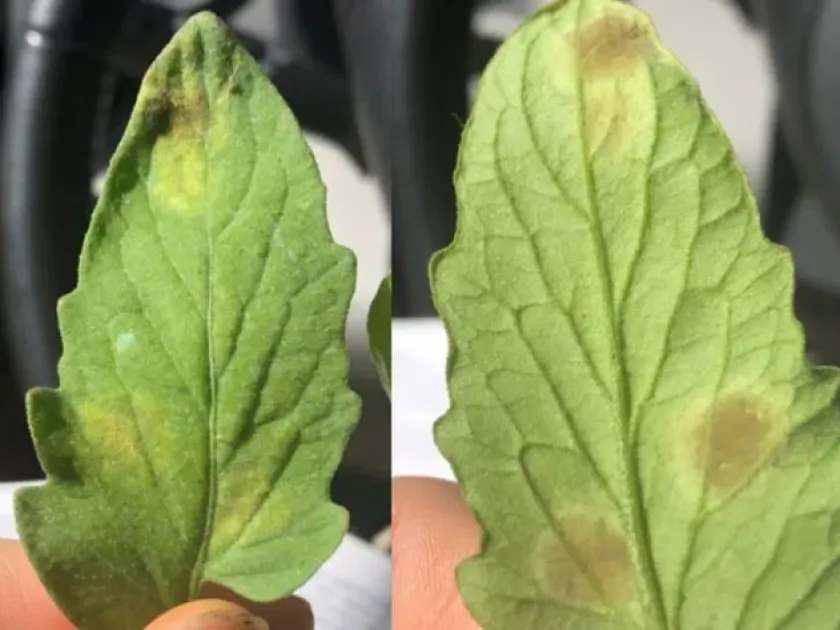
Early symptoms appear on the lower leaves as irregular, pale-yellow chlorotic spots that gradually enlarge and turn brown or olive-colored.
The most diagnostic feature is the appearance of a velvety, olive-brown fungal growth on the underside of the leaves, directly corresponding to the chlorotic spots above.
As the infection advances, the spots merge, leading to leaf curling, wilting, and premature defoliation, which severely reduces the plant's photosynthetic capacity.
Although rare, the pathogen can also infect blossoms and stems under severe infestation, leading to fruit set failure and general plant decline.
Unlike late blight, which produces dark, water-soaked lesions with white mold, leaf mold lesions are distinctly yellowish and exhibit a powdery, velvety texture on the underside.
Pathogen
The disease is caused by the fungus Passalora fulva (formerly known as Cladosporium fulvum), which specifically infects Solanaceae plants, primarily tomatoes.
The fungus survives as conidia or sclerotia on crop debris, in the soil, and on greenhouse structures, allowing it to persist for several seasons if not properly managed.
Dissemination of the pathogen occurs primarily through windborne spores, splashing water during irrigation, and contact with contaminated tools or clothing of greenhouse workers.
The life cycle features the production of conidiophores on the undersurface of infected leaves, which release a massive amount of spores that spread the infection throughout the crop.
As an obligate parasite, this fungus thrives in high-humidity environments, making it a major concern in protected cultivation and glasshouse agriculture.
Conditions for development
The development of leaf mold is heavily dependent on high relative humidity, typically exceeding 85%, combined with moderate temperatures between 20°C and 25°C.
Poor ventilation within the greenhouse creates stagnant air pockets, which promotes spore germination and rapid colonization of the leaf tissue by the fungus.
Overhead irrigation, especially during late afternoon or evening, ensures that leaves remain wet for extended periods, creating the ideal conditions for infection.
Densely planted crops that lack proper pruning restrict airflow, increasing the duration of leaf wetness and allowing the pathogen to thrive throughout the canopy.
Failure to disinfect structures and tools between growing cycles leads to a build-up of inoculum, increasing the likelihood of outbreaks in subsequent plantings.
Why it matters
The primary damage caused by Cladosporium leaf mold is the significant loss of foliage, which deprives the plant of energy and nutrients necessary for fruit development.
Infected plants show reduced fruit size, quality, and overall yield, as the photosynthetic surface is drastically reduced by early leaf senescence and drop.
Severe outbreaks can result in yield losses of up to 50%, making the disease a significant economic burden for commercial greenhouse growers.
The disease weakens the host plant, making it more susceptible to opportunistic secondary infections, further shortening the productive lifespan of the crop.
The cost of implementing integrated pest management (IPM) strategies, including fungicide applications and sanitation, increases production costs significantly.
Protection
Effective management begins with strict environmental control, specifically maintaining greenhouse humidity levels below 70% and ensuring adequate ventilation.
Sanitation is critical; all infected leaves should be removed promptly, and crop debris must be destroyed or removed at the end of each season to reduce inoculum levels.
Selecting resistant tomato cultivars is the most sustainable approach to preventing outbreaks, as many commercial varieties now offer genetic resistance to P. fulva.
Biological control agents, particularly those based on Bacillus subtilis, can be used preventively or at the onset of symptoms to suppress fungal growth.
- Utilize drip irrigation to avoid wetting foliage.
- Implement proper plant spacing to improve air circulation.
- Disinfect greenhouse structures thoroughly after harvest.
- Use systemic and contact fungicides as part of a rotation program.
Discussion
No discussions yet — be the first.