
Cladosporium leaf mold
Cladosporiaceae
Description
Symptoms
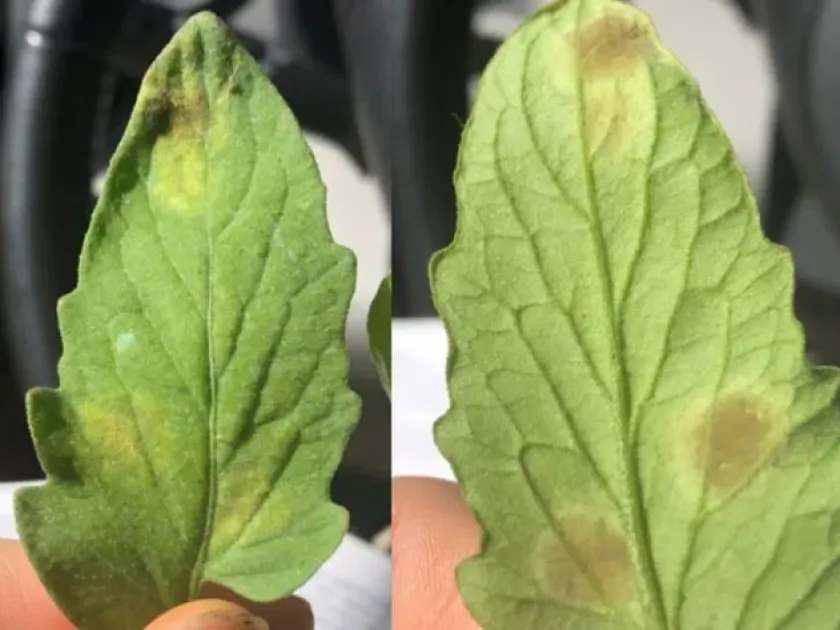
The first signs of Cladosporium leaf mold appear as pale or yellowish spots on the upper surface of the leaves, which gradually expand and turn brown.
The underside of these spots develops a distinctive velvety, olive-green to brown fungal growth, which is composed of masses of spores.
As the disease progresses, the leaves begin to wilt, curl upward, turn necrotic, and eventually drop off the plant prematurely.
The infection typically starts from the lower leaves and moves progressively upward, often leading to significant defoliation of the plant.
The plant shows stunted growth and diminished vitality, resulting in a significantly reduced capacity to produce high-quality fruit.
Pathogen
The disease is caused by the fungus Cladosporium fulvum (also classified as Passalora fulva), which is an obligate parasite.
The pathogen spreads through airborne conidia, which are easily transported by wind, water splashes, tools, and farm workers.
The fungus can survive for long periods in the soil and on crop debris, making sanitation a critical component of disease management.
It colonizes the intercellular spaces of host leaves, extracting nutrients and causing cell death, which manifests as visible necrotic patches.
New spore production is highly prolific, allowing the disease to explode rapidly within a confined greenhouse environment under humid conditions.
Conditions for development
High relative humidity, typically above 85%, is the most important environmental trigger for the rapid development of a leaf mold outbreak.
Temperatures between 20°C and 25°C provide the optimal range for the aggressive germination and colonization of the host by the fungus.
Stagnant air within enclosed structures prevents the evaporation of leaf moisture, providing the perfect medium for fungal spore germination.
Poor ventilation, especially in dense planting schemes, creates microclimates that trap moisture on the foliage for extended periods.
Inadequate sunlight exposure reduces the plant's overall vigor, lowering its natural resistance to fungal invasion and rapid infection.
Why it matters
Cladosporium causes extensive leaf loss, which drastically reduces the photosynthetic area available to the plant for fruit development.
The economic impact is severe in greenhouse tomato production, where yield losses can reach up to 50% without proper intervention.
Fruits produced by heavily infected plants are often smaller, less flavorful, and fail to reach market standards for quality and size.
The disease weakens the overall plant structure, making it highly susceptible to opportunistic secondary infections like bacterial spot or blight.
Increased production costs due to the need for frequent fungicide applications reduce the overall profitability of the agricultural operation.
Protection
Managing the greenhouse climate is crucial; keep relative humidity low by improving air circulation and utilizing drip irrigation systems.
Remove and destroy all infected plant debris immediately after harvest to disrupt the pathogen's lifecycle and reduce the inoculum load.
Selecting and planting resistant cultivars is considered the most sustainable and effective method for long-term leaf mold control.
When the infection is confirmed, apply fungicides labeled for Cladosporium control, ensuring thorough coverage of the leaf undersides.
- Practice regular greenhouse sanitation.
- Avoid overhead irrigation.
- Implement proper spacing to improve airflow.
- Monitor crops regularly for early symptoms.
Discussion
No discussions yet — be the first.