
Cobweb mold of mushrooms
Cladobotryum mycophilum
Description
Symptoms
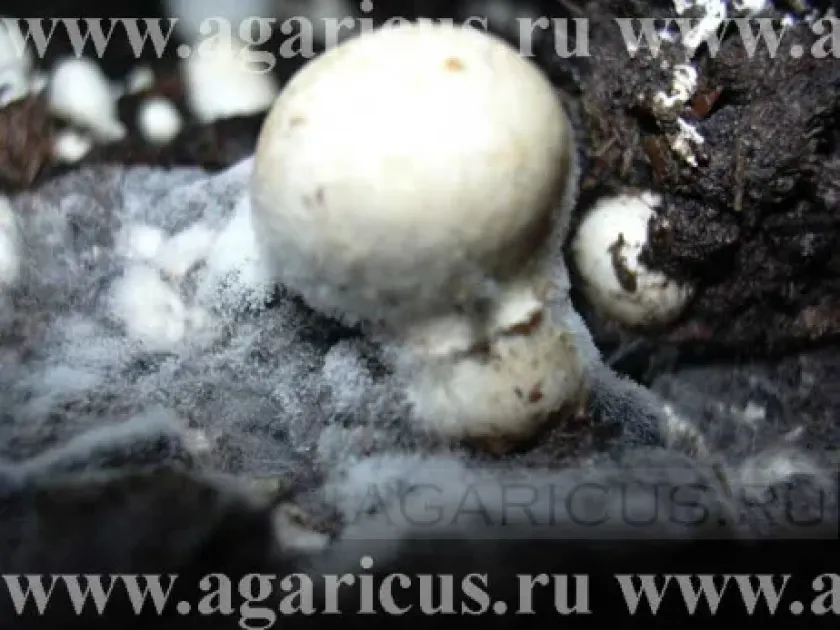
The primary symptom is the appearance of small, white, fluffy patches of mycelium on the surface of the casing layer or the mushroom caps. These patches quickly expand and develop into a cobweb-like structure.
As the infection progresses, the mold covers the mushrooms with a dense white or pinkish mat, leading to the distortion and collapse of the fruit bodies.
In the late stages of development, the mushroom tissues turn into a mushy, dark-colored mass with a foul odor. This is often exacerbated by secondary bacterial infections following the initial fungal attack.
The fungus frequently forms bridges between nearby mushrooms, tying them together in a dense mat of white mold that is easily visible upon inspection.
- White, web-like mycelium on the casing surface.
- Distortion and stunting of mushroom fruit bodies.
- Rapid decay and liquefaction of mushroom tissue.
- Spread of infection spots across growing beds.
Pathogen
The causative agent of the disease is the fungus Cladobotryum mycophilum, a member of the Hypocreales order. It is a highly specialized parasite that exclusively targets the fruit bodies and mycelium of cultivated mushrooms.
The fungus feeds on the nutrients within the host tissue, causing rapid disintegration of the mushroom structure. It produces vast amounts of microscopic spores, known as conidia, which are easily disseminated within the growing environment.
The pathogen is highly resilient and can persist on growing surfaces, equipment, and even within the structure of the growing house for long periods between cropping cycles.
Cladobotryum mycophilum is highly infectious, meaning that a single infected spot can produce enough spores to contaminate an entire production facility if ignored.
Its biological cycle is extremely fast, allowing it to transition from the initial infection to massive colonization of the mushroom beds within a few days under optimal conditions.
Conditions for development
The growth of Cladobotryum is significantly encouraged by high relative humidity (above 90–95%) and warm temperatures, typically ranging from 18°C to 24°C.
Inadequate ventilation, which prevents the surface of the mushrooms from drying out, creates a perfect environment for spore germination and mycelial spread.
Over-watering or incorrect irrigation practices that allow water droplets to stay on the mushroom caps provide a direct pathway for the fungus to colonize the host.
Condensation on ceilings and walls provides a reservoir for fungal spores, which can subsequently fall onto the growing beds and initiate an outbreak.
Poor sanitation practices, such as failing to clean harvesting tools or using contaminated casing materials, are the most frequent causes of outbreaks in mushroom houses.
Why it matters
Cobweb mold is considered one of the most destructive diseases in mushroom cultivation, with the potential to result in a total loss of the crop in infected chambers.
The disease drastically reduces the yield and quality of the mushrooms, rendering them entirely unsalable as they lose their firm texture and aesthetic appeal.
Financial losses occur not only through direct crop loss but also through the high labor costs associated with cleaning, disinfecting, and removing contaminated substrate.
The presence of the disease creates a recurring risk, as the persistent spores remain in the room, threatening future production cycles if the sanitation process is not thorough.
Large-scale infestations may force growers to apply more chemical treatments, which can affect the overall marketability and safety profile of the mushroom product.
Protection
Strict hygiene and sanitation are the cornerstones of cobweb mold prevention. This includes regular disinfection of floors, walls, harvesting tools, and storage areas.
Controlling the microclimate is essential. Maintaining a proper airflow to dry out mushroom surfaces after watering can significantly hinder the development of the mold.
When an infection spot is detected, it should be isolated immediately by covering it with a layer of salt or by removing the affected area along with a portion of the surrounding substrate to prevent spore dispersal.
Monitoring the quality of the casing material and ensuring proper pasteurization processes are crucial for preventing the introduction of the pathogen into the growing house.
Training staff in early disease identification is vital. Prompt action at the first sign of symptoms can prevent a minor spot from becoming a devastating epidemic.
Discussion
No discussions yet — be the first.