
Citrus blight
Citrus blight agent
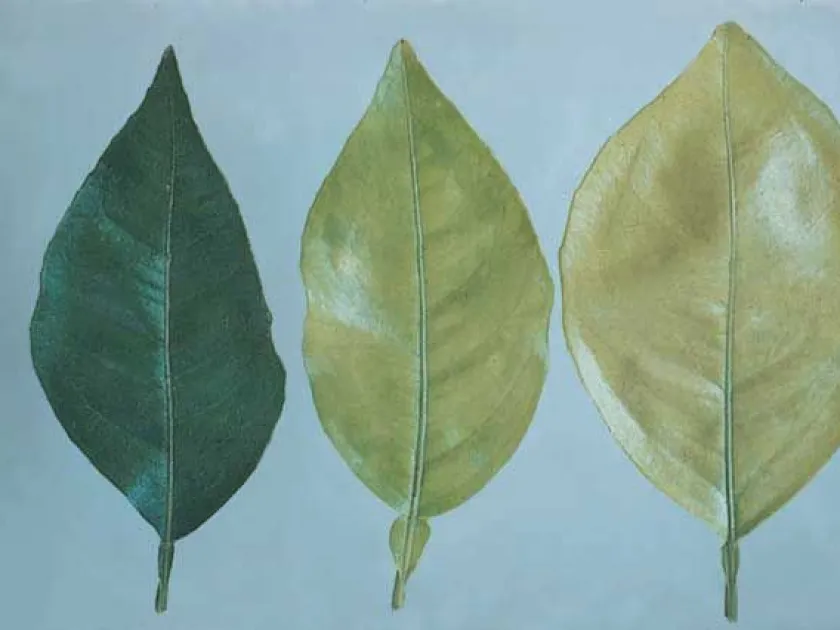
Description
Symptoms
The first visual signs of citrus blight often include sudden wilting of leaves, which gradually lose turgor and take on a dull, wilted appearance. Over time, massive defoliation occurs, leading to critical thinning of the branches and a significant decrease in overall tree growth.
A diagnostic sign of the condition is the inability of root xylem to conduct water, which can be verified by a water uptake test through the wood. The conducting tissues often show obstructions, including amorphous plugs and gummy deposits that block the flow of nutrients.
The root system of affected trees begins to die back gradually, often with a notable absence of healthy young root tips. Unlike Phytophthora root rot, citrus blight does not typically cause distinct lesions or decay on the crown or root collar.
The canopy appearance changes progressively, starting from localized patches of drying foliage to complete collapse of the entire above-ground structure. Enhanced growth of "water sprouts" from the base of the trunk is often observed as the tree attempts to compensate for lost productivity.
In the final stages, the tree loses all commercial value; the fruit becomes small, dry, and tends to drop prematurely, and the plant eventually dies within a few years of the onset of symptoms.
Pathogen
The etiology of citrus blight remains a subject of intense scientific debate, as a specific causative fungus or bacterium has not been definitively identified. Most researchers suggest a theory involving a complex interaction between biological, environmental, and physiological factors.
There are strong theories concerning systemic infection caused by fastidious microorganisms, including specific xylem-dwelling bacteria. These organisms trigger the plant to produce defensive compounds that ultimately clog the vascular system.
The disease has been proven to be transmissible through budding or grafting from infected scion or rootstock to healthy nursery stock. This confirms the presence of an infectious agent with a systemic mode of distribution within the plant tissues.
The potential role of viruses or virus-like particles in the development of blight has been extensively investigated, yet there is currently insufficient direct evidence to claim them as the primary cause of the pathogenesis.
Overall, citrus blight is classified as a degenerative xylem disease with an infectious nature, primarily involving the disruption of normal water transport and xylem fluid dynamics.
Conditions for development
The disease is most actively observed in mature, fruit-bearing trees, typically those older than 10–12 years of age. Outbreaks are highly characteristic of regions with warm and humid subtropical climates.
Soil type plays a significant role in pathogen manifestation: in heavy, poorly drained soils, the risk of disease incidence increases substantially. Waterlogging creates stress on the root system, making it more susceptible to vascular colonization.
Studies have shown that susceptibility varies significantly among rootstock varieties. For instance, rootstocks based on Poncirus trifoliata often exhibit higher tolerance compared to other common commercial rootstocks.
External environmental factors inducing water stress, such as prolonged droughts or excessive rainfall followed by heat, can act as catalysts for the transition of the disease into an active phase.
Mechanical injury to roots during inter-row cultivation practices can create entry points for potential pathogens, further facilitating the spread of the condition throughout the orchard.
Why it matters
Citrus blight is considered one of the most economically devastating diseases in the citrus industry. The primary damage involves a gradual, irreversible decline in yield, followed by the eventual death of productive trees.
The infection is chronic in nature, which makes early detection extremely difficult. By the time a tree begins to show obvious signs of wilt, it may have already served as a source of inoculum for neighboring trees in the orchard.
The costs of maintaining infected trees that produce little to no marketable fruit place a heavy financial burden on agricultural operations. Furthermore, the necessity of removing and destroying diseased trees requires significant labor and equipment investment.
The lack of effective curative treatments makes recovery impossible for infected specimens, forcing farmers to resort to the total removal of affected blocks and subjecting the soil to long-term fallow periods.
The disease has the potential to cause the total destruction of an entire plantation within 5–10 years if rigorous sanitary protocols and strict controls on plant material movement are not followed.
Protection
The primary method of control is prevention, based on the exclusive use of certified, pathogen-free nursery stock. Grafting should only be performed on rootstocks with known resistance profiles.
It is essential to maintain optimal irrigation schedules and ensure efficient soil drainage in the orchard. This practice helps minimize stress factors that render trees more vulnerable to the development of blight.
Prompt identification, removal, and destruction of infected trees—including their root systems—is a mandatory measure to contain the spread of the disease within a specific block or orchard area.
Replanting new citrus trees in sites where infected trees were previously located is strongly discouraged without a multi-year soil disinfection process or a long fallow period to reduce residual inoculum.
Strict phytosanitary control regarding the movement of nursery stock between regions and countries remains the most effective strategy to prevent the cross-border spread of citrus blight.
Discussion
No discussions yet — be the first.