
Neck rot of onion
Ciborinia allii
Description
Symptoms
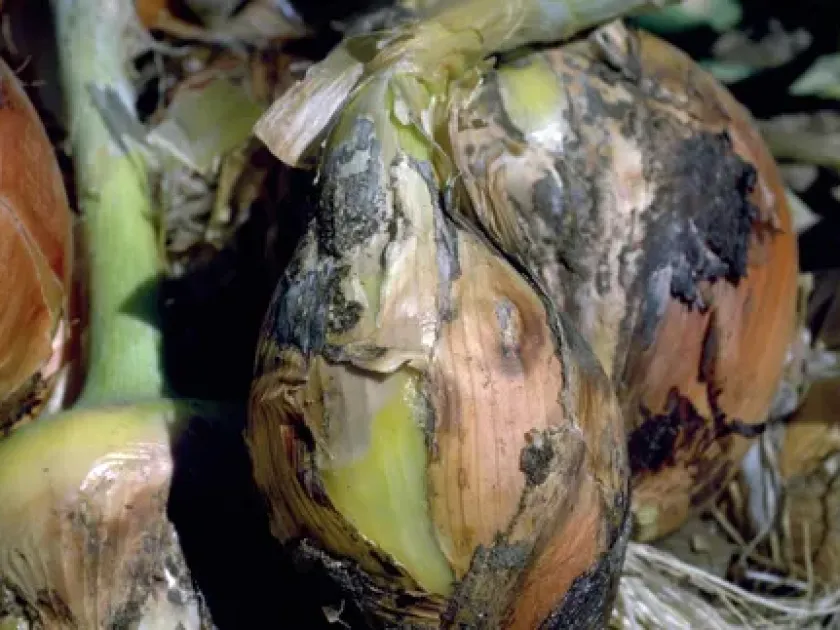
The first signs of neck rot typically appear during storage or just before harvest. Tissues in the neck area of the bulb become soft, watery, and take on a grayish, translucent appearance.
As the disease progresses, the rot spreads deep into the bulb, destroying internal scales. Over time, the affected tissues soften, darken, and a dense gray mass of fungal spores often forms between the scales.
A distinctive diagnostic feature is the appearance of small, hard, black structures called sclerotia. These develop on the surface or within the decayed tissue, serving as resting bodies for the fungus.
Infected bulbs emit a distinct, unpleasant odor that becomes noticeable even with minor damage to the outer skin. In high humidity, the bulb can rapidly deteriorate into a soft, mushy mass.
In the field, severe infection leads to premature wilting and lodging of the tops, while the neck of the bulb becomes soft and can be easily squeezed, losing its structural integrity.
Pathogen
The causative agent of neck rot is the fungus Ciborinia allii (often referred to in older literature as Botrytis allii). This pathogen is specialized for attacking Allium species and causing serious decay.
The primary source of infection is the sclerotia, which can persist in the soil or on infected plant debris for several years. The pathogen can also be introduced through infected sets or seeds.
The life cycle includes a vegetative phase producing conidia, which are easily disseminated by wind or rain splashes onto healthy plants, where they germinate in favorable conditions.
The fungus penetrates the plant primarily through the neck, especially if it remains succulent or damaged during the maturation process. Mechanical injuries or insect feeding sites also provide entry points.
The biology of the pathogen is well-adapted to the onion maturation period. As the bulbs dry and prepare for dormancy, the fungus exploits any remaining moisture or weakened protective barriers to establish infection.
Conditions for development
The development of neck rot is heavily dependent on moisture levels. Cool, wet weather conditions leading up to harvest are ideal for the rapid spread and infection of the bulbs.
High relative humidity combined with temperatures between 15 and 20 degrees Celsius triggers intense sporulation of the pathogen, significantly increasing the risk of infection in the field.
Failure to properly cure the bulbs after harvest is a critical risk factor. If onions are stored with residual moisture in the neck, it provides a perfect environment for the fungus to colonize the bulb.
Poor ventilation in storage facilities or excessive stacking density leads to stagnant air and high humidity, which can quickly turn one infected bulb into a source of rot for the entire container.
Inappropriate agricultural practices, such as excessive nitrogen fertilization, result in thick, fleshy necks that cure slowly, remaining susceptible to fungal colonization for a longer period.
Why it matters
Neck rot is one of the most destructive storage diseases of onions, capable of causing losses of up to 50–80% of the stored crop. It renders the affected produce unmarketable and unsuitable for processing.
The diseased bulbs lose their quality and food value. Because the infection is often latent or internal, large portions of the inventory may be lost after significant labor and costs have already been invested.
Economic losses are compounded by the costs of repeated sorting and disposal of rotten produce. The disease is often discovered in mid-storage, leading to unpredictable supply shortages.
If the soil is heavily contaminated with sclerotia, the disease can also cause poor stand establishment, reducing the total biomass and market value of the crop before it is even harvested.
Latent infection in planting sets poses a long-term threat to production, as the fungus overwinters and ensures the cycle of disease continues in subsequent growing seasons.
Protection
The primary strategy for control is prevention. Crop rotation is essential; do not plant onions in the same field more than once every 3–4 years to reduce the soil-borne inoculum.
It is vital to use high-quality, disease-free planting material. Choosing resistant varieties and timing the harvest to avoid rainy periods can significantly reduce the risk of infection.
Agricultural practices should promote uniform and quick maturation. This includes ceasing irrigation several weeks before harvest and using potassium-based fertilizers to strengthen the neck tissues.
Proper curing after harvest is the most effective defense. Onions should be dried in well-ventilated conditions until the necks are completely dry, shriveled, and tightly sealed.
- Carefully cull any damaged or bruised bulbs before entering storage.
- Maintain storage temperature close to 0–1 degree Celsius with low humidity (65–70%).
- Apply appropriate fungicides as a seed or set treatment if required by regional guidelines.
- Sanitize fields by removing and destroying crop residues after harvest to minimize sclerotia buildup.
Discussion
No discussions yet — be the first.