
Cranberry fruit rot
Ciboria caucus
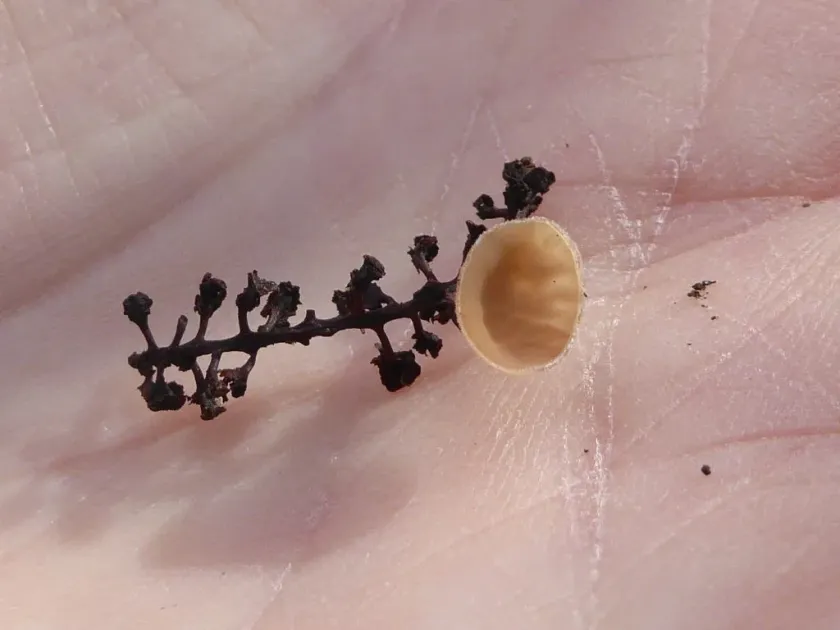
Description
Symptoms
Initial symptoms of the infection appear during the early vegetative stages when the fungus penetrates developing shoots and young leaves.
A characteristic sign is the sudden wilting and blackening of shoot tips, which visually resembles frost damage.
Subsequently, a grayish fungal growth, representing the pathogen's sporulation, may appear on the affected plant parts.
Flowers and fruit buds are also targeted, causing them to dry up and fail to develop into mature berries.
At later stages of development, sclerotia — dense black masses replacing berry tissue — may form on the infected fruits.
Pathogen
The causative agent of the disease is the ascomycete fungus Ciboria caucus, belonging to the Sclerotiniaceae family. It is a highly specialized pathogen that primarily affects plants of the Vaccinium genus.
The life cycle of the fungus is closely linked to the phenological development stages of the host plant. In spring, apothecia develop from sclerotia that have overwintered in the soil.
These apothecia are small, cup-shaped structures on thin stalks that release ascospores into the surrounding air.
The infection spreads via wind and rain splashes, landing on young plant tissues and initiating the primary infection cycle.
The fungus can maintain viability for extended periods in the form of sclerotia, making it extremely resilient to adverse environmental conditions.
Conditions for development
Cool and humid weather conditions during the spring are the most favorable for the development of Ciboria caucus.
High relative humidity promotes the active discharge of ascospores from the apothecia located in the litter or soil surface.
Prolonged rainy periods during the flowering phase significantly increase the probability of mass infection in cranberry bogs.
Poor air circulation within the planting due to overcrowding or lack of pruning creates a microclimate ideal for fungal proliferation.
The presence of infected plant debris from the previous season in the root zone acts as the primary source of annual re-infection.
Why it matters
The economic impact of the disease stems from significant yield losses due to the destruction of the plant's reproductive organs.
Damage to shoots leads to a reduction in the plant's overall vegetative mass, negatively affecting yields in subsequent years.
Massive infection of flowers prevents successful pollination and berry formation, resulting in substantial financial losses.
Infected berries are unsuitable for storage or transport as they decay rapidly, contaminating healthy fruit in the process.
The persistent presence of the pathogen weakens the overall plant immune system, making crops more susceptible to secondary infections.
Protection
The primary control strategy involves strict adherence to agronomic practices, including the removal and destruction of fallen berries and debris.
Mulching the soil surface with a layer of sand or clean substrate is recommended to prevent spores from emerging from the sclerotia.
Thinning the canopy to improve air circulation is a crucial practice to reduce moisture levels around the foliage and flowers.
The application of chemical fungicides during critical windows, such as budding and early bloom, effectively manages spore dissemination.
Proactive monitoring of the fields during spring helps identify disease outbreaks early, preventing the spread of the fungus into an epidemic.
Discussion
No discussions yet — be the first.