
Chrysothrix
Chrysothrix
Description
Symptoms
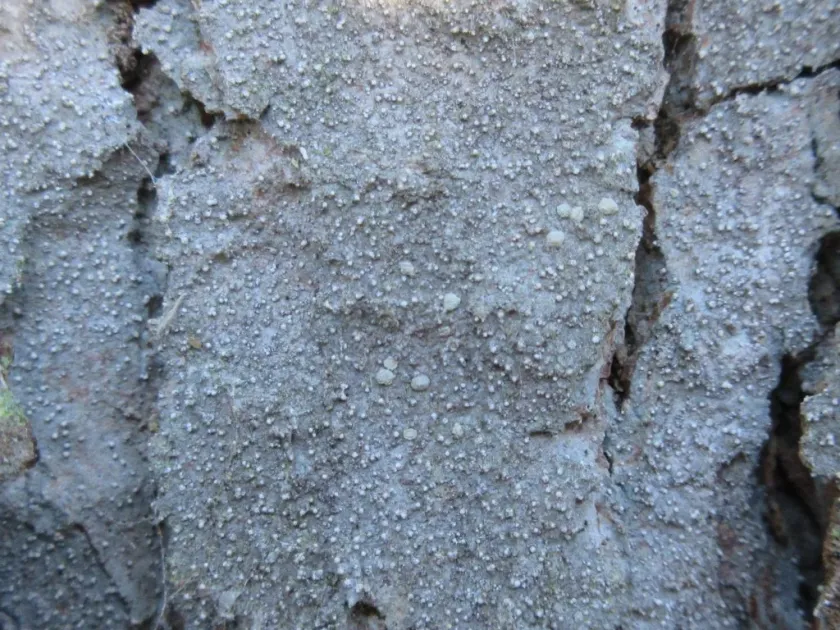
The most prominent sign of Chrysothrix is the presence of a powdery, bright yellow or lemon-colored coating on the trunk and primary branches. The patches appear as if dust or pollen has been spread over the bark.
The affected bark often feels slightly damp to the touch compared to lichen-free sections. Over time, the density of the lichen coverage may cause the bark beneath to become less elastic and prone to micro-cracking.
Unlike foliar diseases, Chrysothrix does not cause leaf spotting, wilting, or yellowing of the foliage. The damage is restricted to the surface of the wood, making it easy to identify visually by its distinctively bright, non-uniform patches.
In wet weather, the color intensity of the lichen increases, making it highly visible. Conversely, during dry spells, the powdery texture might appear slightly faded or flaky.
Upon removing a small patch of the lichen, the bark underneath is typically intact. However, it may be stained a darker color due to the prolonged moisture retained by the lichen layer.
Pathogen
Chrysothrix is a genus of crustose lichens that often colonizes the bark of trees and shrubs. While often perceived by gardeners as a plant disease, it is biologically a symbiotic organism consisting of fungi and algae, which uses the tree merely as a physical substrate.
Unlike pathogenic fungi that infiltrate plant tissues, Chrysothrix remains strictly on the surface of the bark. It does not extract sap or nutrients directly from the tree, making it an epiphyte rather than a true parasite.
The lichen spreads via spores that settle on the rough surfaces of bark. Once established, it grows horizontally, forming powdery or crust-like patches that can cover significant portions of the trunk over many years.
It is important to differentiate this genus from actual bark diseases such as bacterial canker or fungal necrosis. Chrysothrix is generally benign, though its presence indicates that the tree's bark surface is humid and lacks adequate light exposure.
The most recognizable species, Chrysothrix candelaris, is known for its vivid, bright yellow or golden-yellow coloration, which creates a striking contrast against the dark bark of deciduous trees.
Conditions for development
Chrysothrix thrives in high-humidity environments where airflow is restricted. It is commonly found in older, neglected orchards where dense canopy foliage prevents the trunks from drying out effectively.
Shade is a critical factor for its development. The lichen prefers areas protected from direct, intense sunlight, which explains why it is often found on the north-facing sides of trunks or in deeply shaded interiors of tree crowns.
The roughness of the bark is an essential prerequisite. Mature trees with layers of dead, flaky bark provide an ideal anchorage point for lichen spores, allowing the colonies to stabilize and expand.
Poor ventilation within the orchard setup contributes significantly to its spread. Lack of air movement ensures that moisture remains on the bark surface for extended periods, facilitating spore germination.
Furthermore, an accumulation of organic debris or dust on the bark surface acts as an additional nutrient source, creating a micro-habitat that supports the growth of Chrysothrix colonies.
Why it matters
The primary concern regarding Chrysothrix is not the lichen itself, but the environment it creates. Dense lichen coverage acts as a harbor for various garden pests, including scale insects, mites, and beetle larvae that seek refuge in its texture.
The coating can obstruct lenticels, which are the small pores in the bark necessary for gas exchange. Chronic obstruction may lead to localized stress for the bark tissues, although this is rarely lethal.
By retaining moisture, the lichen layer creates conditions favorable for secondary infections by opportunistic pathogenic fungi, which can be much more destructive to the wood than the lichen itself.
From an aesthetic perspective, heavy colonization makes trees appear neglected, which can be a point of concern in commercial orchards or premium landscaping projects.
In young or thin-barked trees, excessive lichen cover might suppress normal bark development and expansion, potentially leading to stunted growth if the infestation is severe enough.
Protection
The most effective physical control method is the manual removal of dead bark and lichen using a stiff brush or a specialized bark scraper. This cleans the surface and eliminates the nesting sites for pests.
Applying a lime wash (whitewash) with copper sulfate is a traditional and highly effective preventative measure. The alkaline environment created by the lime inhibits the growth of lichens.
- Pruning tree canopies regularly to improve light penetration and air circulation.
- Removing dead and damaged branches to keep the tree interior open.
- Applying copper-based fungicides as part of a regular orchard maintenance schedule.
- Maintaining healthy growth through proper irrigation and fertilization.
- Scrubbing trunks during the dormant season to remove spores before they colonize new areas.
Preventative care is the best strategy. By keeping the orchard clean and ensuring that trees are not overcrowded, the conditions necessary for Chrysothrix are largely eliminated.
Regular monitoring during the early spring allows for the detection of small colonies, which can be removed immediately, preventing the large-scale coverage of trunks and limbs.
Discussion
No discussions yet — be the first.