
Spruce needle rust
Chrysomyxa ledi
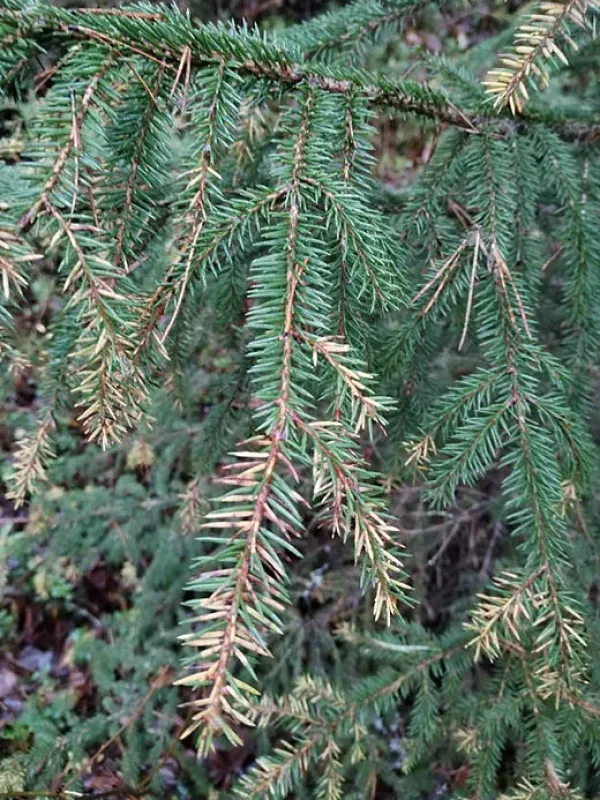
Description
Symptoms
Visible symptoms appear in early summer. Small yellow spots develop on the underside of the new spruce needles, which gradually expand and change color.
Shortly after, raised, bright orange-yellow blisters or pustules emerge in neat rows along the needles. These are the aecia, which eventually rupture to release fungal spores.
Affected needles lose their functionality, turn yellow, become brittle, and drop prematurely. This often results in partial defoliation of the tree.
The disease is most prominent on young trees or the lower branches of mature trees where moisture levels are higher and air circulation is often poorer.
A key diagnostic feature is that the older needles from previous years remain green and healthy, as the fungus almost exclusively attacks the current season's growth.
Pathogen
Spruce needle rust is caused by the fungus Chrysomyxa ledi, a heteroecious parasite. This means its complex life cycle requires two distinct hosts to complete: spruce trees and marsh Labrador tea (Rhododendron tomentosum).
The fungus overwinters as mycelium in the leaves of the Labrador tea plant. During the spring, spores are produced and carried by wind to the young, developing needles of the spruce tree.
Upon infection, the fungus develops orange-yellow fruiting bodies called aecia on the underside of the spruce needles. These structures produce aeciospores which then reinfect the alternate host.
The pathogen is highly specialized, primarily targeting the current year's growth of spruce needles. If the alternate host is absent, the infection cycle is disrupted, preventing the disease from spreading.
The biology of Chrysomyxa ledi is adapted to temperate forest ecosystems where both host species coexist in damp, humid environments.
Conditions for development
High humidity and frequent rainfall during late spring and early summer are the primary environmental drivers for the development and spread of needle rust.
Dense plantings with poor air movement create stagnant, humid microclimates that allow fungal spores to remain viable and germinate on the surface of the needles.
Proximity to Labrador tea (the alternate host) is the single most important factor. If the alternate host is nearby, the risk of recurrent annual infection is extremely high.
Mild temperatures ranging between 15°C and 20°C, combined with dew or rain, provide the ideal window for spore germination and needle penetration.
Low-lying areas with poor drainage or naturally high humidity are "hot spots" for this fungal disease, making them unsuitable for spruce cultivation.
Why it matters
The primary damage is caused by needle drop, which reduces the tree's photosynthetic capacity. This leads to reduced growth rates and overall weakening of the spruce.
For ornamental spruce trees in nurseries or residential landscapes, the loss of needles significantly damages the aesthetic value, often rendering the plants unsellable.
Chronic infection over several years weakens the tree's immune system, making it more susceptible to secondary pests like bark beetles or other opportunistic pathogens.
In young seedlings, heavy infestation can stunt development, leading to deformed branches and reduced cold hardiness during the winter months.
The economic impact involves both the loss of plant material and the recurring costs associated with fungicide applications and maintenance.
Protection
The most effective strategy is the removal of the alternate host (Labrador tea) within a 300-500 meter radius of the spruce planting to break the fungal life cycle.
Ensure proper spacing when planting spruce trees to promote good air circulation, which helps keep needles dry and less hospitable to fungal growth.
During the spring, application of copper-based or systemic fungicides can help protect new growth from infection, provided they are applied before symptoms appear.
Avoid planting spruce in boggy or damp sites where the environmental conditions favor the pathogen and the host plant is likely to be present.
Monitor trees closely in May and June. Early detection allows for immediate intervention, reducing the risk of spores spreading to the rest of the tree canopy.
Discussion
No discussions yet — be the first.