
Spruce needle rust
Chrysomyxa abietis
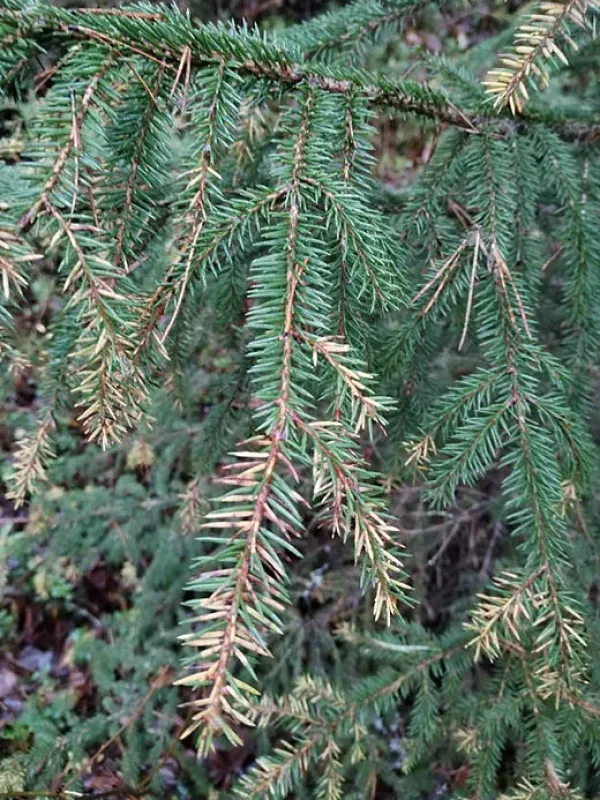
Description
Symptoms
Initial symptoms are characterized by small, yellowish-green spots on the needles. As the infection progresses, these spots expand into distinct, bright yellow to orange-brown bands across the needle surface.
During the spore-bearing phase in summer, raised, cushion-like structures known as aecia erupt through the epidermis of the needles. These structures release powdery orange spores that are easily dispersed by the wind.
Affected needles eventually lose their green color, turn prematurely brown, and wither. This results in significant needle drop, which is particularly evident in the lower and middle portions of the tree crown.
In cases of severe infestation, the tree canopy becomes noticeably thin and sparse. The contrast between the diseased, discolored needles and the healthy new growth of the current season is often very clear.
While the tree may not die immediately, the constant stress from needle loss makes the spruce look sickly and significantly reduces its aesthetic value in garden and forest landscapes.
Pathogen
The causative agent of this disease is the fungus Chrysomyxa abietis, an obligate parasite that specifically targets spruce trees. It is characterized by a life cycle that does not require an alternate host, completing all stages on the spruce itself.
The fungus overwinters as mycelium within the needles that remain attached to the branches. When spring arrives, the mycelium resumes its activity, leading to the production of spores that facilitate the spread of the disease.
Chrysomyxa abietis invades the intercellular spaces of the needle tissue, where it extracts nutrients and disrupts the tree's physiological processes, eventually leading to chlorosis and needle loss.
Spore production is strictly synchronized with the tree's growth season. The development of the fungus is relatively slow compared to other rust pathogens, often taking a full year to express clear symptoms.
Because the fungus is host-specific, it can create localized epidemics within spruce plantations, particularly when environmental conditions remain stable over several years.
Conditions for development
High humidity and prolonged periods of wet, cool weather are the primary drivers of this disease. These conditions are essential for the germination of fungal spores and their successful penetration into the needles.
Poor airflow, often caused by overly dense planting or improper pruning, creates a microclimate within the tree canopy that favors fungal growth. Stagnant, moist air is the perfect breeding ground for the pathogen.
The optimal temperature range for the development of Chrysomyxa abietis is between 15 and 22 degrees Celsius. During this time, the fungus spreads most rapidly across the infected branches.
Trees growing in shaded areas where the foliage remains damp for long periods after rain are at a much higher risk of infection compared to those in open, sunny locations.
Environmental stress, such as air pollution or nutrient deficiencies, weakens the natural resistance of the tree, making it more susceptible to successful colonization by the fungal mycelium.
Why it matters
The primary impact of spruce needle rust is the loss of photosynthetic area due to premature needle drop. This reduction in energy production slows down the tree's growth and overall development.
The disease severely impacts the ornamental value of spruce trees. A thin, sparse crown with discolored needles is generally considered unsightly, leading to significant losses in landscaping and nursery production.
Repeated yearly infections can lead to the dieback of branches, particularly those lower in the crown. Over time, this chronic stress makes the tree vulnerable to secondary pest infestations, such as bark beetles.
In commercial forestry, the infection leads to a reduction in timber yield and overall biomass accumulation. This creates tangible economic losses for forest management companies.
Young, newly planted trees are particularly vulnerable, as a heavy infection can lead to their death before they have a chance to establish themselves properly in the environment.
Protection
Sanitation is the most critical control measure. Removing and destroying infected branches, as well as collecting and burning fallen needles, is essential to reduce the inoculum load for the following season.
Chemical control involving copper-based fungicides or systemic products can be effective if applied at the correct time. The first application should coincide with bud break to protect the new, susceptible needles.
Proper silvicultural practices, including adequate spacing and thinning of plantations, improve air circulation. This helps ensure that the needles dry out quickly, creating a hostile environment for the fungus.
Maintaining tree health through proper fertilization and irrigation helps the spruce develop a stronger immune response. A healthy tree can better tolerate light infestations and recover more effectively.
When planning new landscapes, opting for spruce species or cultivars that show higher resistance to needle rust is the most sustainable way to manage the disease in the long run.
Discussion
No discussions yet — be the first.