
Chromocyphella muscicola
Chromocyphella muscicola
Description
Symptoms
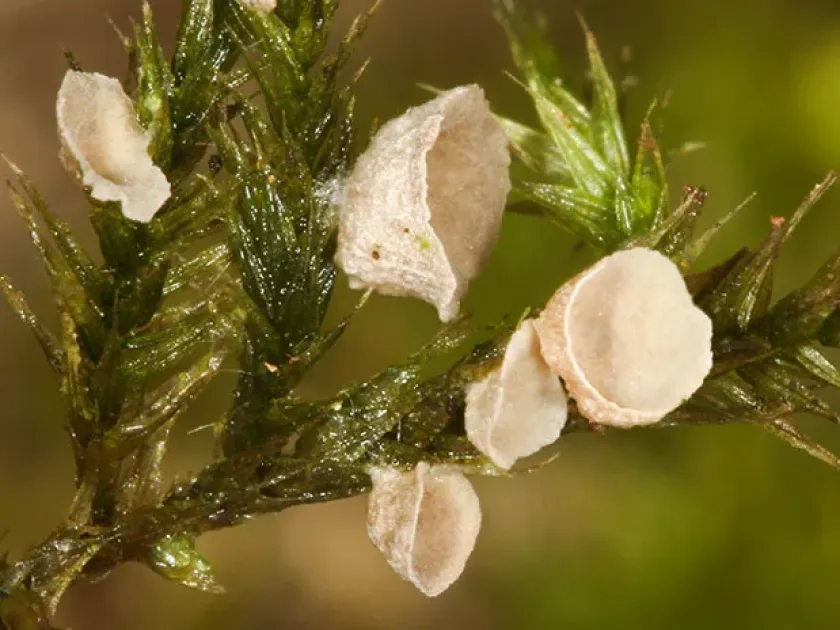
The most visible signs of Chromocyphella muscicola are small, saucer-shaped fruiting bodies, typically ranging from a few millimeters in diameter.
These fruiting bodies often display grayish, yellowish, or pale brown colors, making them easy to spot against the vibrant green of healthy moss.
Affected moss colonies often show chlorosis, where the bright green color fades and eventually turns brown. The infected areas lose their structure and vitality.
A fine, web-like white mycelium may sometimes be observed covering the base of the moss stems, indicating advanced stages of fungal colonization.
In severe cases, entire patches of moss disintegrate into decayed matter, resulting in gaps within the ornamental or natural moss carpet.
Pathogen
Chromocyphella muscicola is a specific basidiomycete fungus belonging to the Inocybaceae family. It is distinct in its ecological role as a specialized moss-inhabiting fungus.
This pathogen does not infect common agricultural crops, as it has a very narrow host range restricted to bryophytes (mosses). It thrives by utilizing the organic tissues of moss colonies.
The fungus produces small, cup-shaped fruiting bodies that emerge from the moss surface. These structures are the main reproductive units capable of discharging spores.
Its life cycle is closely tied to the host's physiological state and environmental humidity. The mycelium acts as an invasive network that absorbs nutrients directly from the moss host.
Scientific studies classify this fungus as a minor pathogen that highlights the biological complexity of damp environments in gardens and forest ecosystems.
Conditions for development
High humidity and consistent moisture levels are essential for the growth and reproduction of this fungal species.
The fungus prefers shaded, poorly ventilated areas where moisture persists on surfaces for extended periods, such as tree bark or moist soil.
Moderate temperatures allow the fruiting bodies to emerge and sporulate effectively. Extreme drought, however, typically inhibits the fungal development.
Organic debris accumulation often serves as a secondary substrate that helps the fungus survive and spread to neighboring moss populations.
Poor airflow in greenhouses or dense garden plantings creates the micro-environments required for the pathogen to thrive and establish itself.
Why it matters
The harm caused by Chromocyphella muscicola is primarily aesthetic. It does not pose a threat to food crops or vascular plant health.
In landscaping and terrarium design, the loss of moss coverage can significantly impact the visual quality and the integrity of a design.
The presence of the fungus indicates an overly damp environment, which can eventually lead to secondary issues like root rot in sensitive companion plants.
While the direct destruction of moss is limited, the accumulation of spores may indicate an imbalance in the garden's micro-ecosystem.
Overall, the damage is localized and rarely requires intensive chemical intervention unless the moss is a highly valued component of the garden display.
Protection
Effective management begins with improving drainage and air circulation in areas where moss is unwanted or becoming overgrown with fungus.
Reducing shade through proper pruning of trees and shrubs helps lower humidity levels, making the environment less hospitable for the pathogen.
Physical removal of infected moss patches is an effective way to minimize the local spore load and prevent further spread.
Avoiding excessive irrigation and ensuring that surfaces dry out between watering sessions are key preventive measures.
Chemical control is generally unnecessary; focusing on cultural practices that restore environmental balance is the preferred and most sustainable approach.
Discussion
No discussions yet — be the first.