
Chromelosporium rot
Chromelosporium ochraceum
Description
Symptoms
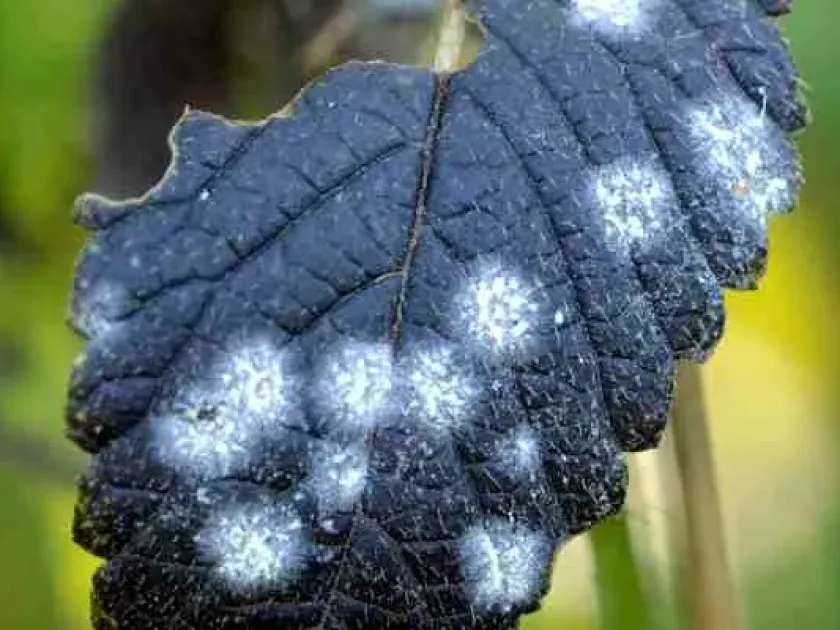
The most prominent sign of the disease is the development of a loose, cotton-like growth on the surface of mushrooms or plant tissues. Initially, these colonies are white, but they mature into characteristic ochre or brown colors.
The infected tissues undergo softening and deformation, which leads to a total loss of commercial quality. Affected areas are often covered with a powdery spore mass that is easily detached upon physical contact.
During the early stages of infection, symptoms may appear as localized spots, making early detection difficult. As the mycelium develops, the affected area expands rapidly, covering significant portions of the substrate or neighboring mushrooms.
A typical feature of this rot is the darkening of tissues at the contact point with the fungal mycelium. This is caused by the secretion of enzymes by the fungus, which break down cell walls for nutrient acquisition.
In advanced stages of the disease, a distinct odor often accompanies the tissue decay. The affected plant material quickly loses its turgor and enters a state of necrosis, making it completely unsuitable for use.
Pathogen
The causal agent of this disease is the imperfect fungus Chromelosporium ochraceum, which belongs to the Deuteromycetes group. It is primarily known as a specialized pathogen or saprotroph that affects cultivated mushroom species.
The mycelium of the fungus is characterized by rapid growth, forming distinct fluffy colonies on the surface of the host tissue or substrate. Over time, these colonies develop a characteristic yellowish or ochre-colored appearance due to mass conidial production.
The life cycle of the pathogen is closely tied to the presence of high humidity and nutrient-rich organic matter. Reproduction occurs through asexual sporulation, enabling the fungus to colonize new areas at an impressive rate.
The biology of Chromelosporium ochraceum is extensively studied in the context of commercial mushroom production, where it poses a significant threat to industrial operational cycles. The pathogen is highly adaptable to various temperature regimes within indoor environments.
The dispersal of conidia occurs mainly through air currents, contaminated tools, or human activity. Microscopic spores are easily carried by airflows, making the infectious background a constant risk in indoor farming facilities.
Conditions for development
The development of Chromelosporium rot is directly dependent on the microclimate within the facility. High relative humidity, typically exceeding 85-90%, creates the most favorable conditions for the pathogen's growth.
A temperature range between 18 and 25 degrees Celsius is optimal for the metabolic activity of Chromelosporium ochraceum. Under these thermal conditions, the fungus reaches its maximum growth rate.
Poor ventilation and air stagnation are critical risk factors that facilitate the disease. Areas with low air circulation maintain high moisture levels, which are ideal for spore germination and colony colonization.
The quality of the substrate plays a major role in the intensity of the disease outbreak. Improper preparation or the use of non-sterile components significantly increases the susceptibility of the crop to infection.
Excessive watering and the presence of water droplets on surfaces can trigger rapid colonization. Additionally, temperature fluctuations may weaken the host's vigor, making it more vulnerable to the pathogen.
Why it matters
The primary harm caused by this disease is the complete loss of the commercial value of the crop. Infected specimens quickly deteriorate and decompose, resulting in direct economic losses for the producer.
Chromelosporium rot is capable of spreading very quickly, and if left uncontrolled, it can lead to the total loss of an entire harvest batch. This creates a risk of large-scale contamination within the production area.
The pathogen can survive in substrate residues and on equipment surfaces for extended periods, acting as a source of chronic infection. This necessitates rigorous and frequent disinfection protocols.
The disease suppresses beneficial microflora and competes for resources, further damaging the growth environment. Furthermore, fungal metabolites can accumulate in the substrate, hindering subsequent cultivation efforts.
Infection is often accompanied by secondary invaders, which exacerbate the destruction of plant tissues. This makes it impossible to utilize even the seemingly unaffected parts of the crop for any purpose.
Protection
A robust defense strategy begins with strict adherence to sanitary and hygienic standards. Regular disinfection of facilities, equipment, and storage containers is essential to minimize the infectious spore load.
Maintaining optimal microclimate parameters, especially humidity control, is crucial. Modern ventilation systems are necessary to prevent air stagnation and the formation of high-humidity zones.
Ensuring substrate quality through reliable thermal processing or pasteurization is a fundamental preventive measure. This eliminates the pathogen's spores at the start of the cultivation cycle.
Upon detection of the first symptoms, affected items must be immediately removed along with a portion of the surrounding substrate to prevent secondary spore dispersal.
Chemical control must be applied in accordance with strict regulations and environmental standards. Preventive treatments are generally more effective than attempting to mitigate an established outbreak.
Discussion
No discussions yet — be the first.