
Choiromyces gangliformis
Choiromyces gangliformis
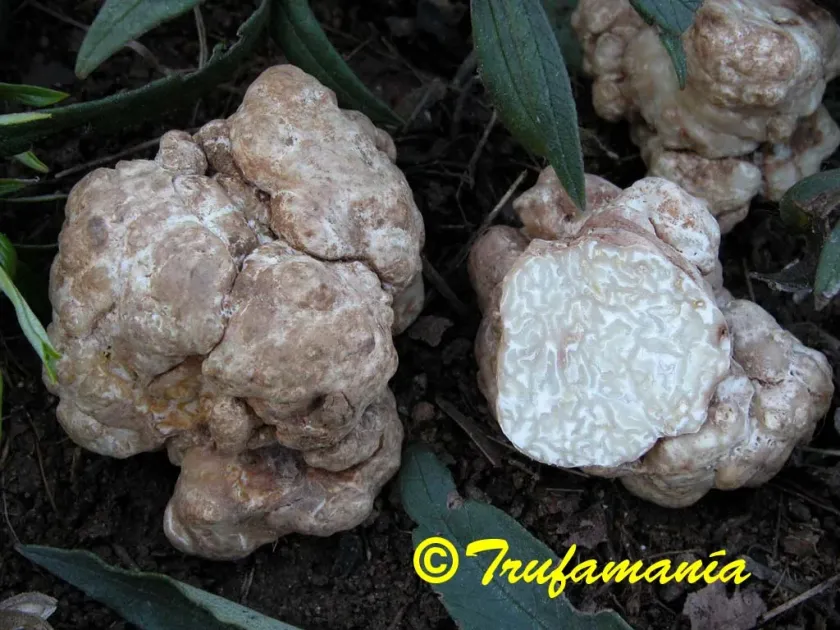
Description
Symptoms
Symptoms often manifest as stunted growth and a general decline in plant vigor, which may initially be misidentified as environmental or soil-related issues.
Physical examination of the root system reveals characteristic root distortions, including small nodules or gall-like swellings, which are tell-tale signs of the pathogen's presence.
The affected root tissues tend to turn dark, become brittle, and are frequently colonized by secondary decay organisms, leading to root rot.
Above-ground foliage often exhibits chlorosis, wilting during peak sunlight hours, and a noticeable lack of development during the vegetative phase.
- Stunted plant growth
- Distorted root development
- Root node and gall formation
- Foliar chlorosis and wilting
Pathogen
The causal agent is the fungal organism Choiromyces gangliformis, a soil-inhabiting ascomycete known for its interaction with plant root systems.
As a hypogeous fungus, it develops its structures beneath the soil surface, making visual field detection quite difficult until significant root damage has occurred.
The fungus persists in the soil profile as resting structures, waiting for favorable environmental conditions and the proximity of a suitable host plant root.
It interferes with plant physiology by colonizing the root tissues, causing physiological stress that mimics nutrient deficiency or moisture stress.
Scientific research highlights its role in localized soil ecosystems, where it can act as a persistent challenge for intensive crop production systems.
Conditions for development
High soil moisture levels act as a primary driver for the development and spread of Choiromyces gangliformis in agricultural fields.
Moderate temperatures are ideal for the metabolic activity of the fungus, facilitating rapid colonization of available host roots during the spring or autumn.
Poorly drained and compacted soils provide the low-oxygen, high-moisture environment that the pathogen prefers for successful infection and survival.
Repeated cropping of susceptible host plants in the same area leads to an accumulation of inoculum, significantly increasing the pressure of the disease.
Agricultural practices, such as moving equipment between infested and clean fields, contribute to the dispersal of contaminated soil particles and fungal spores.
Why it matters
The economic impact of this disease is primarily felt through significant yield reduction, as the damaged root systems cannot support optimal plant development.
In cases of high pathogen density, the crop may suffer from extensive plant death, requiring replanting and resulting in increased production costs.
Marketable quality is severely compromised, as the physiological impact on the crop leads to poorly formed produce that fails to meet quality standards.
The disease reduces the overall resilience of the crop, making it more susceptible to additional environmental stresses and further attacks by other pathogens.
Long-term contamination of the soil can limit the choice of crops that can be successfully grown in a particular field, forcing shifts in rotation plans.
Protection
Implementing a strict crop rotation schedule is the most effective cultural practice to reduce the build-up of the pathogen in the soil over time.
Improving soil aeration and drainage through proper land preparation helps to create an environment less favorable for fungal proliferation.
Sourcing and planting only certified, disease-free seeds or transplants is a critical preventative measure to exclude the pathogen from new areas.
Biological control agents, particularly beneficial soil microbes, can be used to outcompete the fungus and reduce its colonization capacity on roots.
Sanitation practices, including the cleaning of tillage equipment, are essential to prevent the spread of the pathogen to non-infested parts of the farm.
Discussion
No discussions yet — be the first.