
Green elfcup
Chlorociboria aeruginosa
Description
Symptoms
The primary symptom of infection is the dramatic discoloration of the wood tissue. The timber turns a distinct, deep blue-green or turquoise shade that remains permanent, even after the wood has dried.
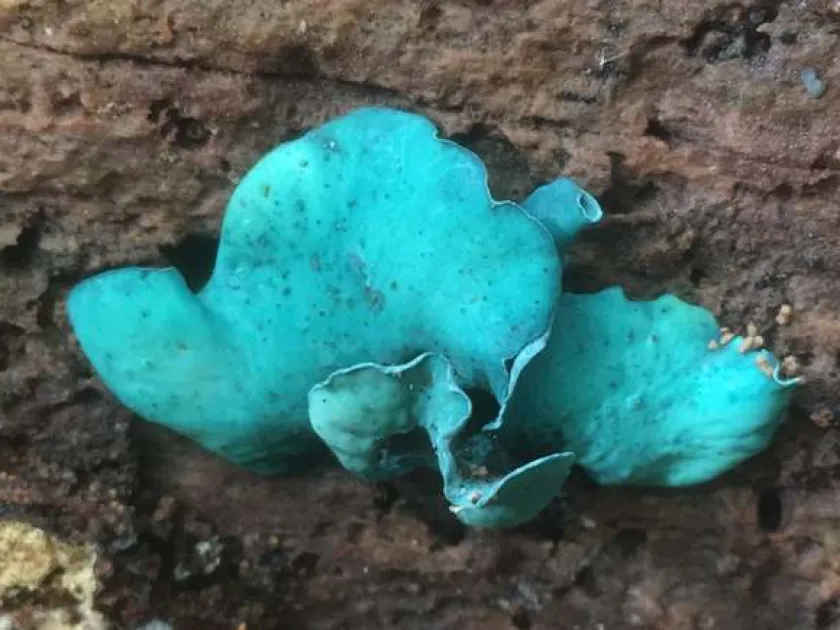
Small, cup-like, bright blue or green apothecia appearing on the surface of fallen logs or stumps are a clear sign of colonization. These structures signify that the fungus has reached its reproductive maturity.
Under a microscope, one can observe the hyphae dense within the wood's cells, vessel elements, and fibers. The external surface might show minimal changes initially, but the inner tissues are already deeply stained.
As the fungal activity progresses, the wood loses some of its structural integrity. While it does not turn into dust immediately, the degradation of cellulose and lignin softens the wood over time.
- Bright turquoise or green wood staining.
- Small, disk-shaped apothecia on the wood surface.
- Gradual loss of wood hardness and structural strength.
Pathogen
The causal agent is the fungus Chlorociboria aeruginosa, an ascomycete belonging to the group of saprotrophic organisms. This fungus is widely recognized for its ability to colonize and decay dead or decaying hardwood.
The fungus produces a specific pigment known as xylindein, which infiltrates the wood fibers. This chemical reaction is responsible for the characteristic vibrant blue-green color that identifies the presence of the pathogen.
The mycelium resides within the woody substrate, performing the function of breaking down complex organic compounds. The fungus remains largely internal until it is time to produce fruiting bodies.
These fruiting bodies, known as apothecia, are tiny, cup-shaped structures that emerge on the surface of the wood. They are typically seen in groups and represent the sexual reproductive phase of the fungus.
Spores are dispersed through wind and insect activity, settling on bark wounds or wood ends, where they germinate and begin the process of colonizing the new host material.
Conditions for development
The development of Chlorociboria aeruginosa is highly dependent on environmental moisture levels. The fungus thrives in shaded, humid environments where wood remains damp for extended periods.
Inadequate ventilation and poor airflow in forest understories or timber storage areas provide ideal conditions for the fungus to establish and spread across the wood surface.
Deciduous wood, such as oak, beech, and alder, serves as the preferred host. The presence of cracks, splits, or mechanical injuries on the bark significantly increases the chances of colonization.
Optimal growth temperatures for the mycelium range from +15°C to +22°C. While growth slows down significantly in cold winter weather, the fungus remains alive within the substrate until conditions improve.
Increased precipitation events act as a catalyst for sporulation. Rain and high humidity help trigger the release of spores, enabling the fungus to spread to nearby organic matter and logs.
Why it matters
The primary harm caused by the Green Elfcup is the significant devaluation of timber and wood products. The deep pigmentation makes the wood unsuitable for high-quality furniture making or decorative joinery.
Although not a primary killer of healthy, living trees, the fungus acts as a decay agent that weakens the structural integrity of deadwood. This creates an entry point for other decay-causing organisms.
In the timber industry, discolored wood is often classified as a lower grade or considered waste, leading to substantial financial losses for sawmill owners and timber producers.
The altered structure of the wood makes it more hygroscopic, which increases its susceptibility to moisture-related issues, including warping and additional colonization by competing fungi.
Overall, the fungus reduces the durability and longevity of wood materials used in construction, especially if the timber was not properly seasoned or treated with preservatives before being put into service.
Protection
Proper sanitation in forest areas, including the removal of deadwood and stumps, is the most effective way to reduce the concentration of spores in the immediate environment.
For stored timber, it is crucial to maintain dry conditions. Stacking wood in well-ventilated areas with protection from rain and soil moisture prevents the fungal mycelium from becoming active.
Chemical preservation is an essential step for high-value wood. Applying industrial fungicides or protective wood stains creates a barrier that prevents fungal spores from establishing on the surface.
If the fungus is detected on living trees, affected parts should be carefully pruned or removed to stop the spread. Any remaining wounded areas should be sealed with specialized wound dressings.
Regular inspections of timber inventories allow for the early detection of discoloration, enabling quick removal of infected pieces before the infestation spreads to the entire stack of wood.
Discussion
No discussions yet — be the first.