
Cherry lethal yellows
Cherry lethal yellows phytoplasma
Description
Symptoms
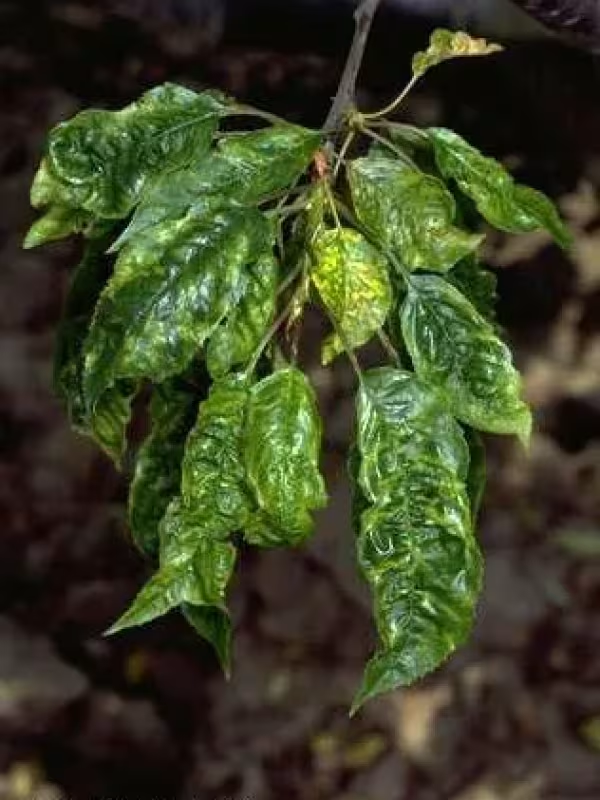
The first symptoms typically appear as premature leaf yellowing and rolling during the mid-summer period. Unlike seasonal senescence, this yellowing starts on individual branches and progressively affects the entire canopy.
Fruit set is severely impacted, resulting in small, malformed, and tasteless cherries. These fruits often drop prematurely, significantly reducing the commercial yield and marketability of the orchard's production.
A distinctive symptom is the formation of witches' brooms, where buds sprout abnormally to form dense, weak clusters of shoots. This growth pattern is a classic sign of systemic phytoplasma infection in stone fruits.
Internal bark inspection reveals necrosis in the cambial layer. Brown streaks or discolored areas can be observed, indicating that the vascular tissue has been compromised, preventing water and nutrient uptake.
The disease eventually leads to the complete death of the tree. Even with optimal irrigation and fertilization, the tree loses its ability to recover, showing a rapid decline in vigor that culminates in permanent wilting.
Pathogen
Cherry lethal yellows is caused by phytoplasmas, which are specialized bacteria lacking cell walls. These pathogens belong to the Candidatus Phytoplasma prunorum group and are known for colonizing the phloem tissue of host plants.
The phytoplasma resides in the sieve elements, where it interferes with the translocation of photoassimilates. By disrupting nutrient transport, the pathogen effectively starves the tree, leading to decline and eventual mortality.
Transmission occurs primarily through insect vectors, such as leafhoppers and psyllids. These insects ingest the phytoplasma while feeding on infected sap and transmit it to healthy trees during subsequent feeding events.
Propagation through infected grafting material is another critical pathway for the spread of the disease. Using scions from diseased trees ensures systemic infection of the new rootstock and scion, leading to rapid spread within a nursery.
These pathogens are highly host-specific but can survive in the roots of perennial plants, which acts as a reservoir. Once established, the pathogen is extremely difficult to eliminate from the host organism.
Conditions for development
Environmental conditions that favor the activity of insect vectors play a significant role in the spread of the disease. Warm, humid weather encourages high populations of leafhoppers and psyllids.
Mild winters allow vectors to overwinter successfully in the soil or protected debris. This increases the pathogen pressure at the beginning of the growing season when new, tender growth is most vulnerable.
The presence of wild host plants, particularly perennial weeds in and around the orchard, facilitates the persistence of the phytoplasma. These reservoirs allow the disease to circulate even in the absence of cultivated hosts.
High-density orchard environments limit airflow and increase contact between insect vectors and trees. In such settings, a single infected tree can become the epicentre for a rapid, localized outbreak.
Drought stress, improper pruning, or root damage can lower a tree's resistance. Stressed trees are more susceptible to colonization by phytoplasmas, showing symptoms earlier and more aggressively than healthy specimens.
Why it matters
The primary economic impact is the total loss of the tree's productive lifespan. Infected orchards experience declining yields, which often forces growers to pull out entire blocks of productive trees to curb the spread.
Loss of fruit quality makes the remaining harvest unsalable, leading to significant financial deficits. The costs associated with tree removal and replanting represent a major setback for fruit producers.
International and local quarantine regulations restrict the movement of nursery stock from infested regions. This severely impacts the trade of cultivars and complicates the expansion of new orchard projects.
Increased expenditures on insecticide applications to control vectors add to the overall production costs. Despite these efforts, the disease often remains persistent due to the difficulty of completely eliminating the insect population.
The loss of biodiversity in orchards and the potential for the pathogen to spread to other stone fruit species add a layer of complexity to regional disease management and orchard safety.
Protection
Management must be centered on the use of clean, certified planting material. Sourcing trees from nurseries that strictly follow phytoplasma-free certification programs is the most effective preventative measure.
- Regular monitoring for early detection of symptomatic trees.
- Prompt roguing and destruction of infected trees to remove reservoirs.
- Application of insecticides targeted at known insect vectors.
- Rigorous weed control to eliminate alternative plant hosts.
- Establishment of buffer zones to protect new orchard plantings.
Once a tree displays symptoms, it should be removed along with its entire root system to prevent root grafting transmission. Leaving a diseased tree in the orchard serves as a continuous source of infection for insects.
Integrated Pest Management (IPM) strategies, including biological control and judicious chemical use, are essential to minimize vector populations throughout the season.
Maintaining optimal tree vigor through balanced nutrition and adequate irrigation can help trees withstand the initial stages of infection, though it does not provide a cure for the disease itself.
Discussion
No discussions yet — be the first.