
Cheilymenia fimicola
Cheilymenia fimicola
Description
Symptoms
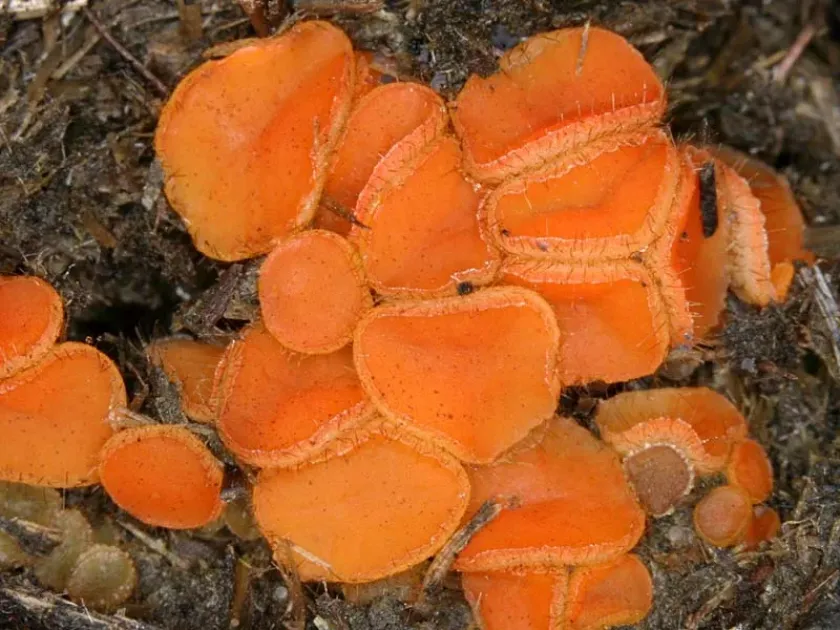
The most visible sign of Cheilymenia fimicola is the sudden appearance of bright orange or reddish, saucer-shaped discs on the soil surface.
These fruiting bodies are small, typically ranging from 2 to 10 millimeters in diameter. The edges of the discs are often adorned with fine, hair-like structures.
The fruiting bodies often appear in clusters, coating the substrate in a vibrant, color-shifting blanket after irrigation or periods of high humidity.
When moist, the surface of the disc appears glossy or gelatinous. As the substrate dries, the fruiting bodies may shrink and become less vibrant.
Early colonization of the soil by the mycelium is generally invisible to the naked eye, as it remains embedded deep within the organic material until the fruiting phase.
Pathogen
Cheilymenia fimicola is an ascomycete fungus belonging to the Pyronemataceae family. It is a common saprotrophic fungus that thrives on decaying organic matter.
Unlike parasitic fungi that attack living tissues, this organism is primarily a decomposer. It is frequently associated with dung and nitrogen-rich soil substrates.
The fungal mycelium spreads throughout the substrate, secreting enzymes to break down cellulose and other organic polymers. This process is essential in nature for nutrient cycling.
Reproduction occurs through spores released from cup-shaped structures known as apothecia. These spores are lightweight and easily dispersed by air currents or splashing water.
Biologically, the fungus is highly adapted to environments with high organic content, making it an indicator species for specific soil conditions.
Conditions for development
The primary prerequisite for the growth of this fungus is the presence of manure or insufficiently composted organic matter. It thrives where organic fertilizers are abundant.
High humidity is essential for the formation of visible apothecia. The fungus prefers environments with moisture levels exceeding 70-80% in the substrate.
In greenhouses, its appearance is a clear sign that the soil mix was not properly sterilized or contained raw manure. Proper composting is the key to preventing its establishment.
Optimal temperatures for mycelial expansion range from +18°C to +25°C. Well-aerated but moist soils provide the perfect environment for its rapid development.
The pH of the substrate also influences its growth, with neutral to slightly alkaline environments being particularly suitable for this species.
Why it matters
Cheilymenia fimicola does not directly infect healthy plants, as it lacks the physiological mechanisms to penetrate live host tissue.
However, it acts as a significant competitor for nutrients in the soil. It rapidly consumes nitrogen and other elements, potentially reducing the availability of these nutrients for crops.
In mushroom cultivation, this fungus is considered a troublesome weed that can overgrow the casing layer, outcompeting the cultivated mushroom mycelium.
The metabolic byproducts of the fungus may alter the substrate pH, which could indirectly cause stress to delicate young seedlings in greenhouses.
Excessive growth of the fungus can also lead to water retention issues and microclimatic changes that favor the development of actual plant pathogens like root rots.
Protection
The most effective control strategy is the use of sterilized, high-quality soil media. Heat treatment (steaming) at temperatures above +70°C effectively eliminates spores.
Ensure that all manure used for composting is fully processed. Proper aeration during the composting process is critical to kill off mycelial fragments of undesirable fungi.
Maintain proper greenhouse ventilation to prevent stagnant, high-humidity pockets near the soil surface. Regulating irrigation is also vital to reduce humidity levels.
If fruiting bodies appear, remove them manually along with the top layer of substrate to limit the release of spores into the environment.
- Thermal sterilization of soil substrates.
- Use of well-composted organic fertilizers.
- Improved greenhouse airflow and ventilation.
- Precise water management to avoid over-saturation.
- Mechanical removal of apothecia.
Discussion
No discussions yet — be the first.