
Ceriporiopsis gilvescens
Ceriporiopsis gilvescens
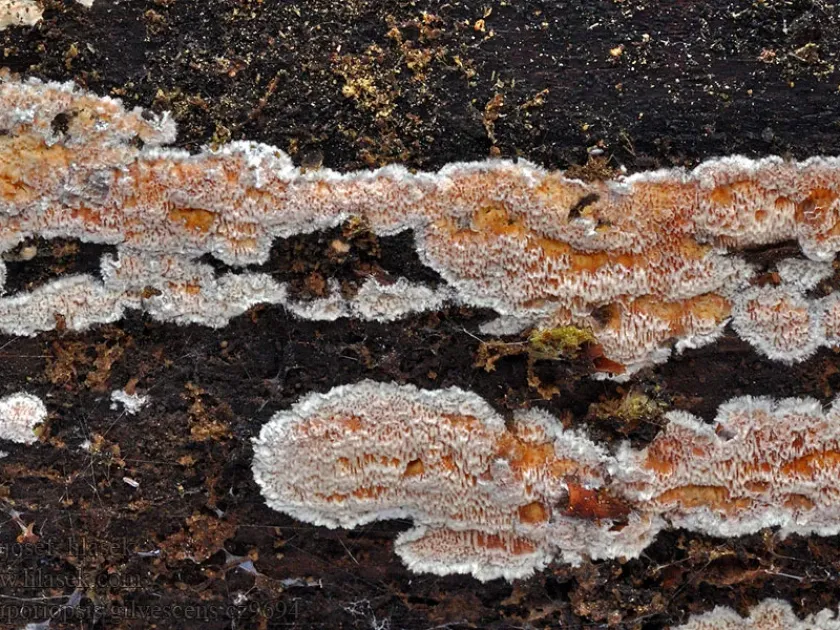
Description
Pathogen
The causal agent of this wood decay is the fungus Ceriporiopsis gilvescens, which belongs to the Basidiomycota division. It is a saprotrophic organism that specializes in breaking down wood tissue in various hardwood species.
This fungus causes white rot by decomposing both lignin and cellulose. This enzymatic breakdown leads to the loss of structural integrity, effectively reducing the wood to a soft and fibrous state.
The fruiting bodies of the fungus are typically resupinate, meaning they grow flat against the surface of the wood. They display a characteristic yellow or creamy color, which is a key identifying feature.
Its life cycle relies on spore dispersal via air currents. Once the spores land on an exposed or weakened area of the tree, they germinate and form a network of mycelium that permeates the timber.
While often found on deadfall and decaying logs, it can also opportunistically colonize stressed or damaged standing trees, playing an active role in nutrient cycling.
##signs##The primary symptom is the emergence of resupinate, pore-bearing fruiting bodies on the bark or exposed wood. These structures are often seen as thin, spreading patches with a yellowish hue.
Affected wood displays a bleached, whitish appearance. Its internal structure becomes soft and fibrous, easily separating into small fragments when subjected to physical pressure.
Visual inspection often reveals significant internal rot within the trunk. Sometimes, the bark may begin to peel away or loosen in areas where the fungal mycelium has become particularly dense.
The presence of a distinct mushroom-like or earthy odor is another sign that the fungus is actively decomposing the wood. This scent becomes more pronounced in damp conditions.
During peak spore production, a fine dust-like substance can be observed near the fruiting bodies, indicating that the fungus is spreading and potentially impacting neighboring trees.
##conditions##Ceriporiopsis gilvescens thrives in high-humidity environments and moderate temperatures, typically ranging from 15°C to 25°C. Prolonged wet weather significantly accelerates the fungal growth rate.
The fungus usually gains entry through physical damage to the tree bark. Wounds caused by storms, wildlife, or human activities provide the necessary path for the spores to reach the inner wood.
Densely planted forests with poor air circulation create stagnant, humid pockets that favor the survival and colonization of the fungus on tree trunks.
A high accumulation of coarse woody debris, such as logs and branches on the forest floor, keeps the local spore count high, increasing the risk of transmission to healthy trees.
Trees already weakened by drought, insect attacks, or root diseases have reduced natural resistance, making them highly susceptible to infection by this wood-decay fungus.
##harm##The fungus causes severe internal wood decay, which compromises the tree's mechanical strength. This significantly increases the risk of structural failure and windthrow.
In the timber industry, infection leads to a substantial loss of product value. Wood degraded by white rot cannot be used for high-quality structural or aesthetic applications.
From an ecological perspective, while the fungus aids in breaking down dead organic matter, its spread to healthy stands can alter the forest composition by killing vulnerable trees.
In urban landscapes, infected trees present a significant safety hazard. The decay process can lead to the sudden collapse of limbs or entire trees, endangering people and property.
If left unmanaged, a localized outbreak can lead to the widespread degradation of forest health, requiring costly intervention to remove the infected timber.
##control##The most effective strategy is proactive forest sanitation. This includes the timely removal of infected trees and logging debris that could harbor the fungus and serve as a source of spores.
Preventing physical damage to the trunks during forest operations is crucial. Minimizing the number of open wounds on the tree bark reduces the chances of successful fungal invasion.
Maintaining appropriate tree spacing is essential to ensure proper air circulation and decrease the humidity around the trunks, creating a less hospitable environment for fungal development.
Applying fungicidal treatments to pruning wounds on high-value trees or in garden settings can help protect the vulnerable wood from infection until the tree can naturally seal the wound.
Tools used during the removal of diseased wood should be sanitized with an appropriate disinfectant to prevent the mechanical transfer of spores to healthy trees.
Discussion
No discussions yet — be the first.