
Ceriporia mellita
Ceriporia mellita
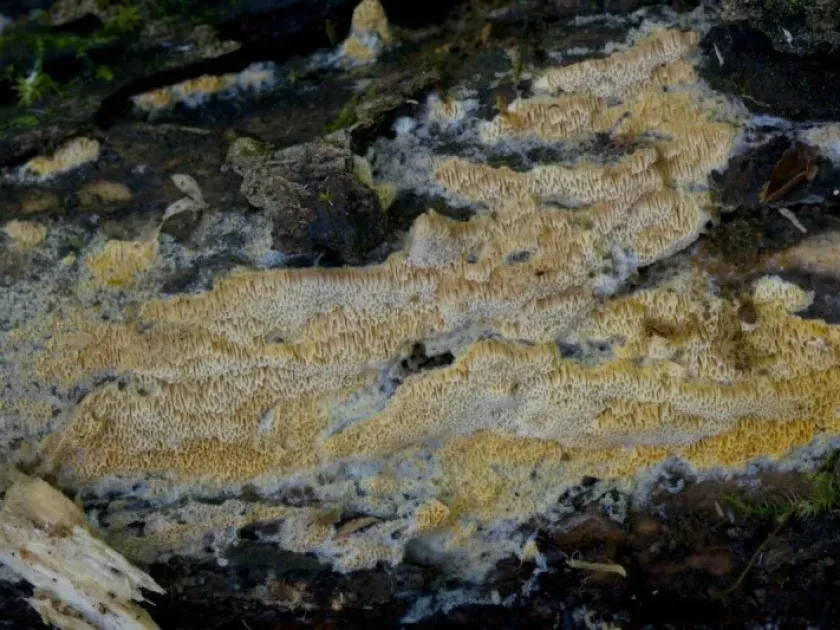
Description
Symptoms
The primary symptom of Ceriporia mellita infection is the presence of its characteristic fruiting bodies on the bark of infected trees. These structures often display a honey-colored appearance, making them recognizable to trained eyes.
Internally, the disease causes advanced white rot within the wood. If a tree is sectioned, one can observe bleached, fibrous areas where the lignin has been degraded by the fungal mycelium, compromising the wood's structural integrity.
External signs include the general decline of the tree, characterized by canopy thinning, chlorosis of leaves, and premature leaf drop. These symptoms are non-specific but often indicate a failure in the vascular system of the plant.
Bark cracks and deep wounds often serve as external indicators of entry points for the pathogen. In advanced stages, localized swelling or depressions on the trunk may appear, indicating internal decay and tissue death.
In some cases, the tree may exhibit epicormic shoots as a stress response to the infection. While these sprouts are common in stressed trees, their sudden appearance in combination with fungal growth is a strong indicator of a systemic health issue.
Pathogen
Ceriporia mellita is a wood-decay basidiomycete fungus. It functions primarily as a saprotroph, recycling organic matter, but it can act as a facultative parasite when tree host defenses are weakened by stress or physical injury.
The fungus produces spores that travel via wind, water, or insect vectors. Upon landing on a suitable substrate—specifically exposed wood tissue—the spores germinate to form a mycelial network that colonizes the host.
The enzymatic profile of this fungus is specialized for the degradation of complex lignocellulose structures. By secreting specific enzymes, the fungus breaks down the rigid cell walls of wood, providing nutrients for its own vegetative growth.
The life cycle of the pathogen is closely tied to humidity levels and temperature. Once the mycelium is established, it can persist within the heartwood for many years, slowly expanding its influence through the tree's internal vascular network.
Biological research highlights Ceriporia mellita as an important member of the woodland ecosystem's decomposer community. Its ability to efficiently digest dead organic matter makes it a powerful force in the carbon cycle of forest floors.
Conditions for development
High humidity and moisture are the most critical factors for the survival and spread of Ceriporia mellita. The fungus thrives in shaded, cool environments where evaporation is low and wood moisture content remains high.
Physical injuries, such as broken branches from wind storms or improper pruning, provide the essential access points for the fungus. Without an open wound or exposed sapwood, the pathogen struggles to breach the tree's natural protective barriers.
A temperature range of 15°C to 25°C provides optimal conditions for the growth of the fungal mycelium. While the fungus can tolerate broader ranges, these temperatures allow for maximum enzymatic activity and colonization speed.
The presence of necrotic tissues within a grove creates a high-pressure environment for disease spread. Deadwood or logs acting as reservoirs allow the pathogen to maintain a significant spore load, increasing the risk to neighboring trees.
Poor silvicultural practices, such as excessive stand density or lack of sanitation, contribute to the spread of the disease. Dense canopies prevent proper aeration, keeping humidity trapped and facilitating fungal reproduction and movement.
Why it matters
The primary damage caused by this fungus is the structural weakening of the wood. The decomposition of lignin significantly reduces the tensile and compressive strength of the trunk, leading to hazardous trees prone to sudden stem breakage.
Vascular disruption is another major impact. As the fungus colonizes the xylem, it hinders the upward movement of water and nutrients. This inevitably leads to a decline in tree vigor, resulting in stunted growth and dieback of the crown.
Fruit production is severely affected in orchard environments. An infected tree shifts its physiological focus toward stress management rather than reproductive efforts, leading to reduced harvest quality and quantity.
The pathogen can turn an aesthetically pleasing tree into a safety liability within a few seasons. Once heartwood decay becomes advanced, traditional corrective measures become ineffective, often necessitating the removal of the entire tree.
In a landscape or forest context, the harm is cumulative. An undetected infection can turn a single tree into a source of inoculum that threatens the long-term health and stability of the entire surrounding stand.
Protection
Sanitation is the most effective management strategy. Regularly removing and destroying infected tree material prevents the pathogen from producing and releasing new spores into the environment, effectively breaking the disease cycle.
Pruning should be performed with extreme care, ideally during the dormant season. Always use sterilized tools to prevent the accidental transfer of Ceriporia mellita spores from diseased sections to healthy wood surfaces.
Wound protection is vital for prevention. Applying professional-grade wound sealants to major pruning cuts or accidental physical injuries can create a temporary physical barrier that inhibits spore germination.
Promoting tree health through appropriate fertilization, mulching, and irrigation builds host resistance. A tree with a strong, active defense system is better equipped to compartmentalize initial fungal incursions and prevent colonization.
In nursery or high-value landscapes, fungicide applications (such as copper-based sprays) may be used as a preventative measure on vulnerable surfaces. However, these treatments should always be part of an integrated pest management plan.
Discussion
No discussions yet — be the first.