
Carbonea vitellina
Carbonea vitellina
Description
Symptoms
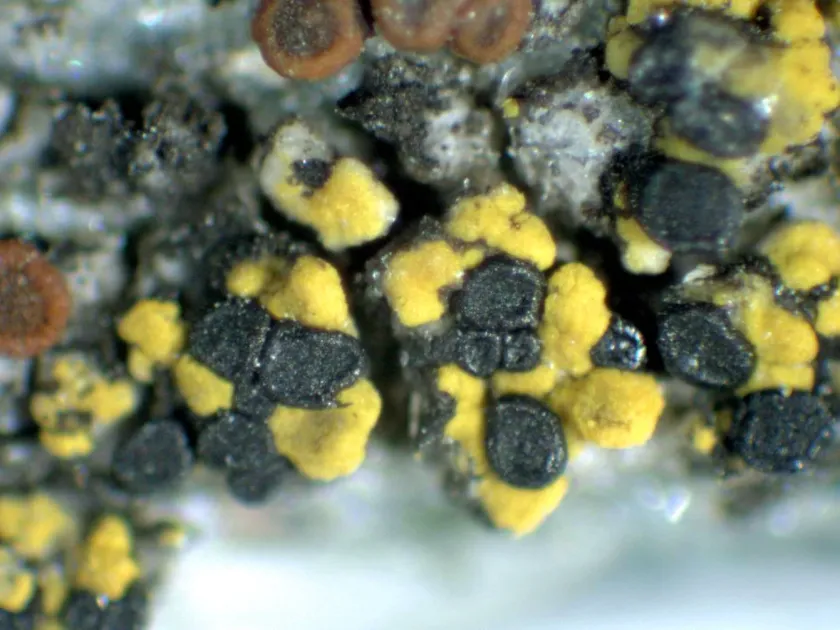
The most prominent sign of infection is the development of distinct black spots on the lichen surface, which correspond to the fungal fruiting bodies (apothecia).
Infected areas typically show a loss of pigmentation, as the lichen host loses its natural vibrancy and turns pale or discolored due to physiological stress.
The thallus surface becomes physically compromised. Increased brittleness and uneven texture are common observations in the vicinity of the fungal colonies.
In advanced stages of infection, localized necrosis occurs. The host tissue may begin to disintegrate, leading to the gradual reduction of the lichen colony's total area.
Diagnostic confusion is possible because other lichenicolous fungi exhibit similar symptoms. Microscopic verification of spore morphology is essential for precise identification.
Pathogen
Carbonea vitellina is a specialized lichenicolous fungus, taxonomically classified within the Ascomycota phylum. It functions as an obligate parasite of specific lichen species, primarily those belonging to the genus Candelariella.
The fungus is strictly limited to inhabiting the thallus of its host. It does not infect vascular plants or agricultural crops, making it a subject of interest primarily in ecological and mycological studies.
The vegetative mycelium of the fungus permeates the interior layers of the lichen thallus. This structural invasion allows the fungus to derive necessary nutrients directly from the lichen tissues.
The reproductive organs, known as apothecia, are diagnostic in identifying the fungus. These structures appear as small, dark, and often carbonized discs scattered across the surface of the infected lichen.
The biological cycle of Carbonea vitellina is highly sensitive to external environmental factors. Spore dispersal is optimized during periods of high humidity and moderate temperatures.
Conditions for development
Moisture availability is the primary driver of Carbonea vitellina development. The fungus exhibits peak activity during humid conditions typical of temperate autumn and spring seasons.
Temperature range influences the metabolic rate of the fungus. While it can withstand varying conditions, moderate temperatures are most conducive to rapid mycelial growth.
Spore dissemination relies on abiotic vectors, including wind currents and splash dispersal from raindrops, which facilitate the colonization of new hosts.
Host density is critical for spread; dense, continuous lichen mats provide an ideal environment for the fungus to propagate across the entire colony quickly.
Anthropogenic environmental changes, such as shifts in atmospheric quality, can alter the susceptibility of the lichen host, thereby impacting the fungus's colonization success.
Why it matters
The damage caused by Carbonea vitellina is ecological rather than economic. It negatively impacts lichen populations, which are vital components of many ecosystems.
By infecting host lichens, the fungus acts as a population regulator, limiting the abundance and spatial distribution of sensitive lichen species in nature.
There is no economic harm to agriculture, forestry, or horticulture, as the pathogen lacks the evolutionary machinery to parasitize plants.
The decline of lichen populations due to fungal infection can disrupt local biodiversity, affecting organisms that rely on lichens for shelter or food.
Ultimately, the impact is a natural part of ecosystem dynamics, where fungal parasitism maintains a balance between host species and their consumers.
Protection
There are no established agricultural control measures for Carbonea vitellina, as it does not constitute a threat to crops or cultivated plants.
In scientific or conservatory contexts where lichen health is a priority, management involves maintaining environments with low humidity to prevent fungal proliferation.
Chemical fungicides are generally not recommended, as they are toxic to the lichen hosts themselves and would disrupt the ecosystem balance.
Biological management focuses on minimizing human impact on natural habitats to ensure the long-term stability of native lichen communities.
- Avoid excessive manual wetting of lichen substrates.
- Minimize environmental stress factors on the lichen host.
- Maintain stable conditions for lichen preservation.
Discussion
No discussions yet — be the first.