
Pale-pruinose chanterelle
Cantharellus subpruinosus
Description
Symptoms
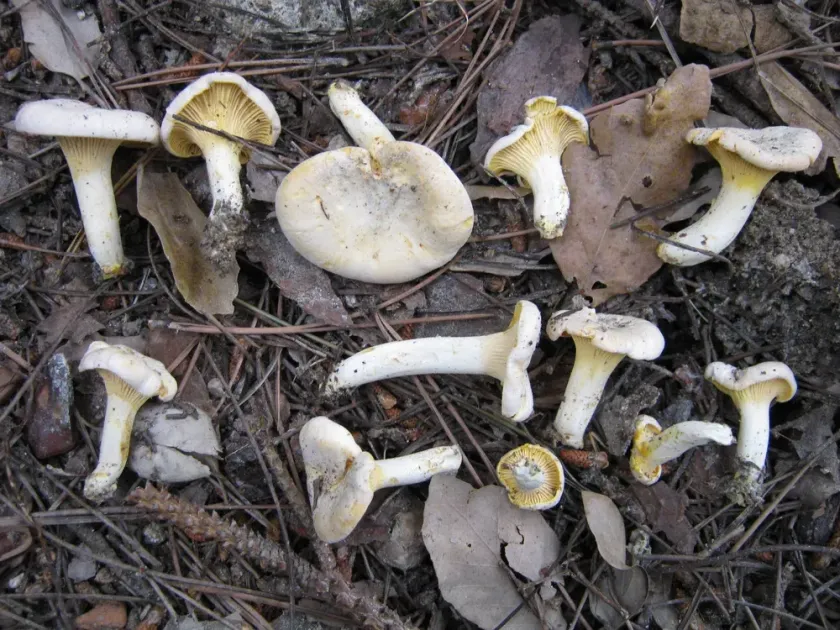
The fruiting body is typically funnel-shaped with firm, decurrent gill-like folds running down the stem. The cap color varies from pale yellow to light ochre.
A specific identifying feature is the whitish "frosted" or pruinose layer on the cap of young specimens, which helps to distinguish it from related species.
The flesh is dense and whitish, possessing a characteristic fruity, apricot-like scent. Spore deposits are pale cream or pinkish-white.
Growth occurs in leaf litter, typically in the proximity of hardwoods. It does not cause wilting, spots, or necrosis on vegetation, as it does not parasite host tissues.
The presence of this fungus is often visible only during the fruiting phase when the basidiocarps emerge from the ground following periods of moisture.
Pathogen
Cantharellus subpruinosus is not a plant pathogen or a disease. It is an edible fungus belonging to the Cantharellaceae family that lives in a mutualistic mycorrhizal relationship with trees.
The fungus does not infect crops or cause plant diseases. Instead, it forms beneficial symbiotic associations with the root systems of various hardwood species, such as oak and beech.
It is characterized by a distinctive pruinose (powdery) layer on the cap surface, which is a natural morphological trait and not a symptom of an infection or pathological process.
In biological terms, the species serves as a vital component of the forest soil ecosystem, aiding in mineral nutrient exchange between the soil and its host trees.
Scientific literature classifies this mushroom strictly as a beneficial symbiote, which is devoid of any phytopathogenic properties or mechanisms that could damage live plant tissue.
Conditions for development
This species requires specific soil conditions, usually acidic to neutral soils rich in organic matter. Sufficient moisture and good soil aeration are essential for the mycelium.
It thrives in temperate climate zones, particularly in deciduous forests where the temperature remains between 15°C and 22°C during the development period.
The fungal mycelium relies heavily on the root exudates of its host trees, establishing a symbiotic link that is vital for both the tree's health and the mushroom's reproduction.
Disturbance of the forest floor or the use of heavy agricultural chemicals can severely impact the survival of the mycelium, as the species is sensitive to soil pollution.
Mass production of fruiting bodies generally occurs during late summer and autumn after steady rainfall has replenished soil moisture levels.
Why it matters
Cantharellus subpruinosus poses no threat to agricultural crops, horticultural plants, or forestry. It is not an infectious agent and causes no economic loss.
The fungus does not have the enzymatic capacity to break down living plant matter; it strictly functions as a helper, facilitating nutrient uptake for its host trees.
From an agronomical perspective, this mushroom is an indicator of healthy soil biology and environmental stability in adjacent forest ecosystems.
No agricultural harm has been attributed to this species. Its presence is generally welcomed by ecologists and foresters as a sign of high biodiversity.
There are no recorded instances of this fungus spreading to cultivated fields or negatively affecting plant productivity in any managed setting.
Protection
No control measures are necessary because the pale-pruinose chanterelle is not a pest. Management should focus on preservation rather than eradication.
Preventative actions for the forest environment include minimizing the use of synthetic fungicides and avoiding deep mechanical soil cultivation that could damage the fungal network.
Maintaining a healthy ecosystem with diverse tree species ensures the survival of this and other mycorrhizal fungi, which in turn support forest resilience.
Monitoring the health of these mushroom populations can provide insights into the overall quality and chemical balance of the forest soil.
Eradication protocols do not exist for this species, as it is a beneficial part of the ecosystem that requires no management or intervention.
Discussion
No discussions yet — be the first.