
Violet-dusted chanterelle
Cantharellus lilacinopruinatus
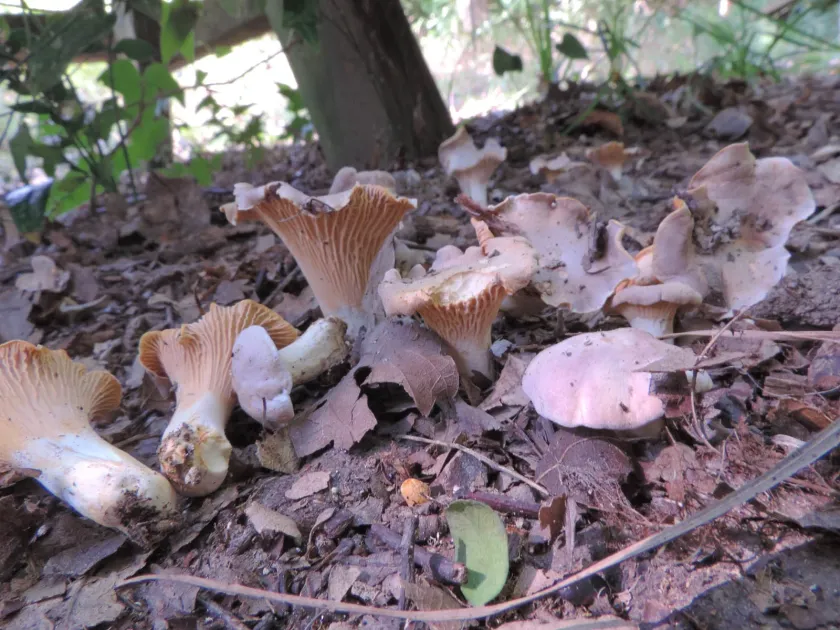
Description
Pathogen
It is crucial to emphasize that Cantharellus lilacinopruinatus is not a plant disease or a pathogen of agricultural crops. This organism belongs to the biological kingdom Fungi, specifically the phylum Basidiomycota.
This species is a typical mycorrhizal symbiont that forms mutually beneficial relationships with the root systems of various tree species. It does not infect plants; instead, it aids in their nutrient uptake.
The species was described relatively recently and separated into a distinct taxonomic group due to specific morphological features that differentiate it from the common chanterelle.
The biology of this fungus is deeply integrated into forest ecosystems, where it receives carbohydrates from tree roots in exchange for water and minerals supplied from the soil substrate.
Therefore, classifying this object as a "disease" is an agronomic inaccuracy, as it displays no parasitic activity toward cultivated plants.
Conditions for development
The development of fruiting bodies of this species depends directly on the presence of symbiotic relationships with specific tree species, most commonly found in coniferous or mixed forests.
The fungus favors moderately moist soils with sufficient organic matter and leaf litter, which are essential for the formation and spread of the mycelium.
Temperature regimes play a decisive role in seasonal activity: stable warmth and periodic rainfall during late summer and autumn are necessary for successful fruiting.
Soil acidity also influences mycelial distribution, and the species is well-adapted to the specific forest soils characteristic of various European regions.
Any anthropogenic disruption to the forest community, such as drainage or the logging of host trees, leads to the disappearance of this fungus's mycelium from the area.
Discussion
No discussions yet — be the first.