
Camillea leprieurii
Camillea leprieurii
Description
Symptoms
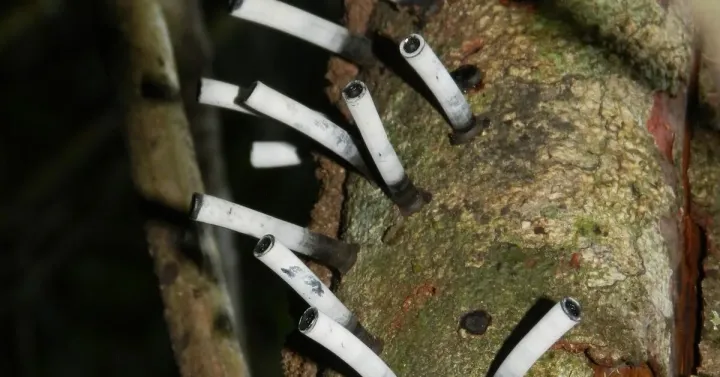
The primary symptom of infection is the emergence of small, raised black stromata on the surface of tree trunks or branches. These structures are often clearly visible against the lighter background of the bark.
Affected areas of the bark frequently show signs of necrosis, leading to cracking, desquamation, and eventual exposure of the underlying wood. This exposure creates further entry points for secondary pathogens.
Tree hosts may exhibit premature chlorosis or yellowing of the foliage. This physiological distress is a consequence of the fungus disrupting the vascular system, which hinders the transport of essential water and nutrients.
In advanced cases, dieback of branches becomes evident. The affected wood loses its mechanical strength and becomes brittle, often resulting in limb breakage during adverse weather conditions like high winds.
- Appearance of hard, black stromata on the bark.
- Localized necrosis and splitting of the bark.
- Premature yellowing and leaf loss on infested branches.
- Structural decay and brittleness of infected wood.
- Widespread dieback of canopy foliage in severe infections.
Pathogen
Camillea leprieurii is a fungus classified within the Ascomycota phylum. It primarily functions as a saprotroph or weak parasite, specializing in colonizing the bark and wood tissues of various tree species.
The fungus produces distinctive reproductive structures known as stromata, which appear as hard, carbonaceous, black mounds embedded in the host's bark. These structures serve as protection for the developing spores against environmental stress.
Dissemination of Camillea leprieurii occurs through the release of ascospores into the atmosphere, which are then transported by wind and rain. This allows the pathogen to colonize new hosts across significant distances effectively.
The life cycle of this organism is closely tied to the host's physiology. It breaks down wood components to obtain nutrients, which over time compromises the structural integrity of the affected plant host.
Research into this fungal species is essential for understanding the dynamics of forest ecosystems, particularly in tropical and subtropical regions where it is most prevalent.
Conditions for development
The development of Camillea leprieurii is heavily influenced by high relative humidity. Frequent rainfall and persistent moist conditions are the primary drivers for spore germination and colonization.
Optimal temperatures for this fungus typically fall within the warm range, characteristic of tropical environments. Constant warmth allows for rapid metabolic activity and continuous growth of the mycelium.
Poor aeration in dense forest stands or improperly managed plantations creates microclimates with stagnant air. This prevents bark from drying out after rain, significantly increasing the probability of fungal infection.
Trees subjected to environmental stress—such as prolonged drought or physical injury—show reduced natural defenses. These stressed plants are far more susceptible to initial colonisation by the fungus.
The presence of woody debris and fallen logs on the forest floor serves as an inoculum source. These reservoirs keep the fungal population high, facilitating the spread of the pathogen to healthy living trees.
Why it matters
The most significant damage caused by this pathogen is the structural degradation of the wood. This compromises the safety and stability of the tree, creating risks of limb failure or whole-tree collapse.
Growth suppression is a major consequence for younger trees, which often experience reduced biomass accumulation and potential mortality if the infection remains unchecked for extended periods.
From an economic standpoint, Camillea leprieurii poses a threat to timber production. Infested wood lacks the quality required for industrial processing, leading to substantial economic loss for forestry enterprises.
By weakening the host's overall resistance, the fungus acts as a precursor to other pest infestations and diseases. This cumulative impact often accelerates the decline and senescence of the tree.
In ornamental and urban forestry, the presence of diseased trees diminishes the aesthetic value of landscapes. The costs associated with tree removal and management significantly impact public maintenance budgets.
Protection
The foundation of management lies in strict sanitary practices. Regularly inspecting stands and removing infected wood or dead trees is crucial to reducing the fungal inoculum in the local environment.
Promoting good forest hygiene by clearing fallen debris helps break the life cycle of the pathogen. Maintaining optimal stand density also improves airflow, reducing the time bark remains wet.
In high-value areas, pruning infected branches and treating the resulting wounds with appropriate fungicidal pastes can prevent the pathogen from penetrating the heartwood of the tree.
Cultivating tree species well-suited to the local climate ensures higher baseline resilience. Healthy plants with intact bark barriers are significantly more capable of resisting fungal invasion.
Early detection programs are essential for effective intervention. By monitoring the forest periodically, foresters can identify localized outbreaks and mitigate the spread before it becomes a widespread epidemic.
Discussion
No discussions yet — be the first.