
Caloplaca crenulata
Caloplaca crenulata
Description
Symptoms
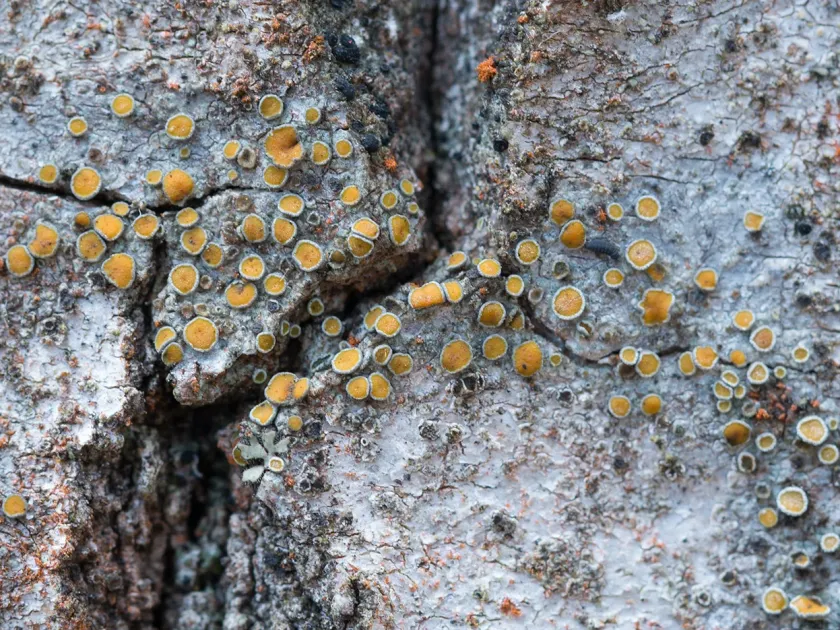
Caloplaca crenulata is a crustose lichen characterized by bright yellow-orange or reddish patches that form on the surface of tree bark.
These patches often appear as small, granular crusts that eventually merge to cover larger areas of the trunk or branches.
The edges of the lichen thallus show a distinct lobed or crenulated structure, which is a key diagnostic feature for identification.
This lichen is most commonly found on the bark of older trees, especially those with rough surfaces that can trap moisture and debris.
During the moist season, the coloration of the lichen becomes more vivid, making it very easy to spot against the dark bark of fruit trees.
Pathogen
Caloplaca crenulata is not a pathogen but a lichenized fungus that lives in a symbiotic relationship with green algae.
It acts as an epiphyte, utilizing the bark of the tree solely as a substrate for physical support and colonization.
While it does not feed on the tree sap, its establishment indicates a slow-growing or aging tree surface that has remained stable for a long time.
Reproduction occurs via spores produced in small, circular structures called apothecia, which are scattered across the thallus surface.
The fungal component of the lichen provides protection and mineral absorption, while the algae supply necessary carbohydrates via photosynthesis.
Conditions for development
The development of Caloplaca crenulata is strictly dependent on high ambient humidity and moderate light availability.
Orchards with poor ventilation and dense canopy cover are particularly prone to colonization by this type of lichen.
Long periods of moisture on the bark surface are required for the spores to germinate and establish a stable thallus.
It thrives in areas with low air pollution, making its presence an indicator of relatively clean atmospheric conditions.
Trees with nutrient deficiencies or those that are stressed by environmental factors tend to be colonized more rapidly.
Why it matters
Although it is not a parasitic infection, the lichen can indirectly harm the tree by creating a persistent micro-environment of high moisture.
Dense layers of lichen can block the lenticels (pores on the bark), which might slightly interfere with the tree's gas exchange processes.
The lichen crust provides a perfect hiding spot for various insect pests like scale insects, which can then proliferate undetected.
The moisture trapped under the lichen can promote the growth of opportunistic fungi that actually attack and damage the bark tissue.
Significant coverage suggests that the tree's natural defense mechanisms are weakened, necessitating professional orchard management.
Protection
Mechanical removal using a wire brush or scraper is the most direct and effective method for clearing lichen from branches.
Applying a protective lime wash to the trunks after cleaning helps to prevent re-colonization and improves bark sanitation.
Pruning is essential to open the canopy, increasing light exposure and airflow, which naturally discourages lichen growth.
Early spring spraying with iron sulfate solutions is a standard horticultural practice to dehydrate and remove lichens from trunks.
- Maintain proper tree vigor through balanced fertilization and hydration.
- Perform regular inspections of tree trunks for early signs of lichen spread.
- Promote an environment that encourages fast drying of bark after rainfall.
Discussion
No discussions yet — be the first.