
Caloplaca
Caloplaca
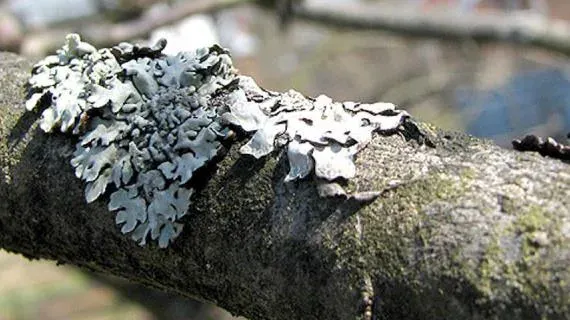
Description
Symptoms
Caloplaca is a genus of crustose lichens that are often mistaken for a pathogenic plant disease. Visually, they appear as bright, usually orange, yellow, or reddish crusts or rosettes that are tightly attached to the bark of trees.
Unlike typical fungal infections, Caloplaca does not penetrate deep into plant tissues and does not form centers of rot. The affected bark areas look like dry, hard patches that may crack over time, but the tree itself remains perfectly healthy.
Most often, lichen colonies are found on the trunks and skeletal branches of old fruit trees. They are particularly visible during periods of high humidity when the lichen thallus becomes brighter and more intensely colored.
The development of Caloplaca visually changes the texture of the bark, making it rough and uneven. These lichens can cover significant areas of the trunk, completely masking the natural color and structure of the wood surface.
It is important to distinguish between lichen colonies and actual bark necrosis caused by bacteria or pathogenic fungi. Caloplaca can be easily scraped off the surface without leaving ulcers or deep damage to the cambium layer.
Pathogen
Caloplaca is not a plant pathogen in the biological sense. It is a symbiotic organism consisting of a fungus (mycobiont) and an alga or cyanobacterium (phycobiont) that uses tree bark solely as a substrate for attachment.
These lichens are not parasites: they do not feed on the host plant's sap and do not secrete toxins that destroy plant cells. Their relationship with the tree is one of epiphytic coexistence, where the tree serves only as a physical support.
The fungal component of Caloplaca can synthesize specific secondary metabolites, including anthraquinones, which give the lichen its characteristic bright color. These substances also protect the organism from excessive solar radiation.
Caloplaca reproduces via spores dispersed by wind or raindrops. Once landing on a suitable surface with sufficient humidity and light levels, the spores germinate, gradually forming a new lichen colony.
Biologically, this organism is considered an indicator of the site's ecological condition, as many lichen species are sensitive to air purity and humidity levels in the agroecosystem.
Conditions for development
Optimal conditions for Caloplaca growth include high relative humidity and moderate light. Lichens often aggressively colonize dense, unpruned tree crowns where air circulation is poor and moisture remains trapped for long periods.
Neglected orchards that lack regular sanitation and rejuvenation pruning create an ideal microclimate for epiphytes. Lichens prefer the bark of trees that have natural cracks, crevices, and rough surfaces.
The age of the tree is an important factor for colonization. On old, coarse bark with many dead scales, lichens can establish themselves and grow much more easily than on the smooth bark of young saplings.
The increased acidity of the bark of certain tree species can promote the development of specific Caloplaca varieties. Lichens also thrive in environments where the tree is generally stressed or its growth processes are slowed down.
Lack of regular bark care, such as trunk cleaning and whitewashing, creates a favorable background for the accumulation of lichen spores and the gradual formation of a continuous cover on the stems.
Why it matters
While Caloplaca is not a pathogen, excessive lichen growth on the bark can indirectly harm a fruit tree's condition. Dense colonies create conditions that retain excess moisture, which can trigger the growth of mold and decay-causing microorganisms.
The lichen layer can become a refuge for overwintering stages of pests such as scale insects, mites, and various small insects. By hiding under the lichen layer, pests gain protection from temperature fluctuations and predatory insects.
A thick layer of lichens may contribute to the clogging of lenticels, through which the tree performs gas exchange. This is especially relevant when the trunk is completely covered, which could theoretically slow down metabolic processes in the surface bark tissues.
The appearance of an orchard heavily affected by lichens reduces its aesthetic appeal and the market value of the timber. Experienced gardeners view the presence of lichens as a signal that the tree requires extra care and rejuvenation.
Caloplaca does not have a direct lethal effect on healthy trees, but it serves as an indicator that the tree is weakened or is growing in conditions of poor aeration and excessive humidity.
Protection
The primary control method is an agrotechnical approach focused on improving the tree's health. Regular thinning of the crown improves light penetration and ventilation, making the trunk unsuitable for lichen growth.
Mechanical cleaning of trunks to remove lichens is the most effective measure. Using special scrapers or stiff brushes, one can safely remove the growth without damaging the living bark tissues. It is important to carry out this procedure during the dormant season.
Applying lime wash or specialized whitewashing mixtures based on lime and copper sulfate helps suppress spore development and disinfect the bark surface.
To combat established colonies, the use of iron sulfate solutions (in concentrations of 3-5%) is permissible, as they possess significant fungicidal and algicidal properties, effectively suppressing lichen communities.
- Crown thinning to improve ventilation.
- Mechanical cleaning of bark to remove growths.
- Use of lime-based garden whitewash.
- Sanitary treatment of trunks with iron sulfate solution.
- Ensuring optimal water balance and tree nutrition.
Discussion
No discussions yet — be the first.