
Calonectria variabilis
Calonectria variabilis
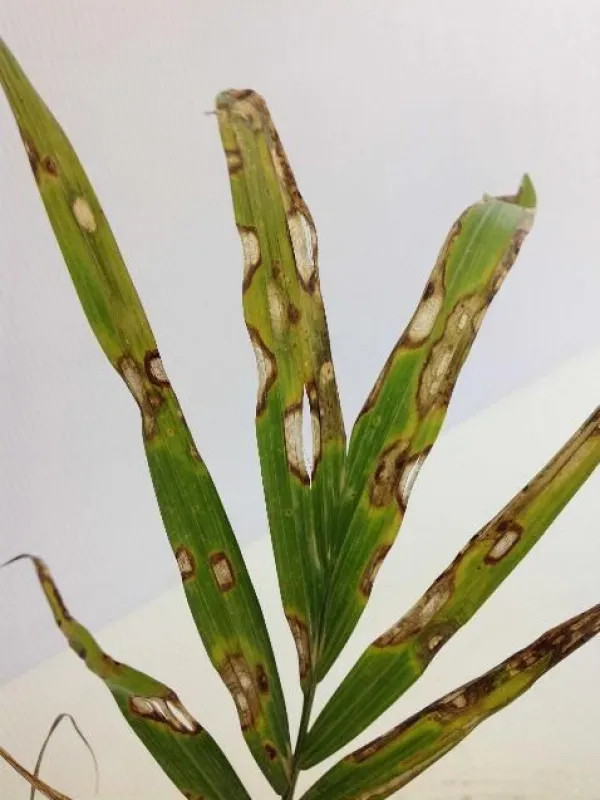
Description
Symptoms
The primary symptoms of Calonectria variabilis infection involve the appearance of necrotic leaf spots that gradually expand, often forming irregular patterns across the leaf surface. These lesions may be bordered by yellow haloes, signaling active fungal colonization of the tissue.
Infected shoots frequently show signs of wilting and drooping, even when soil moisture is adequate. As the disease progresses, young stems may become brittle, leading to a general collapse of the plant's structural integrity.
Under high humidity conditions, a sparse layer of spores appears on the undersides of leaves or on affected stems. This whitish or pinkish growth is the reproductive stage of the fungus and is easily transmitted by splashing water or air currents.
Severe infestations result in the death of apical buds and branches, causing significant defoliation. The loss of leaves weakens the plant's photosynthetic capacity, leading to a visible decline in overall vigor and health.
In cases of root or stem base infections, the tissues may develop dark, sunken lesions. This often leads to the destruction of the vascular system, resulting in rapid chlorosis followed by the death of the entire plant.
Pathogen
Calonectria variabilis is a pathogenic fungus belonging to the order Hypocreales. It is a highly aggressive organism known to infect a wide range of woody ornamentals and forest tree species.
The fungus survives as dormant structures or mycelium in soil, plant debris, and occasionally on seeds. This resilience makes it a difficult pathogen to eliminate completely from an agricultural environment.
It reproduces through both asexual conidia and sexual structures, which allows it to adapt to various environmental pressures. The movement of these spores is facilitated by rain splash, overhead irrigation, and contaminated tools used in nursery operations.
Once the fungus makes contact with a host, it penetrates through natural openings like stomata or via wounds caused by mechanical damage. Once inside, the fungus secretes enzymes that degrade cell walls, allowing the mycelium to spread rapidly.
Due to its broad host range, including Eucalyptus species, Calonectria variabilis poses a continuous threat to international trade and large-scale plant production systems where biodiversity is limited.
Conditions for development
The development of Calonectria variabilis is highly dependent on humidity levels. Sustained high relative humidity above 85% provides the necessary moisture for spores to germinate and infect plant tissues efficiently.
Temperatures ranging between 20°C and 28°C are optimal for the fungus to thrive. These moderate conditions, often found in greenhouses or during warm rainy seasons, accelerate the infection cycle significantly.
Poor ventilation in enclosed growing spaces leads to stagnant air pockets where moisture remains on the foliage for extended periods. This persistence of leaf wetness is a primary driver for the initiation of infection sites.
Plants under environmental stress, such as improper fertilization or poor light exposure, are significantly more susceptible to infection. Stress weakens the natural defenses, allowing the fungus to establish itself much faster.
High plant density exacerbates the spread of the pathogen by creating a microclimate that prevents airflow and promotes leaf-to-leaf contact, which facilitates the transmission of conidia throughout the crop.
Why it matters
The main impact of Calonectria variabilis is the widespread mortality of seedlings and young plants in nursery settings. This results in massive economic losses for producers and disrupts supply chains for forestry and landscaping.
Infected plants suffer from stunted growth and reduced vigor, rendering them unfit for sale or transplanting. The cosmetic damage caused by necrotic spots also decreases the commercial value of ornamental stock.
The pathogen can destroy entire batches of nursery stock, as it spreads rapidly through water irrigation systems. If not addressed, the infection can become endemic in a greenhouse facility, necessitating expensive cleaning and sterilization.
In forest plantations, the disease causes crown dieback, reducing the growth rate and long-term timber quality. This impacts the forest ecosystem's health and lowers the overall productivity of the plantation.
The presence of the fungus often triggers strict quarantine regulations, which can restrict the movement of nursery stock and impose significant legal and economic burdens on the growers affected by the outbreak.
Protection
Effective management begins with strict sanitation practices. All infected plant material must be promptly removed, bagged, and destroyed to prevent the further release of fungal spores into the nursery environment.
Maintaining adequate spacing between plants and ensuring proper airflow are critical cultural practices. It is recommended to avoid overhead irrigation, as this is the most common way for spores to spread between plants.
Chemical control using systemic fungicides, such as those in the benzimidazole or strobilurin classes, has proven effective. Frequent monitoring and rotating active ingredients are essential to prevent the development of resistant fungal strains.
Disinfecting all tools, benches, and potting containers between cycles is a vital preventative measure. Using sterilized soil substrates can also prevent the introduction of the fungus at the start of a production cycle.
- Regular inspection for early signs of disease.
- Use of certified pathogen-free plant material.
- Optimizing fertilization to prevent over-succulent growth.
- Quarantine of newly arrived plants to prevent introduction.
Discussion
No discussions yet — be the first.