
Calonectria leaf spot
Calonectria pteridis
Description
Symptoms
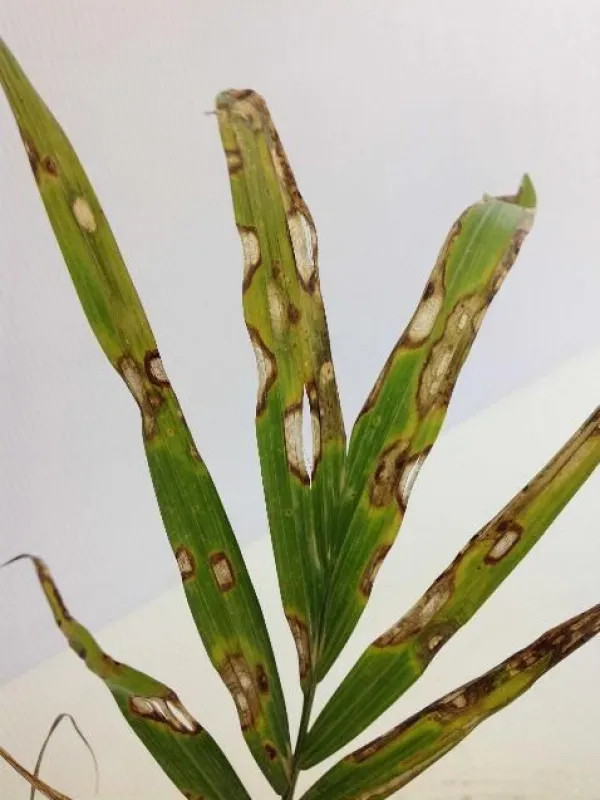
Symptoms typically begin as small, round, reddish-brown spots on leaves, which gradually expand and often develop a darker margin or a yellow halo.
Under high humidity, white or creamy masses of fungal spores appear on the underside of the leaves or on infected stems, indicating active sporulation.
As the infection progresses, lesions coalesce, leading to large necrotic patches that eventually cause the entire leaf or frond to wilt and collapse.
Stem cankers may develop, appearing as sunken, darkened areas that restrict nutrient flow, often resulting in the snapping of the plant stem.
In young ferns, the infection often targets the fiddleheads (crosiers), causing them to turn black and rot before they can fully unfurl.
Pathogen
The disease is caused by the fungus Calonectria pteridis (anamorph: Cylindrocladium pteridis), a notorious pathogen affecting various ornamental plants and forestry seedlings.
This pathogen survives in soil and crop debris through mycelium and sclerotia, allowing it to persist in greenhouses for long periods even after a crop is removed.
Conidia, the asexual spores, are the primary inoculum and are efficiently dispersed by splashing water, overhead irrigation, and contaminated tools.
The biology of C. pteridis is strictly dependent on moisture, as free water on the foliage is essential for spore germination and tissue colonization.
The fungus invades host tissues through stomata or wounds, where it colonizes the vascular and mesophyll cells, leading to rapid tissue death.
Conditions for development
Development of the disease is highly favored by warm temperatures, specifically within the range of 20°C to 28°C.
High relative humidity (above 85%) is critical, as it provides the necessary moisture for the pathogen to thrive and sporulate aggressively.
Poor ventilation and overcrowding in greenhouse environments create stagnant microclimates that trap moisture and promote fungal spread.
Overhead irrigation methods that frequently wet the foliage are significant contributors to the rapid escalation of the disease in nursery settings.
Inadequate sanitation practices, such as reusing pots or failing to remove fallen debris, provide a persistent reservoir for the pathogen.
Why it matters
The economic impact of this disease is severe, as it renders ornamental ferns unmarketable due to their unsightly necrotic lesions.
If left unmanaged, the pathogen can quickly spread throughout a whole nursery, resulting in total crop failure within a very short timeframe.
The weakened state of infected plants makes them susceptible to secondary infections by bacteria or other fungi, further complicating recovery.
Significant labor and resource costs are associated with the intensive chemical control programs required to suppress the outbreak.
The persistent nature of the fungus in soil makes long-term management difficult, often requiring costly disposal and sterilization of growing media.
Protection
The primary control strategy involves strict sanitation, including the removal of all infected plant materials and deep cleaning of growing areas.
Modifying the environment by reducing humidity and ensuring proper spacing between plants is essential to create conditions unfavorable for the fungus.
Switching from overhead irrigation to drip or sub-irrigation methods significantly reduces the risk of spore dispersal through splashing.
- Apply preventative fungicides containing chlorothalonil or mancozeb.
- Use systemic fungicides such as thiophanate-methyl or strobilurins for curative control.
- Ensure the use of sterile, high-quality potting mix for all propagation.
Regular monitoring of plants allows for early detection, enabling the isolation of symptomatic plants before the infection spreads to the rest of the crop.
Discussion
No discussions yet — be the first.