
Calonectria penicilloides
Calonectria penicilloides
Description
Symptoms
Early signs of infection often manifest as sudden wilting of the shoots. Leaves initially show chlorosis followed by browning and eventual necrosis, often remaining attached to the stems for some time.
Dark, sunken lesions or cankers appear at the stem base or the root collar. These necrotic areas restrict the flow of nutrients and can lead to the collapse of the entire stem.
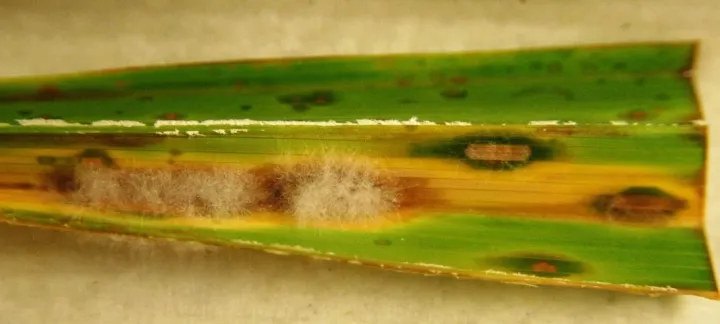
Under humid conditions, a characteristic white to cream-colored mycelial growth or spore mass may be observed on the affected parts of the plant, indicating active sporulation.
The root system typically exhibits decay, characterized by discoloration, softening, and deterioration of the root tissues. In severe cases, the fine root system is completely destroyed.
Without intervention, the entire plant will wither and die within a short period. Infections often occur in patches, spreading from initially infected plants to neighbors through soil moisture.
Pathogen
The disease is caused by the ascomycete fungus Calonectria penicilloides. This pathogen is known for its ability to cause severe damage to nursery seedlings and young woody plants.
The life cycle of the pathogen involves both asexual and sexual stages. Asexual spores (conidia) are produced in large numbers, facilitating rapid dissemination within nurseries through water splashes and air movement.
This fungus acts as a vascular pathogen, colonizing the host tissues and producing toxins that disrupt the plant's ability to transport water and essential nutrients effectively.
Due to its resilience, the fungus can persist in the soil for extended periods as microsclerotia or mycelial fragments. This makes soil decontamination a critical but difficult task for growers.
Genetic studies indicate that different strains of Calonectria penicilloides may vary in virulence, which poses a continuous challenge for developing resistant plant varieties.
Conditions for development
High relative humidity is the primary driver for Calonectria penicilloides development. The fungus requires moist conditions for spore germination and successful host penetration.
The optimal temperature range for fungal growth is between 20°C and 28°C. These temperatures are commonly maintained in greenhouse environments, creating a year-round risk for infection.
Overcrowding of plants limits airflow, leading to high humidity pockets. Poor ventilation serves as a catalyst for disease spread, especially in high-density container nurseries.
Waterlogged soil is highly conducive to root infection. Excess moisture stresses the root system and promotes the mobility of fungal propagules within the growth substrate.
Cultural practices that maintain wet surfaces on leaves or stems for prolonged periods increase the likelihood of foliar infection, particularly if the pathogen is present in the area.
Why it matters
The economic impact of the disease is most severe in commercial forestry nurseries, where it can cause significant mortality among high-value seedlings, such as eucalyptus species.
The infection leads to substantial financial losses through the loss of inventory, the cost of labor to rogue diseased plants, and the expenses related to fungicide applications.
Even if plants survive the initial infection, they often suffer from stunted growth and lack the vigor required for successful field establishment, ultimately reducing their commercial value.
The presence of the pathogen in a nursery poses a risk to the surrounding environment and potentially to larger plantations if infected nursery stock is distributed.
The breakdown of the vascular system makes the host plant highly susceptible to secondary invaders, including opportunistic pathogens and pests that capitalize on the weakened condition of the plant.
Protection
Prevention is centered on rigorous sanitation. Growers must use disease-free substrates and propagate only from healthy mother plants to avoid introducing the fungus into the facility.
Management of the microclimate is crucial. Improving ventilation and spacing between plants can significantly reduce the moisture levels required for fungal proliferation.
Careful irrigation management is necessary to prevent over-saturation of the substrate. Sub-irrigation or drip systems are often preferred over overhead watering to keep foliage dry.
- Regular inspection and immediate removal of symptomatic plants to minimize inoculum.
- Disinfection of pots, tools, and surfaces using approved chemical agents.
- Strategic application of systemic fungicides during periods of high risk or to protect healthy plants.
Successful control requires an integrated approach that combines cultural practices with periodic monitoring and timely chemical interventions when the disease threshold is approached.
Discussion
No discussions yet — be the first.