
Calonectria ovata
Calonectria ovata
Description
Symptoms
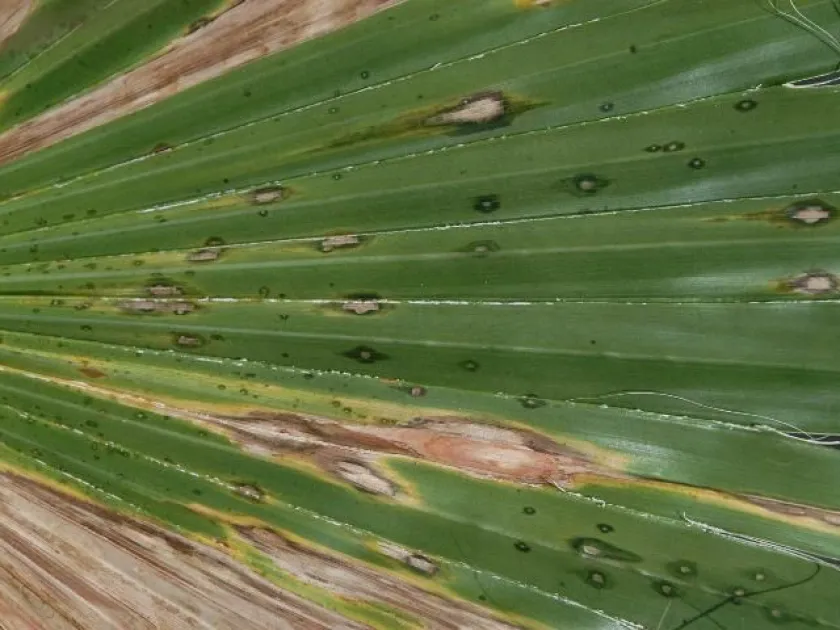
The disease typically begins with the formation of small, circular spots on leaves that progressively enlarge, developing into characteristic oval shapes with defined margins.
As the infection advances, these spots coalesce, leading to severe necrosis of the leaf tissue, followed by chlorosis and premature leaf drop.
Under humid conditions, a visible fungal growth, usually white or cream-colored, can be observed on the underside of the leaves, representing the pathogen's sporulation.
Lesions may also appear on the stem and crown, manifesting as dark, sunken areas that can disrupt the plant's vascular system and eventually lead to wilting.
- Development of oval leaf spots.
- Premature defoliation of plants.
- Visible sporulation on necrotic lesions.
- Lesions on the crown and stem.
- Overall stunting and poor growth performance.
Pathogen
The disease is caused by the fungus Calonectria ovata, a member of the Ascomycota division, known for its ability to infect diverse plant tissues in various environments.
The pathogen utilizes conidia for dispersal, which are efficiently spread by wind, splashing rain, or irrigation water, facilitating quick colonization of healthy plants.
The fungus is highly resilient, capable of surviving for long periods in infested soil, plant debris, or on seeds, making it a persistent threat to agricultural production.
Infection occurs when spores germinate and penetrate the host plant through stomata or mechanical wounds, initiating the development of mycelium within the plant tissue.
As a closely related species to other notorious plant pathogens in the Calonectria genus, it requires strict monitoring to prevent significant outbreaks in nurseries.
Conditions for development
Calonectria ovata thrives under conditions of high relative humidity, typically exceeding 80–85%, which is crucial for successful spore germination and infection.
Prolonged wet weather, including frequent rainfall or fog, provides the necessary moisture layer on the leaf surface for the fungus to initiate its colonization process.
In greenhouse environments, poor air circulation and high humidity levels create the perfect microclimate for the rapid proliferation and spread of the disease.
Dense plant spacing restricts airflow, keeping foliage damp for extended periods and increasing the likelihood of widespread infection within the greenhouse or nursery.
Optimal temperatures for the development of this pathogen generally fall within the range of 20–25 degrees Celsius, though it remains viable across a wider range.
Why it matters
The primary damage is caused by the substantial loss of photosynthetic surface area, which significantly weakens the plant and reduces its overall growth rate.
For horticultural crops and nursery plants, the cosmetic damage caused by the leaf spots can lead to total loss of marketability and severe economic consequences.
Severe infections can be fatal to young seedlings, causing entire batches of nursery stock to fail, which is a major concern for producers in humid climates.
The persistence of the pathogen in the soil means that the same plot of land may remain unsuitable for susceptible crops for several years after an outbreak.
Secondary infections often take advantage of the stressed state of the plant, further complicating disease diagnosis and reducing the effectiveness of standard treatments.
Protection
Effective management begins with rigorous sanitation practices, including the use of certified pathogen-free seeds and the prompt removal of infected plant material.
Ensuring proper spacing and excellent ventilation in growing facilities is essential to keep foliage dry and reduce the humidity levels that favor the fungus.
The use of preventative and systemic fungicides has proven effective in controlling outbreaks, provided they are applied at the onset of initial symptoms.
Implementing crop rotation cycles and avoiding the cultivation of highly susceptible plant varieties in known hot spots can significantly reduce infection pressure.
Proper nutritional management, avoiding excess nitrogen that stimulates soft tissue growth, can help increase the plant's natural resistance to initial fungal penetration.
Discussion
No discussions yet — be the first.