
Calonectria macroconidialis
Calonectria macroconidialis
Description
Symptoms
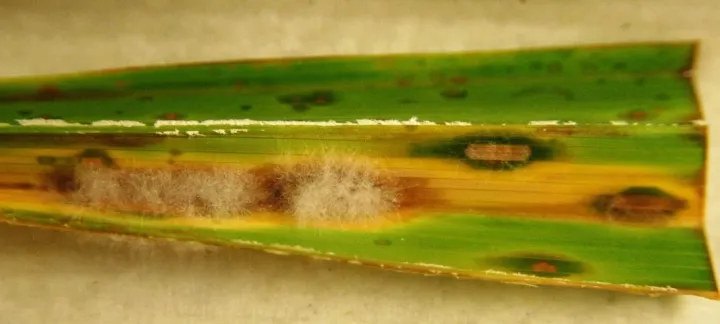
Initial signs of infection typically include the development of necrotic spots on the foliage. These lesions are often surrounded by a chlorotic halo, indicating the systemic response of the host plant to the fungal toxins.
As the disease progresses, these spots coalesce, leading to severe leaf blight and premature leaf drop. On stems, the infection manifests as depressed lesions or cankers, which may eventually girdle the affected part of the plant.
Root systems may also be compromised, resulting in root rot, stunted growth, and a loss of overall vigor. Affected plants struggle to absorb nutrients and water, leading to wilting even when moisture levels are otherwise adequate.
Under high humidity, a characteristic whitish or cream-colored mycelial growth appears on the surface of necrotic areas. This growth confirms the presence of active sporulation, which can easily spread to healthy tissue.
Diagnostic verification often requires microscopic examination to distinguish it from other similar fungal pathogens. Correct identification is critical to choosing the appropriate treatment and avoiding further damage.
Pathogen
The causal agent of this disease is the ascomycete fungus Calonectria macroconidialis. This pathogen is known for its ability to infect various plant tissues, significantly impacting the vascular systems of both woody and herbaceous crops.
The fungus reproduces primarily through macroconidia, which serve as the main infectious units for dispersal under favorable environmental conditions. Its life cycle often includes stages that allow it to persist in soil and plant debris for extended periods.
Morphologically, the fungus displays specific characteristics in its conidiophores and spore size, facilitating laboratory identification. It exhibits a high level of virulence, making it a serious concern for modern agriculture and horticulture.
The pathogen's biological plasticity allows it to colonize diverse plant hosts. Its ability to adapt to varying ecological conditions makes it a resilient opponent that requires careful management strategies.
The fungal mycelium invades plant tissues, often causing extensive damage to the structural integrity of leaves, stems, and roots. This internal damage is the primary cause of the visible symptoms observed in infected plants.
Conditions for development
Calonectria macroconidialis thrives in environments characterized by high humidity and moderate temperatures. The fungus is especially problematic in greenhouses where air circulation is limited or inadequate.
Water droplets on leaf surfaces provide the necessary medium for spore germination and infection. Therefore, excessive overhead irrigation or constant condensation significantly accelerates the spread of the disease.
The optimal temperature for fungal growth typically ranges from 20 to 25 degrees Celsius. Within this thermal range, the pathogen can rapidly colonize plant tissue and produce new spores for secondary infections.
Plant density is another critical factor; overcrowded planting inhibits airflow, maintaining a microclimate that is conducive to fungal development. Ensuring adequate space between plants is essential for disease management.
Mechanical damage from pruning or insect feeding creates open wounds that serve as entry points for the fungus. Maintaining plant health and preventing unnecessary injuries can significantly reduce infection rates.
Why it matters
The disease poses a significant threat to agricultural productivity, causing substantial losses in both quality and quantity of yield. Infected crops often lose their marketability due to unsightly blemishes and poor health.
In nursery settings, this pathogen can cause widespread seedling mortality, resulting in heavy economic consequences. Preventing the movement of infected plant material is vital to protect against further outbreaks.
Because the fungus can survive in the soil, it complicates crop rotation strategies. Fields once infested may remain unsuitable for sensitive crops for multiple seasons without thorough soil remediation.
The cumulative damage from the disease reduces the overall fitness of the crop, leaving it susceptible to secondary pathogens. This synergy often leads to a rapid decline in plant health and vitality.
Effective management is necessary to avoid epidemic situations in larger plantations. Ignoring the disease leads to increasing inoculum levels, which makes subsequent control efforts more difficult and costly.
Protection
Control of Calonectria macroconidialis requires an integrated approach focusing on sanitation and preventive measures. Stringent quarantine protocols should be enforced when introducing new plant material to a site.
Recommended management strategies include:
- Prompt removal and safe disposal of all infected plant tissues.
- Strict sterilization of gardening tools and equipment after each use.
- Improving greenhouse ventilation to reduce relative humidity.
- Using systemic fungicides specifically targeted at ascomycete pathogens.
- Implementing soil solarization or chemical disinfection in contaminated areas.
Systemic fungicides are effective at suppressing fungal activity within plant tissues. It is essential to apply these treatments preventively, particularly during periods of high disease pressure.
To prevent the development of fungicide resistance, rotate chemicals with different modes of action. Keeping detailed records of treatments and monitoring for disease progress will help in optimizing the spray schedule.
Strengthening the host plant's immunity through balanced fertilization is a key preventive measure. Avoiding excessive nitrogen fertilization helps prevent the development of succulent tissues that are highly vulnerable to infection.
Discussion
No discussions yet — be the first.