
Calonectria indusiata
Calonectria indusiata
Description
Symptoms
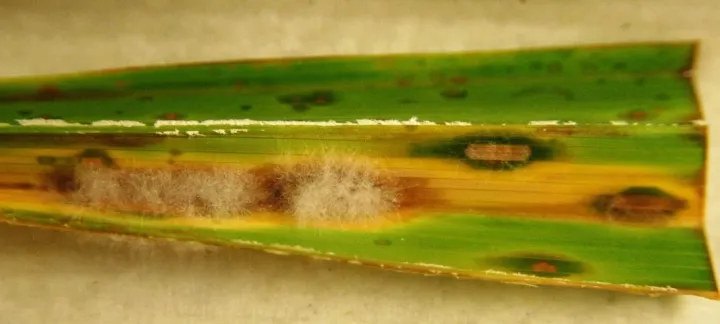
Initial symptoms are characterized by small, irregular necrotic spots on leaves, which gradually enlarge and turn dark brown or reddish-brown.
As the disease progresses, these spots often merge, leading to extensive tissue death and significant premature defoliation of the plant.
Stem blight is another common manifestation, where dark, sunken lesions develop on the stem, often resulting in the wilting and collapse of the entire shoot.
In humid conditions, a white or yellow fungal growth consisting of spores and conidiophores may become visible on the underside of the affected leaf surface.
Advanced infections may involve root rot symptoms, where the plant stops growing, leaves exhibit chlorosis, and the overall plant vigor declines rapidly.
Pathogen
The disease is caused by the ascomycete fungus Calonectria indusiata, a pathogen known for its aggressive colonization of various plant tissues, particularly in forest nurseries.
This fungus exhibits a complex lifecycle, possessing both sexual and asexual stages, the latter being commonly referred to as Cylindrocladium indusiata.
The ability of the fungus to produce microconidia and microsclerotia allows it to survive in adverse environmental conditions and persist in soil for significant durations.
It propagates primarily via spores that are dispersed by water splashes, air currents, and human activity, making its control challenging in large-scale operations.
The pathogen is highly adaptable and can switch between different hosts, which enhances its survival probability in diverse agricultural settings.
Conditions for development
High relative humidity, typically exceeding 90%, is the primary environmental requirement for the effective germination of spores and the initiation of new infections.
Warm temperatures, generally ranging from 22°C to 28°C, are optimal for the rapid expansion of the fungus and the colonization of healthy plant tissues.
Poor ventilation within nurseries, combined with high-density planting, creates a microclimate that traps moisture and facilitates the rapid spread of the pathogen.
Frequent rainfall or overhead irrigation systems are critical vectors for spore transmission, as water droplets effectively carry the fungus from soil or foliage to new sites.
Stress factors, such as waterlogging of the growing medium or mechanical injuries during transplanting, significantly increase the susceptibility of plants to infection.
Why it matters
Calonectria indusiata poses a significant economic threat to the forestry sector, particularly in the production of eucalyptus seedlings.
The pathogen causes massive seedling mortality in nurseries, leading to substantial financial losses and supply chain disruptions for forestry projects.
Plants that do not die from the infection often remain stunted and show poor growth, making them unsuitable for commercial reforestation efforts.
Its persistence in the soil makes it difficult to reuse nursery beds without extensive and costly sterilization procedures to eradicate the fungal spores.
The lack of effective long-term resistant varieties makes it a persistent challenge for plant breeders and pathologists working in affected regions.
Protection
Management strategies must prioritize strict phytosanitary practices, including the use of pathogen-free seeds and sterilized growing media.
Improving airflow and lowering humidity levels within greenhouses are essential cultural practices to inhibit the development of the fungal life cycle.
Chemical control involving systemic fungicides applied at the first signs of infection can prevent further spread, though resistant strains should be monitored.
Regular disinfection of all gardening tools and equipment is crucial to prevent the accidental transfer of contaminated soil or plant debris.
- Routine monitoring for early detection of symptomatic leaves.
- Quarantine measures for all incoming plant material.
- Prompt removal and destruction of infected individuals.
- Integration of soil solarization or heat treatments in nurseries.
Discussion
No discussions yet — be the first.