
Calonectria ilicicola
Calonectria ilicicola
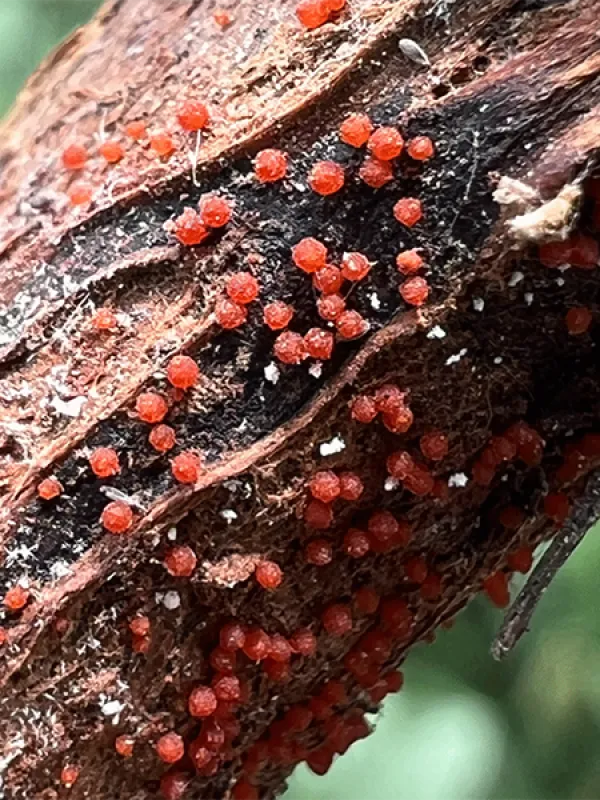
Description
Symptoms
Initial symptoms frequently involve root decay and the development of dark, sunken lesions on the crown and lower stem area, often referred to as black rot or collar rot.
Foliar symptoms appear as irregular chlorotic spots that transition into necrotic, tan, or dark brown patches, often surrounded by a distinct chlorotic halo.
Under high-humidity conditions, a visible mass of white or light-pink conidia (spores) may develop on infected tissues, particularly on the undersides of leaves or at the base of stems.
Plants often exhibit stunted growth, wilting during the hottest part of the day, and overall chlorosis. In advanced stages, the foliage prematurely wilts, turns brown, and eventually dies.
When examining the vascular system of the stem, browning or dark discoloration is observed, which is a classic indicator of deep-seated fungal colonization.
Pathogen
The causal agent of this disease is the ascomycete fungus Calonectria ilicicola, also known in its anamorph state as Cylindrocladium parasiticum. It is a soil-borne pathogen known for its ability to survive for several years through resilient chlamydospores.
This fungus exhibits a wide host range, infecting various legume crops, forest trees, and ornamental plants, making it a versatile and dangerous threat in diverse ecosystems.
The infection propagates through soil movement, contaminated water, infested plant debris, and movement of infected nursery stock or seeds across geographical regions.
The fungal mycelium invades plant tissues primarily through roots or natural openings, colonizing the vascular system and hindering the translocation of water and essential minerals.
Its complex life cycle, involving both sexual and asexual reproduction, contributes to its genetic diversity and effectiveness in overcoming plant defense mechanisms.
Conditions for development
Calonectria ilicicola thrives in warm, humid environments, with optimal disease development occurring at temperatures ranging from 25°C to 30°C.
High soil moisture and stagnant water conditions are critical triggers for chlamydospore germination and the rapid spread of motile spores across the field.
Plants subjected to environmental stress, such as poor drainage, soil compaction, or nutrient deficiencies, are significantly more susceptible to successful colonization by the fungus.
Continuous cropping of the same host species creates a favorable cycle for the accumulation of pathogen inoculum in the soil over consecutive seasons.
The dispersal of conidia is frequently facilitated by water splashes during heavy rain or overhead irrigation, which move spores from the soil onto the foliage.
Why it matters
The primary economic impact is the rapid mortality of seedlings in early stages, which results in poor stand density and often necessitates costly replanting efforts.
In mature plants, the disease causes significant root loss, which leads to reduced nutrient uptake, stunted growth, and a substantial decrease in overall grain yield or biomass.
For ornamental plants, the infection ruins aesthetic quality, rendering products unsalable and causing total financial loss for nursery owners.
The disease also poses long-term risks, as the soil remains infested for many years, forcing farmers to abandon the cultivation of preferred crops in affected fields.
Combined with the potential for quality degradation of harvested seeds, the economic losses for the agricultural sector can reach severe proportions during favorable seasons.
Protection
An integrated approach is essential, starting with the use of certified pathogen-free seeds and disease-free nursery stock to prevent initial field contamination.
- Implement long-term crop rotation schemes using non-host crops to starve the fungus in the soil.
- Improve field drainage and avoid overhead irrigation methods that increase foliage wetness duration.
- Treat seeds with systemic fungicides specifically selected for efficacy against soil-borne root rot pathogens.
- Sanitize all farming tools, boots, and equipment before moving them between different parts of the field to avoid cross-contamination.
Maintain optimal soil fertility and pH levels to promote robust plant vigor, which helps the host better tolerate and resist infection pressures.
Promptly identify and remove localized hotspots of infection by destroying affected plants and their roots to reduce the overall inoculum density in the field.
Discussion
No discussions yet — be the first.