
Calonectria hurae
Calonectria hurae
Description
Symptoms
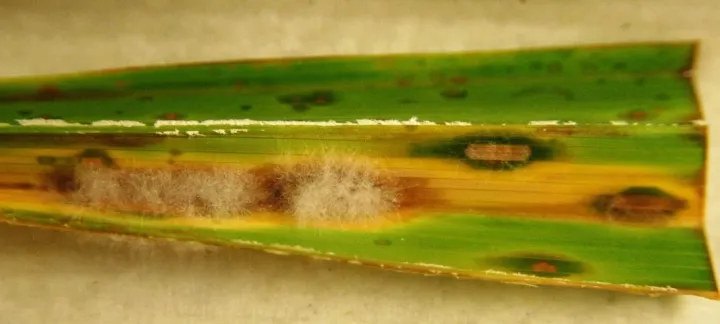
The first symptoms of Calonectria hurae infection typically appear as small, dark necrotic spots on the foliage. As the disease progresses, these spots expand rapidly, often coalescing into larger, irregular patches of dead tissue.
Under humid conditions, you can observe the development of conidial structures on the underside of the affected leaves or on stems. This often appears as a white or creamy, velvety coating of spores.
Young shoots and stems are particularly susceptible, often showing signs of wilting, discoloration, or terminal dieback. In severe cases, the infected branches may become distorted or brittle, leading to structural damage.
Premature leaf drop is a hallmark sign of advanced infection, as the pathogen targets the leaf petioles, causing them to detach from the main stem. This defoliation significantly stresses the plant.
Visual symptoms can mimic other fungal leaf spots, but the rapid rate of spread and the specific host preference of Calonectria hurae are usually indicative of this particular pathogen.
Pathogen
Calonectria hurae is an ascomycete fungus and a highly aggressive plant pathogen. It is recognized for causing significant leaf blight and shoot dieback in a variety of tropical and subtropical plants.
The fungus produces asexual spores called conidia, which are primarily responsible for the rapid spread of the disease during the growing season. These spores are easily dispersed by water splashes, wind, and contaminated tools.
In addition to its parasitic phase, the fungus acts as a saprophyte, surviving on decaying plant debris in the soil. This allows it to persist in the environment even when no host plant is present.
The pathogen possesses a complex life cycle, including the potential for sexual reproduction, which increases its genetic diversity and ability to overcome resistant plant varieties.
The organism is notorious for its ability to quickly colonize host tissue by secreting specialized enzymes that break down cell walls, leading to rapid tissue death and necrosis.
Conditions for development
The development of Calonectria hurae is heavily dependent on moisture. High relative humidity and frequent rainfall are the primary drivers for spore germination and infection.
The optimal temperature range for the pathogen's growth typically falls between 20°C and 28°C. These conditions are commonly found in nursery environments and greenhouses.
Poor aeration in dense plantings significantly increases the risk of an outbreak. Stagnant air allows leaf surfaces to remain wet for extended periods, facilitating pathogen entry.
Plants under nutrient stress or those experiencing physical damage are significantly more vulnerable. Mechanical injuries often serve as the primary entry points for the fungal mycelium.
Over-irrigation, especially overhead watering, creates the perfect conditions for the splash-dispersal of conidia, effectively moving the fungus from the soil to the leaves.
Why it matters
The pathogen poses a severe threat to nurseries and commercial plantations. It can lead to complete failure of crop establishment, resulting in substantial financial losses for growers.
By causing widespread defoliation, Calonectria hurae reduces the photosynthetic capacity of trees, which directly leads to stunted growth, loss of vigor, and reduced timber quality.
The ease with which the fungus spreads via contaminated machinery and equipment makes it a significant management challenge. It can rapidly move from a single infected plant to an entire block.
Chronic infections weaken the plant's natural defense mechanisms, making it more susceptible to secondary attacks by wood-boring insects and other opportunist pathogens.
Without stringent quarantine measures, this fungus can easily cross borders through imported plant materials, potentially endangering native forest species that lack inherent resistance.
Protection
The most effective strategy is the implementation of rigorous sanitation practices in nurseries. This includes the removal and immediate incineration of all symptomatic plant material.
Chemical control can be achieved through the application of broad-spectrum fungicides. Preventive treatments are often necessary during periods of high humidity to protect healthy foliage.
Improving airflow and lowering humidity within greenhouses are essential. Spacing plants adequately and avoiding overhead irrigation can significantly reduce the infection pressure.
Regular monitoring of nurseries for early symptoms is crucial. Detecting the disease in its initial stages allows for spot treatment and prevents the need for large-scale eradication efforts.
Using pathogen-free soil media and disinfecting all tools after each use are fundamental steps in preventing the transmission of Calonectria hurae within the facility.
Discussion
No discussions yet — be the first.