
Calonectria cylindrospora
Calonectria cylindrospora
Description
Symptoms
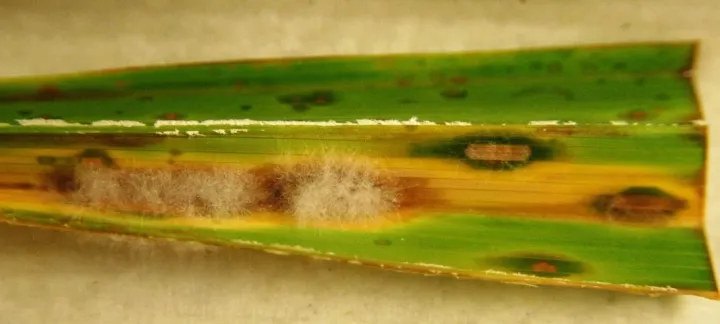
The primary symptom typically presents as small, circular, or irregular chlorotic spots on leaves that rapidly progress into brown or dark necrotic lesions.
In advanced stages, these lesions expand and coalesce, leading to severe leaf blight, premature defoliation, and significant reduction in the photosynthetic area.
On stems and branches, the fungus often causes dark, sunken cankers that can girdle the stem, resulting in wilting and dieback of the distal plant parts.
During periods of high ambient humidity, a sparse, whitish, or greyish mycelial mat may be observed on the surface of the lesions, marking active sporulation.
Seedlings affected by this pathogen show stunted growth, chlorosis, and, in severe infections, complete collapse and death of the shoot system.
Pathogen
Calonectria cylindrospora is a fungal pathogen belonging to the Ascomycota phylum. It is well-documented as a serious threat to a variety of forest nursery seedlings and ornamental crops worldwide.
The life cycle involves both sexual and asexual stages. The asexual stage, often referred to as Cylindrocladium, is highly efficient at dispersing spores under favorable environmental conditions.
The pathogen possesses a durable mycelium that can survive in the soil, organic debris, and plant tissue for extended periods, creating a persistent reservoir of inoculum.
Infection occurs when conidia land on susceptible plant surfaces and germinate under high humidity, penetrating the tissue through stomata or directly through the cuticle.
Molecular diagnostics and specialized culturing techniques are often required for precise identification, as the pathogen shares morphological similarities with other species within the Calonectria genus.
Conditions for development
The development of the disease is strictly dependent on moisture. Relative humidity levels exceeding 85% provide the necessary hydration for spore germination and colonization.
The optimal temperature range for the pathogen's growth is between +20°C and +28°C, which makes it particularly problematic in tropical and subtropical regions, or in greenhouse environments.
Poor air circulation within dense nursery beds traps moisture, which significantly accelerates the dispersal of conidia and increases the rate of disease spread.
Prolonged leaf wetness, often caused by overhead irrigation or condensation in greenhouses, is a critical factor for the infection process to initiate successfully.
Plants that are stressed due to inadequate fertilization, mechanical wounding, or improper soil pH exhibit increased susceptibility to colonization by Calonectria cylindrospora.
Why it matters
The economic impact of this pathogen is most severe in commercial nurseries, where it can cause significant losses in seedling production and quality.
Affected plants are often unmarketable due to unsightly leaf spots and distorted growth, leading to direct revenue loss for producers.
In forest plantations, the introduction of this pathogen can lead to long-term decline in stand health and impact the overall yield of the crop.
The persistence of the fungus in the soil makes site sanitation extremely difficult, often requiring costly chemical treatments or soil sterilization to manage.
Weakened plants are prone to secondary infections by other opportunistic pathogens, further complicating the rehabilitation and recovery process of the seedlings.
Protection
Integrated disease management (IDM) is the most effective approach, starting with the strict use of disease-free propagation material and rigorous quarantine protocols.
Modifying the growing environment by improving air circulation and lowering humidity levels is essential for suppressing the development of the fungus.
Transitioning from overhead irrigation to drip irrigation systems reduces leaf wetness and significantly lowers the likelihood of successful spore inoculation.
Application of fungicides such as those containing benzimidazoles or triazoles can be effective when applied preventatively or at the earliest sign of disease.
- Sanitize all nursery tools and equipment regularly.
- Remove and destroy symptomatic plant material immediately.
- Ensure balanced fertilization to promote plant vigor.
- Use well-drained, sterile growth media to prevent soil-borne inoculum buildup.
Discussion
No discussions yet — be the first.