
Calonectria citri
Calonectria citri
Description
Symptoms
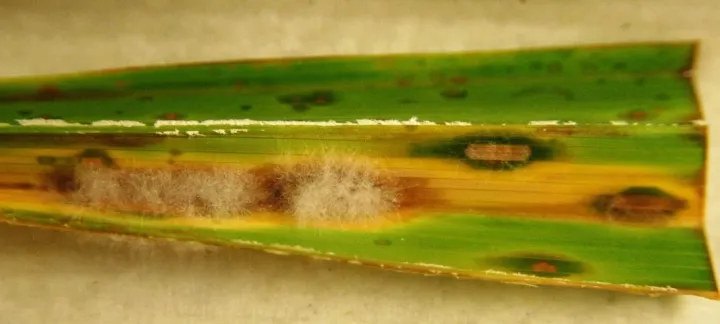
Early clinical signs of infection appear as chlorotic lesions on the leaf surface, which subsequently expand into dark brown or necrotic spots surrounded by a yellow halo.
Under conditions of high humidity, a distinct white or pale grey mycelial mat or sporulation layer may be observed on the abaxial side of the affected leaves.
Stems often develop sunken canker lesions, which, if left untreated, can girdle the branch, leading to chlorosis, dieback, and the eventual death of distal parts of the plant.
Root system damage is characterized by dark rotting of the feeder roots, leading to reduced water and mineral uptake, which manifests as overall tree stunting and wilting.
- Leaf chlorosis and necrotic spot development.
- Formation of sunken cankers on stems and twigs.
- White to grey fungal growth during humid periods.
- Premature fruit drop and canopy thinning.
- Severe stunting of young nursery seedlings.
Pathogen
The fungus Calonectria citri is the primary causal agent of this disease, classified within the Ascomycota division. It functions as a necrotrophic pathogen capable of attacking foliage, stems, and the root system of various citrus species.
The organism reproduces through the production of conidia within complex structures, allowing for efficient dissemination via water splash and wind currents. This life cycle ensures rapid spread under suitable environmental conditions.
Calonectria citri persists in infested plant debris and soil, serving as a reservoir for recurring infections when environmental factors become favorable for colonization.
Upon germination, the fungal hyphae enzymatically degrade plant cell walls, allowing the pathogen to penetrate host tissues and establish a systemic presence that disrupts nutrient transport.
Given its taxonomical proximity to other destructive Calonectria species, this pathogen is recognized globally as a significant threat to citrus health in tropical and subtropical regions.
Conditions for development
High relative humidity, typically exceeding 85%, is the most critical environmental factor driving the infection process and the rapid spread of conidia.
The pathogen thrives at moderate to warm temperatures, with the optimal growth range for mycelial development falling between +20°C and +28°C.
Prolonged leaf wetness caused by frequent rainfall, irrigation, or heavy morning dew provides the necessary hydration for spore germination and active fungal penetration.
Poor orchard sanitation and overcrowding contribute significantly to disease pressure by restricting airflow within the canopy and increasing the duration of moisture retention.
Environmental stress factors, such as soil compaction or poor drainage, weaken the host's natural defenses, making plants more susceptible to initial fungal colonization.
Why it matters
Calonectria citri causes significant financial loss by reducing the photosynthetic capacity of trees, which directly limits fruit size and sugar accumulation.
In nursery settings, the pathogen can cause high mortality rates among young seedlings, potentially destroying entire batches of planting stock.
The disease contributes to the premature death of productive branches, leading to structural deformation of trees and a sustained decline in annual fruit yields.
Fruit quality is compromised as systemic infection can lead to post-harvest decay issues, making the harvest unsuitable for commercial distribution or export.
The potential for rapid spread and the difficulties associated with total eradication make this pathogen a concern for regional agricultural stability and trade security.
Protection
The primary control strategy involves the procurement and planting of disease-free, certified stock, coupled with rigorous quarantine protocols in nursery production.
Integrated pest management should include regular pruning to remove infected tissue, which helps lower the overall inoculum density within the orchard environment.
Fungicidal intervention using copper-based contact products or systemic triazole and strobilurin compounds is recommended during high-risk stages of growth.
Improving orchard layout to enhance ventilation and adopting efficient irrigation techniques that minimize direct water contact with the foliage are essential preventative measures.
Disinfection of all pruning tools and agricultural equipment between trees is mandatory to prevent the mechanical transmission of fungal spores within the plantation.
Discussion
No discussions yet — be the first.