
Calonectria candelabra
Calonectria candelabra
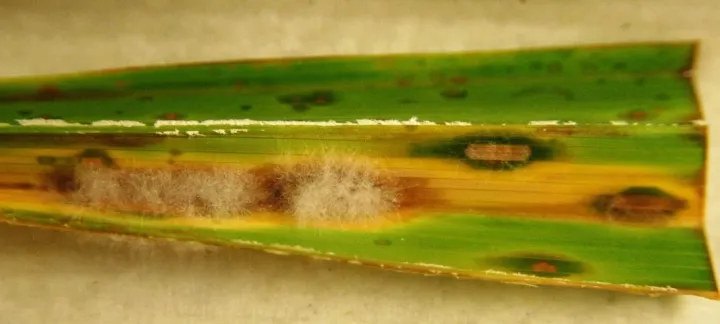
Description
Symptoms
The first clinical signs of infection include the appearance of small, dark brown or greyish necrotic spots on leaves. These spots expand rapidly, often merging and causing the leaf tissue to wither.
Under conditions of high humidity, a white or yellow fungal mass (conidia) may appear on the underside of the leaves. This sign is indicative of active sporulation and high infection pressure.
Root system damage is a classic symptom, characterized by the decay of lateral roots and a distinct browning of the root collar. The bark at the base of the stem may become soft and easily detached.
As the disease progresses, the plant exhibits signs of severe wilting, chlorosis, and premature senescence. In advanced stages, the internal stem tissues show vascular discoloration, confirming systemic pathogen colonization.
- Necrotic spots on leaves.
- Wilting of terminal shoots.
- Browning and decay of the root system.
- Fungal sporulation on leaf surfaces.
Pathogen
Calonectria candelabra is a highly aggressive fungal pathogen that primarily affects a wide range of woody plants and nursery stock. It is a member of the Calonectria genus, known for causing significant damage in agricultural and forestry sectors.
The disease manifests as leaf blight, stem necrosis, and severe root rot. The pathogen spreads rapidly through conidia, which can be dispersed by water splashes or wind within confined areas like greenhouses.
The fungus is capable of surviving for extended periods in contaminated soil and decaying plant matter, making it a persistent threat to new plantings. Its lifecycle involves both asexual and sexual stages, allowing for rapid colonization of host tissues.
By invading the vascular system, the fungus disrupts the uptake and translocation of water and essential nutrients, ultimately leading to the systemic collapse of the host plant.
Due to its high adaptability and wide host range, this pathogen is considered a significant challenge in integrated pest management programs, requiring rigorous sanitary controls.
Conditions for development
The development of Calonectria candelabra is heavily dependent on moisture. Relative humidity levels above 80% create an optimal environment for the germination of fungal spores on plant surfaces.
Optimal temperatures for pathogen growth range between 22°C and 28°C. During these warm and humid periods, the latent period of the disease is significantly reduced, leading to rapid epidemic spread.
Overcrowding of plants limits airflow, leading to high-humidity microclimates around the foliage. This environment is highly conducive to the establishment of the pathogen from airborne or water-borne spores.
Physical injuries to the roots or stems, whether from pests or cultural practices, provide direct entry points for the fungus, facilitating a more rapid and aggressive infection process.
Contaminated substrates and unsterilized nursery equipment are the primary vehicles for spreading the disease across different parts of a production facility.
Why it matters
The primary impact of this disease is the high mortality rate of nursery-grown seedlings, leading to substantial economic losses and a decrease in the quality of the planting material.
In forestry and plantations, infections lead to stunted growth and reduced vigor, which hinders the long-term productivity and survival of the affected tree stands.
Soil contamination limits the future use of the infected site, necessitating expensive soil sterilization processes or the selection of alternative, resistant plant varieties.
In ornamental horticulture, the disease significantly impairs the aesthetic quality of plants, rendering them unfit for sale or landscape use.
The need for intensive chemical applications to manage the disease increases production costs and may lead to the development of fungicide resistance in the pathogen population over time.
Protection
The most effective strategy is the use of high-quality, pathogen-free planting stock. Rigorous quarantine protocols should be applied to all new incoming nursery materials.
Implementing proper spacing and canopy management improves airflow, which helps to keep plant surfaces dry and reduces the chances of infection establishment.
Sanitation is paramount; any infected plant material should be removed immediately from the production area and destroyed to limit the source of inoculum.
Systemic fungicides are recommended as a preventive measure during high-risk conditions. Rotation of active ingredients is necessary to maintain efficacy and prevent the buildup of resistance.
All agricultural tools must be disinfected regularly, especially after contact with suspicious material, to prevent the mechanical transmission of the pathogen between plant batches.
Discussion
No discussions yet — be the first.