
Calonectria avesiculata
Calonectria avesiculata
Description
Symptoms
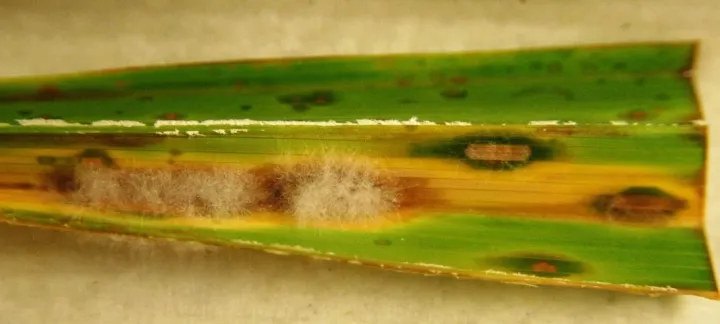
Symptoms often manifest as necrotic spots on leaves and stems. These lesions are typically reddish-brown with a distinct yellow halo, which helps in early field diagnosis.
Stem cankers and crown rot are common in seedlings. The tissue at the base of the stem becomes darkened, soft, and decayed, eventually causing the plant to wilt and collapse.
Under conditions of high humidity, white or cream-colored masses of fungal conidia may appear on the surface of infected tissues, indicating active sporulation.
Stunted growth, chlorosis, and premature leaf drop are characteristic signs of root and vascular system compromise caused by the pathogen's destructive activity.
Without intervention, the infection spreads rapidly through nursery benches, leading to patches of dead seedlings and significant gaps in production rows.
Pathogen
Calonectria avesiculata is a fungal pathogen that acts as a serious threat to various plant species, particularly in forest nurseries. It is an ascomycete fungus often associated with the Cylindrocladium complex.
The fungus produces asexual spores known as conidia, which are highly efficient at spreading the infection within humid nursery environments. These spores are primary drivers of outbreaks.
It survives in the soil through resilient structures such as microsclerotia, which can remain viable for extended periods, even without a susceptible host plant present.
The primary hosts include various Eucalyptus species, although the pathogen has a broad host range among broad-leaved and woody plants in tropical and subtropical regions.
Transmission occurs through contaminated soil, irrigation water, movement of diseased nursery stock, and dirty agricultural tools, making hygiene a critical control factor.
Conditions for development
High relative humidity (typically above 85-90%) is the most significant environmental driver for the development of Calonectria avesiculata infections.
The fungus thrives in warm temperatures, with an optimal range between +20°C and +28°C. These conditions accelerate the incubation period and spore production.
Poor ventilation and overcrowded nursery conditions prevent rapid drying of leaf surfaces, facilitating the germination of spores and the development of leaf spot disease.
Waterlogged soil substrates promote the development of root rot, as the pathogen exploits the weakened vascular integrity of plants suffering from root asphyxiation.
Contaminated water sources, such as overhead irrigation systems using untreated surface water, can splash spores onto susceptible foliage, igniting new infection cycles.
Why it matters
The main impact of Calonectria avesiculata is the substantial loss of seedlings in forest nurseries, which disrupts reforestation programs and economic planning.
Infected plants are often stunted or deformed, making them unsuitable for sale or field planting, which translates into direct financial losses for nursery operations.
Systemic damage to the roots prevents efficient nutrient and water uptake, reducing the long-term vigor and survival rates of seedlings planted in the field.
The presence of the pathogen imposes strict phytosanitary requirements, potentially restricting the trade and movement of nursery stock between regions or countries.
Outbreaks can occur with extreme speed, potentially destroying entire batches of seedlings within days if preventative measures and monitoring protocols are absent.
Protection
The first line of defense is strict nursery hygiene: using sterile growth media, certified seeds, and conducting regular sanitation of all tools and containers.
Optimizing nursery layout to improve airflow and humidity control is essential for preventing the buildup of fungal spores on plant surfaces.
Irrigation management should focus on avoiding leaf wetness and preventing water splashing, which are the primary vehicles for spore dispersal between plants.
Early detection and immediate removal of symptomatic plants (roguing) are critical to slowing the progress of the epidemic within a nursery batch.
Where necessary, chemical control involves the application of fungicides, such as those containing copper or systemic active ingredients, to protect healthy seedlings from infection.
Discussion
No discussions yet — be the first.