
Calonectria
Calonectria
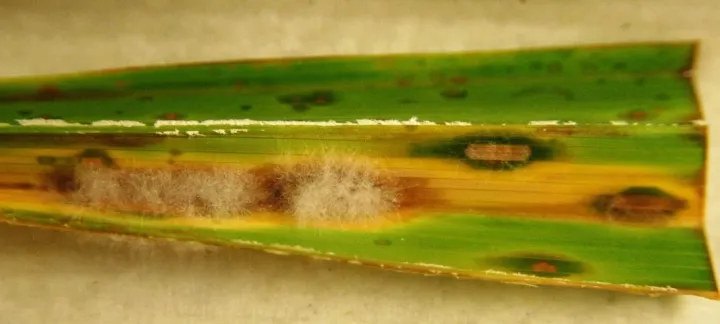
Description
Symptoms
Initial symptoms typically appear on leaves and stems as small, circular, reddish-brown or dark brown spots, often surrounded by a light-colored halo.
When the root system is affected, characteristic darkening and rotting of roots occur, leading to plant wilting due to the disruption of water uptake.
In high-humidity conditions, a white or yellowish fuzzy layer may be visible on affected plant parts; this is the fungal sporulation, which facilitates further spread.
Deep lesions often form on the stems of young seedlings, causing girdling (canker) that leads to breakage or total death of the upper plant portion.
- Yellowing and premature leaf drop.
- Stunted growth and shoot deformation.
- Necrotic spots with visible halos.
- Root and root crown rot.
Pathogen
The disease is caused by fungi of the genus Calonectria (anamorph stage — Cylindrocladium). These ascomycetes are known for their complex life cycles and ability to produce both sexual and asexual spores.
The pathogen demonstrates high virulence and a wide host range, allowing it to adapt to various environmental conditions in greenhouses and nurseries.
Infection spreads through contaminated substrates, soil, plant debris, as well as via plant materials and irrigation water.
The fungus can persist in the soil for long periods as microsclerotia, making it extremely difficult to eradicate in greenhouse environments.
The pathogen's mycelium actively penetrates plant tissues through natural openings like stomata or mechanical wounds, initiating cellular necrosis.
Conditions for development
The primary factor triggering a Calonectria outbreak is excessive moisture in the air and soil within greenhouses, especially where ventilation is inadequate.
Optimal temperatures for fungal development range from 20 to 28 degrees Celsius, which often coincides with ideal growing conditions for many ornamental species.
Poor air circulation fosters a microclimate conducive to spore germination on the surfaces of vegetative plant parts.
Crowded planting conditions significantly increase the risk of pathogen transmission from infected individuals to healthy ones via foliage contact or water splashes.
Neglecting the disinfection of tools and equipment during daily plant care is a critical factor that accelerates the spread of the fungus within a nursery.
Why it matters
The disease causes serious economic losses in ornamental nurseries by resulting in the mass death of seedlings and cuttings during the rooting process.
Calonectria infections lead to the loss of aesthetic value, rendering plants unsellable and requiring the culling of large batches of stock.
Because the infection persists in substrates, growers face high costs associated with complete soil replacement or sterilization, increasing overall production expenses.
Affected plants show significantly reduced growth rates, which delays market entry and diminishes the overall profitability of the nursery business.
In cases of large-scale outbreaks, without immediate containment, the entire inventory of a specific production area may be lost.
Protection
The primary defense strategy involves using healthy, certified propagation material and implementing strict quarantine measures for all new plant arrivals.
It is crucial to maintain proper irrigation practices, avoiding overhead watering and moisture accumulation on foliage, especially during nighttime.
Regular disinfection of greenhouses, containers, and gardening tools using specialized fungicides or disinfectants helps suppress primary infection foci.
Upon detecting the first signs of the disease, infected plants must be immediately isolated and destroyed, followed by preventive treatment of surrounding healthy plants.
Chemical control should rely on systemic fungicides effective against ascomycetes, strictly adhering to application protocols for the specific crop variety.
Discussion
No discussions yet — be the first.