
Calocybe onychina
Calocybe onychina
Description
Symptoms
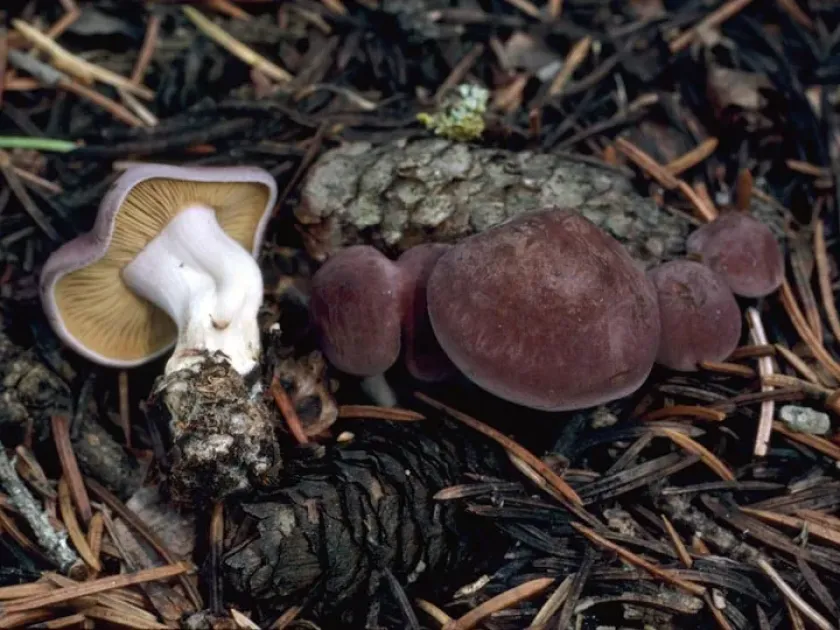
Calocybe onychina is a rare member of the Tricholomataceae family. Its fruit bodies are characterized by a yellowish-brown to purple-brown cap with a darker, distinct center.
The gills are crowded and cream-colored, which serves as a primary diagnostic feature for identifying this specific species in the field.
The stem is typically dense and fibrous, usually matching the color of the gills or appearing slightly lighter. In dry conditions, the cap surface may crack, giving it a claw-like appearance.
The spore print of this fungus is white, which is a standard trait for the Calocybe genus. Unlike some related species, the flesh lacks a strong farinaceous odor.
These mushrooms typically grow individually or in small clusters, mostly found in habitats rich in decomposing organic forest litter.
Pathogen
Biologically, Calocybe onychina is not a plant pathogen and does not cause diseases in agricultural crops or forest trees.
It is classified as a saprotrophic fungus within the Basidiomycota division, meaning it survives by decomposing dead organic matter.
The organism does not possess the biological pathways required to infect living tissues, making it harmless to cultivated plants and ecosystems.
The role of this fungus is purely ecological, as it aids in the breakdown of lignin and cellulose within the soil structure.
Its mycelium spreads throughout the forest floor, contributing to nutrient cycling and the formation of healthy humus layers.
Conditions for development
The mycelium requires high humidity levels and stable temperatures, typically ranging from 12 to 18 degrees Celsius, to produce fruit bodies.
It prefers shaded environments where the forest floor retains moisture, often found in deciduous or mixed woodland areas.
Fruiting occurs primarily during the late summer and autumn seasons when rainfall is sufficient to support the development of the mushrooms.
Prolonged drought periods significantly inhibit growth, as the fungus is highly sensitive to fluctuations in environmental moisture levels.
The availability of decaying organic matter from hardwood trees is essential for the long-term survival and distribution of the species.
Discussion
No discussions yet — be the first.