
Calocera cornea
Calocera cornea
Description
Symptoms
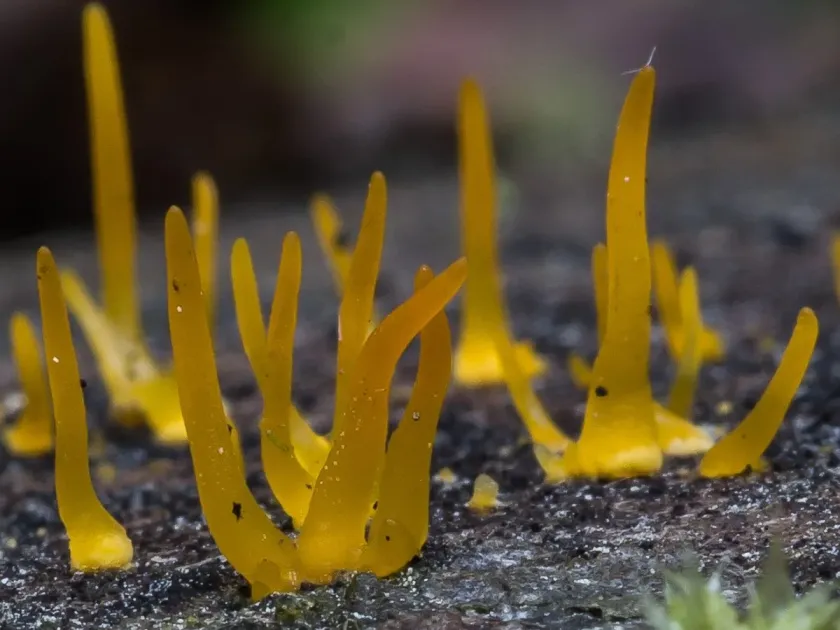
The most distinctive symptom of Calocera cornea is the formation of its bright yellow or orange, club-shaped or branched fruiting bodies. They are small, typically ranging from 5 to 10 millimeters in height.
These fruiting bodies often appear in clusters on decaying logs, stumps, or dead branches of deciduous trees. During dry weather, they shrink and become hard and inconspicuous, but quickly rehydrate after rain.
The wood colonized by this fungus often shows signs of advanced decay. The surface may become soft, pulpy, and discolored, reflecting the degradation process occurring within the interior of the wood fibers.
In some cases, the fungus may grow on the bark of wounded trees where the dead tissue has accumulated moisture. This contrast between the bright fungus and the tree bark makes it easy to identify.
Observation of these structures confirms that the wood has reached a stage where it can no longer support the growth of the living plant, making the substrate ideal for saprophytic colonization.
Pathogen
Calocera cornea, commonly known as the small stagshorn, is a basidiomycete fungus that belongs to the Dacrymycetales order. It is a saprophytic organism that thrives on decaying wood rather than living tissues.
The fungus acts as a decomposer, utilizing complex organic materials like cellulose and lignin as its primary energy source. It plays a significant ecological role by breaking down dead wood in forest and garden ecosystems.
Unlike parasitic fungi that attack healthy trees, Calocera cornea is restricted to dead or dying woody substrates. Its presence indicates that the wood has already lost its vitality and defensive capabilities.
The life cycle involves the production of basidiospores, which are dispersed by wind and air currents. When these spores land on a damp, decaying wood surface, they germinate to form new mycelial colonies.
It is classified as a xylotrophic fungus. While it does not kill healthy plants, its activity in a managed landscape should be viewed as a signal that the woody material requires removal or proper sanitation.
Conditions for development
High moisture levels are the most critical factor for the growth and development of Calocera cornea. It thrives in environments with frequent rainfall, high humidity, or persistent dew.
Temperature requirements for optimal development fall within the range of 15°C to 22°C. The growth process slows significantly in extremes of temperature, specifically during hot and dry spells.
The availability of a suitable host substrate is essential. This includes dead branches, fallen logs, or untreated wood products left in contact with the ground, providing the necessary moisture and organic matter.
Poor ventilation and overcrowded planting sites create microclimates where humidity levels remain elevated. Such conditions are conducive not only to this fungus but to other, more harmful pathogens.
Improper irrigation practices, such as excessive watering of the trunk base, can cause localized bark moisture, creating a favorable niche for saprophytic fungi to establish themselves on dead patches of bark.
Why it matters
Calocera cornea is not considered a primary plant pathogen. It does not possess the mechanisms required to breach the defenses of healthy, vigorous woody plants, and therefore poses no direct threat to them.
The harm caused by this fungus is limited to the acceleration of wood decay. By breaking down dead limbs, it may weaken the structural integrity of those specific sections, which could become a safety hazard in mature trees.
The presence of this fungus is a diagnostic sign of underlying issues. It alerts the gardener to the fact that parts of the tree have already succumbed to other stresses, such as winter injury or insect attacks.
While not lethal, the appearance of the fungus can diminish the aesthetic value of ornamental garden features. It is a visual indicator of neglect, suggesting that the woody debris has not been cleaned up.
Accumulation of decayed material colonized by fungi can potentially create a reservoir for other pathogens, although Calocera cornea itself remains a harmless component of the garden ecosystem.
Protection
The primary control method for Calocera cornea is strict sanitation. Regularly removing all dead wood, broken branches, and fallen timber prevents the fungus from finding a suitable substrate.
Maintaining tree health is the best long-term strategy. Proper pruning, balanced nutrition, and adequate irrigation prevent the formation of deadwood, which is the necessary condition for fungal colonization.
Ensure good air circulation within the canopy and around the trunk base by thinning out overcrowded branches. This keeps the environment dry and less hospitable to moisture-loving fungi.
If the fungus is found on an otherwise healthy tree, carefully excise the affected tissue back to clean, healthy wood and treat the wound with an appropriate sealant or copper-based fungicide.
Chemical control specifically targeting this fungus is generally unnecessary. Focus resources on agricultural practices that enhance plant vitality, as healthy trees provide the best natural defense against any opportunistic decay.
Discussion
No discussions yet — be the first.