
Calloria
Calloria
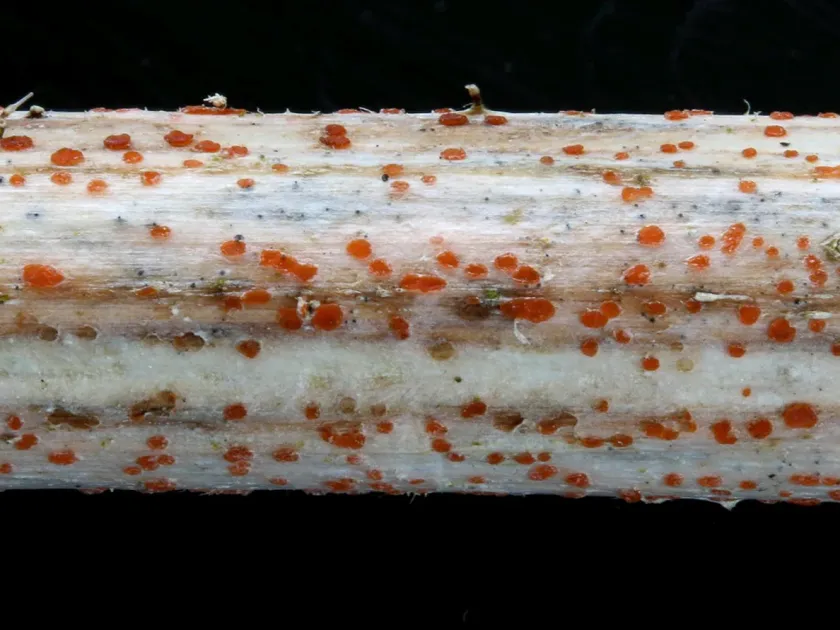
Description
Symptoms
The initial signs of infection are small, bright yellow to orange fruiting bodies appearing on the bark or stems. These apothecia often cluster together as they mature during periods of high humidity.
Tissues surrounding the infection site often show visible necrosis. As the disease progresses, the bark may crack, turn dark brown, and peel away, revealing damaged cambium layers beneath.
Symptoms often include the gradual wilting and dieback of infected branches. As the vascular system becomes compromised, the foliage on these branches may turn yellow or brown prematurely.
Severe infestations lead to the formation of cankers, which can girdle a stem or branch. This blockage stops the flow of nutrients and water, eventually causing the death of the distal part of the plant.
- Bright yellow or orange cup-shaped fruiting bodies.
- Visible cracking and necrosis of the bark.
- Dieback of twigs and branches.
- Premature yellowing of leaves or needles.
Pathogen
The disease known as Calloria is caused by fungi belonging to the genus Calloria within the Ascomycota division. These fungi typically act as opportunistic pathogens, colonizing tissues that are already weakened or damaged.
The fungal mycelium invades the plant epidermis and cortical tissues, breaking down cell walls through the secretion of specialized enzymes. This degradation process is essential for the pathogen to obtain nutrients from the host.
Reproduction occurs through the formation of apothecia, which are small, cup-shaped fruiting bodies. These structures produce spores that are primarily dispersed by wind and splashing rainwater, facilitating the spread of the disease.
The pathogen is characterized by a latent phase, where it may remain dormant within the host tissue for a long time. It typically manifests when the plant experiences environmental stress or physiological decline.
Scientific classification and diagnosis are performed by examining the morphology of the apothecia and the dimensions of the spores under laboratory conditions, ensuring proper identification of the fungal species.
Conditions for development
High humidity and moisture are the primary drivers for the development of Calloria. Frequent rainfall and persistent fog create the necessary conditions for spore germination and colonization.
Moderate temperatures ranging from 15 to 22 degrees Celsius (59 to 72 degrees Fahrenheit) are ideal for the pathogen's growth. These conditions are commonly found during the spring and early autumn.
Poor air circulation, often found in dense plantings or neglected gardens, allows moisture to linger on plant surfaces. This constant wetness significantly increases the risk of infection.
Mechanical damage to bark caused by pruning, storms, or pests provides entry points for the pathogen. Once inside, the fungus exploits the plant's weakened state to expand its colonization.
Nutritional deficiencies can compromise a plant's ability to defend itself. Plants under stress are significantly more susceptible to successful infection compared to those with optimal vigor.
Why it matters
The primary impact of Calloria is the progressive death of branches, which diminishes the aesthetic value of ornamental plants. In severe cases, the entire plant may succumb to the infection.
By compromising the bark and vascular tissues, the disease reduces the plant's natural cold hardiness. Infected plants often struggle to survive winter dormancy, leading to further dieback in the spring.
In nursery environments, Calloria poses a significant threat, as it can cause high mortality rates among young seedlings. This leads to substantial financial losses for growers and producers.
The disease interferes with normal metabolic processes, slowing down growth and reducing the plant's productive potential. Chronic infections lead to long-term decline and loss of vigor.
The presence of the fungus creates an open door for secondary invaders, including various pests and other pathogens, which further accelerate the deterioration of the host plant.
Protection
Sanitation is the most critical measure for controlling Calloria. Regular pruning of infected branches, performed during dry weather, helps remove the pathogen's primary source of inoculum.
Chemical control involving fungicides, particularly those containing copper or systemic triazoles, can be effective in protecting healthy tissues and suppressing active fungal growth.
Disinfecting pruning tools between cuts is essential to prevent the mechanical transmission of spores to healthy plant parts. This is a standard procedure in integrated disease management.
Maintaining plant health through balanced fertilization and proper irrigation helps strengthen natural defenses. Healthy plants are better equipped to limit the spread of fungal pathogens.
All infected plant debris must be removed from the site and destroyed. Burning or deep burial prevents the fungus from overwintering and reinfecting the garden in the following season.
Discussion
No discussions yet — be the first.