
Callistosporium luteoolivaceum
Callistosporium luteoolivaceum
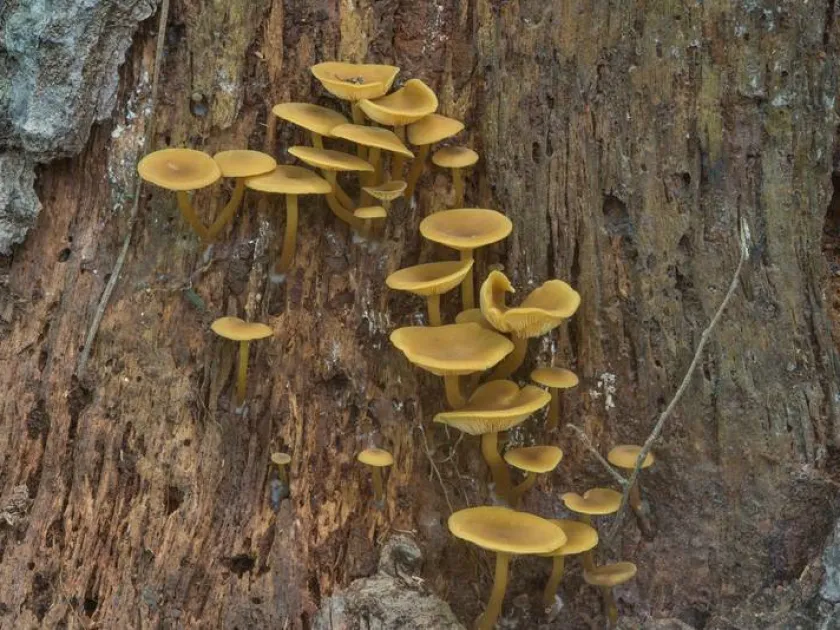
Description
Pathogen
Callistosporium luteoolivaceum is a species of gilled mushroom belonging to the Tricholomataceae family. It is strictly classified as a saprotrophic organism rather than a plant pathogen, meaning it feeds on dead organic material.
The fungus functions primarily as a wood-decomposer, utilizing specialized enzymes to break down lignin and cellulose components of timber. This process is essential for nutrient cycling within forest environments.
Physically, the mushroom is known for its distinct yellow-olive coloration, which can vary depending on environmental conditions and the age of the specimen. It develops small, fragile fruit bodies on decaying wood surfaces.
There is no record of this fungus causing disease in agricultural crops or living trees. Its biological impact is limited to the degradation of woody substrates that are already in a state of decay or death.
The life cycle involves the mycelium colonizing the interior of the wood, followed by the emergence of fruiting bodies to release spores into the atmosphere for dispersal to new substrate locations.
Conditions for development
The growth and survival of Callistosporium luteoolivaceum are heavily dependent on moisture levels within the wood substrate. High humidity is a prerequisite for both mycelial spread and the development of visible mushrooms.
The fungus thrives in cool, shaded environments where the decay of logs, stumps, or branches provides sufficient nutrition. It is most active during moist periods such as the autumn months or rainy spring seasons.
Moderate temperatures ranging from 15°C to 22°C are optimal for the metabolic processes of the fungus. Excessive heat and desiccation significantly hinder its ability to produce spores or maintain colony integrity.
Exposure to direct sunlight can limit the fungus's growth by drying out the surface of the wood, which forces the organism to remain deeper within the substrate for protection and moisture retention.
Spore dispersal is facilitated by wind currents. Once spores settle on a moist, nutrient-rich, decaying wood surface, the germination process begins, leading to the establishment of a new fungal colony within the substrate.
Discussion
No discussions yet — be the first.