
Burkholderiosis
Burkholderiales
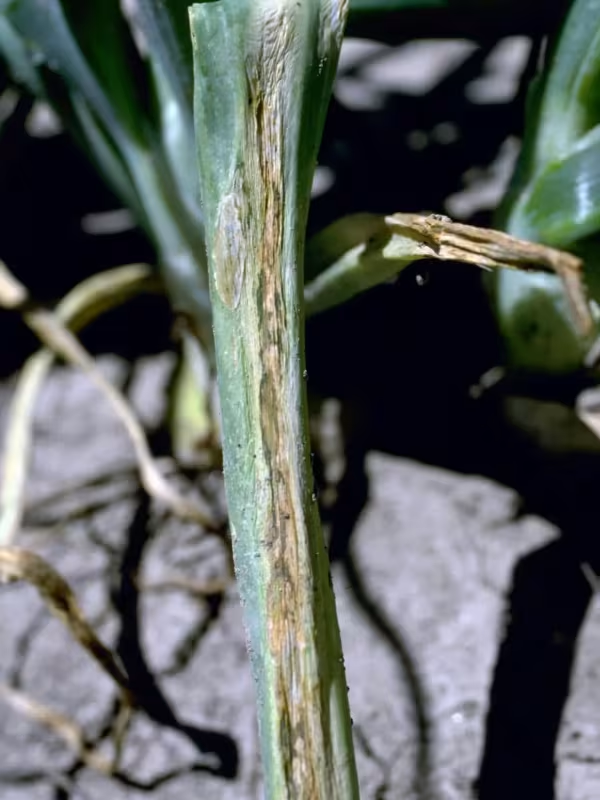
Description
Symptoms
Initial symptoms are characterized by water-soaked spots on leaves that eventually enlarge and turn necrotic or dark brown in color.
Under humid conditions, the affected areas may exude a bacterial ooze or a sticky film, which is a classic diagnostic sign of bacterial infection.
Infected bulbous crops often exhibit soft rot in the bulbs, which can lead to complete tissue disintegration and plant death.
Wilting of foliage without signs of water stress is common when the bacteria infect the vascular tissues, effectively blocking nutrient transport.
- Water-soaked lesions on leaves and stems.
- Stunted growth and yellowing (chlorosis).
- Decay of root systems and tubers.
- Formation of bacterial slime on leaf surfaces.
Pathogen
The causative agent of the disease is a group of bacteria belonging to the genus Burkholderia, with Burkholderia gladioli being one of the most prominent agricultural pathogens.
These bacteria are gram-negative rods that thrive in various environments, including soil, water, and infected plant tissues.
They utilize specialized enzymes to degrade plant cell walls, which allows the bacteria to colonize the host plant rapidly and extract nutrients for their growth.
The pathogen can survive in dormant states within plant debris, making it a persistent threat across consecutive growing seasons.
Transmission of the bacteria frequently occurs through splashing water, contaminated tools, and infected seeds or bulbs used for propagation.
Conditions for development
High humidity and temperatures ranging between 20°C and 30°C create the optimal environment for the proliferation of Burkholderia species.
Poor soil drainage leads to waterlogging, which stresses the plant and provides a medium for bacterial movement and colonization of roots.
Mechanical damage to the plant, caused by agricultural operations or insect feeding, provides entry points for the bacteria to invade systemic tissues.
High planting density restricts airflow, keeping the leaf canopy moist for longer periods and facilitating the rapid spread of the disease.
Lack of proper sanitation in greenhouse environments can cause rapid spread between pots and rows, leading to severe outbreaks.
Why it matters
Burkholderiosis significantly impacts crop yields by reducing the plant's photosynthetic capacity and destroying marketable organs like bulbs and fruits.
In storage, produce infected with the bacteria often undergoes rapid degradation, causing significant post-harvest economic losses.
Plants affected by this pathogen lose their aesthetic value, making them unsuitable for decorative or commercial purposes.
The persistence of the pathogen in the soil necessitates long intervals between susceptible crops, limiting land-use flexibility for farmers.
Severe infestations can result in total crop failure if immediate measures are not taken to contain the spread of the pathogen.
Protection
The primary control strategy involves the implementation of a diverse crop rotation cycle to reduce the bacterial population in the soil.
Utilizing certified, disease-free planting material is essential to prevent the introduction of the pathogen into clean areas.
Regular sanitation of tools using chemical disinfectants helps prevent the mechanical transfer of bacteria between infected and healthy plants.
Copper-based bactericides and fungicides can be applied preventively to protect the foliage and reduce the risk of secondary infections.
Prompt roguing (removal and destruction) of symptomatic plants is critical to eliminating the primary inoculum source within the field.
Discussion
No discussions yet — be the first.